'I'm still waiting for ideal gender equality'
Updated On: 15 December, 2019 07:35 AM IST | Mumbai | Sumedha Raikar Mhatre
At 83, Pune-based activist-author Sayed Mehboob Shah Quadri is winner of an award from Chaturang Pratishthan for five decades of work against the instant talaq-e-biddat, but he says he is far from done





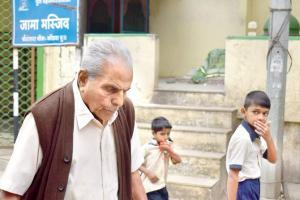
Sayed Mehboob Shah Quadri will receive the Lifetime Achievement Award from Chaturang Pratishthan this month for his work to empower Muslim women by challenging gender-skewed traditions. Pic/Nithin Mohan
 Sayed Mehboob Shah Quadri—Sayedbhai for those who love and respect him—is a reformist movement in himself, one that flows uninterrupted, but without magical speed. Little wonder that after sustaining a five decade-long campaign against triple talaq, the Pune-based activist-author, who is co-founder of Muslim Satyashodhak Mandal, doesn't wish to call it a day. Instead, at 83, he longs to see a time when Muslim women will speak up for their rights. A week before he is to receive the Lifetime Achievement Award in Nasik from Mumbai-based cultural organisation Chaturang Pratishthan, for his efforts to end the unjust marital practice, he says, "I am waiting for greater change in the everyday lives of Muslim women, and a vision that brings us closer to ideal gender equality."
Sayedbhai's wait for a better social climate dates back to the post-Tilak Pune of the 1940s when his family shifted from Hyderabad in search of livelihood. At the impressionable age of four, he descended on one of Pune's military tenements along with five siblings. While his father worked at a British officer's bungalow, his elder brother and mother took up odd jobs. A formal education for the children was not an immediate priority, but little Sayed got admission to a free Urdu school on Moledina Road. The Sayeds slowly secured a toehold in a city whose fuel came from a strong anti-British nationalist sentiment. He recalls the first time that the Indian tricolour was unfurled by the Khadki Cantonment Board officers. Children of neighbouring Marathi and Urdu schools gathered to see the Ashok Chakra replace the crescent moon.
Trending Stories
Latest Photos
Latest Videos
Latest Web Stories
ADVERTISEMENT

Ganeshotsav 2026

ADVERTISEMENT