About Asha
Updated On: 19 April, 2026 09:04 AM IST | Mumbai | Rahul da Cunha
Back in the 60s and 70s, singers often ‘made’ the stars (Kishore Kumar’s singing helped elevate Rajesh Khanna to his superstar status).





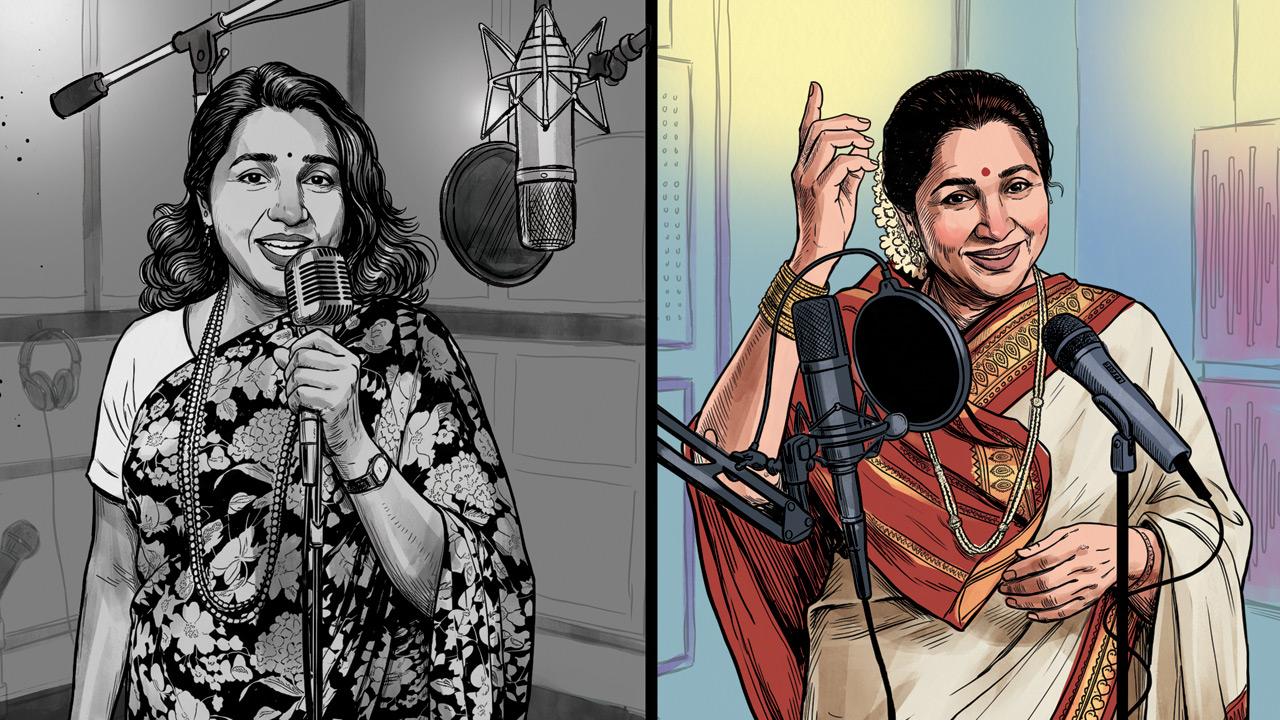
Illustration/Uday Mohite
 Dubbing is hard. Actors have to “remember” the emotion they’d conveyed during shooting, and reproduce it in a studio. Playback singing is harder, there’s a two way process, two artistes involved. The actor/actress, mouthing lines of a song, lip syncing the words, during the filming. The singer then has to sing the lines plus add the required emotion that he/she felt the actor/actress would in a song.
Asha Bhosle, took the art of playback singing to another level. She had the clarity and technique to get the essence of the song nailed down, but she also “emoted the part”, getting to the heart of the actress’ motivations, she “acted” the lyrics, she lent soul to the melody. In her playback performance, she could shift between sexy, and sultry, she could be playful, she was pouty. She had mischief, she was fun, she sought to break free of boundaries. Helen felt she added “oomph” to her dancing, helping her to get the moniker “Queen of Cabaret”. Zeenat Aman said, “she gifted me the soundtrack to my success”, meaning Dum Maro Dum from Hare Krishna Hare Ram and Chura liya from Yaadon Ki Baraat. Mumtaz, Asha Parekh, and Rekha all felt she got to the heart of their character in the songs she sang for them.
Trending Stories
Latest Photos
Latest Videos
Latest Web Stories
ADVERTISEMENT
Mid-Day Fast
ADVERTISEMENT