Tramming it up in Bombay electric
Updated On: 15 November, 2020 12:00 AM IST | Mumbai | Meher Marfatia | Meher Marfatia
In the festival of lights, we map how overhead-wired trams from early 20th-century Bombay changed the way the city travelled and lived





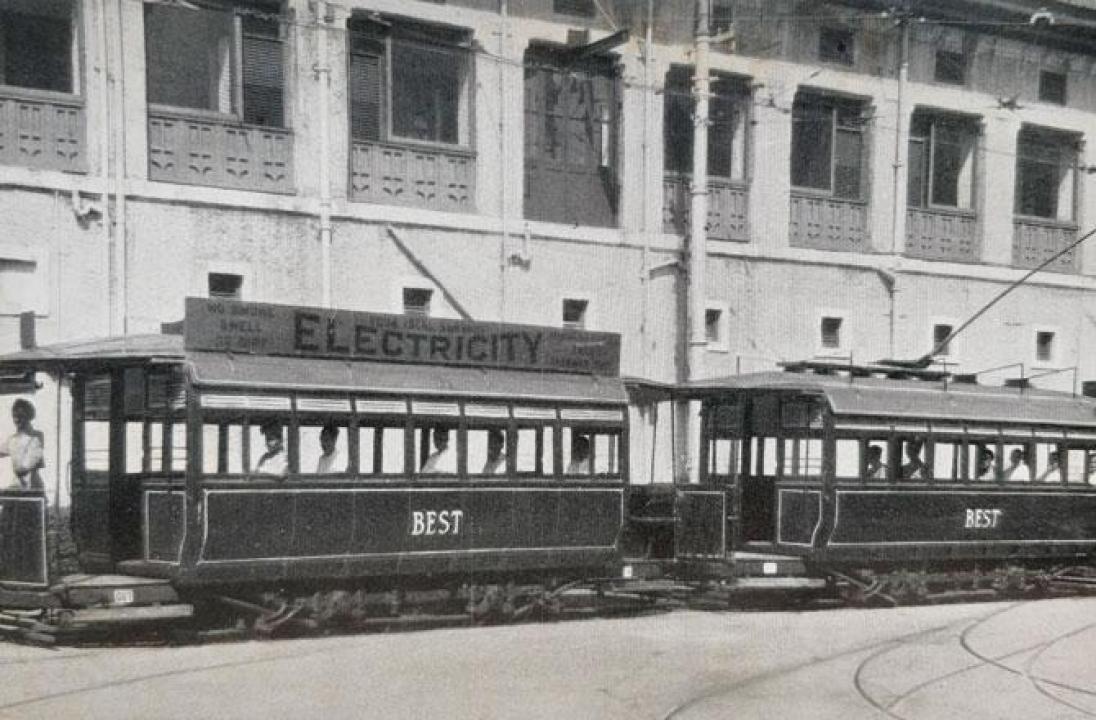
Two-compartment trailer trams started after 1910 to cope with rush hour. To the left of the word Electricity is printed: "No smoke, smell or dirt". Reproduced with permission from History of the Bombay Electric Supply & Tramways Company, Limited, by Pesto
 It-s November 3rd. On a day all of America burns with election fever, come exceptionally prompt mail reverts from Husein Nakhooda of Cleveland, drolly describing the tram ride to his grandfather-s home during childhood years in Bombay.
Slow-paced trams meant being transfixed by goings-on adults thought inappropriate for young eyes. He writes: "The first one is the one you remember. The journey from my Abdul Rehman Street home to Motapapa-s on Warden Road, involved the No. 13 tram to Tardeo or No. 16 to Gowalia Tank and connecting to a bus. That trip went through the infamous red-light district, -Pila House- in our vernacular. As we approached, Motapapa covered my eyes with his palm to ensure I would not avail of the sights. When I got old enough to travel on my own, Motapapa realised he had lost control."
Trending Stories
Latest Photos
Latest Videos
Latest Web Stories
ADVERTISEMENT

Ganeshotsav 2026

ADVERTISEMENT