Home / Sunday-mid-day / Article /
A swan song
Updated On: 21 July, 2019 07:22 AM IST | | Jane Borges
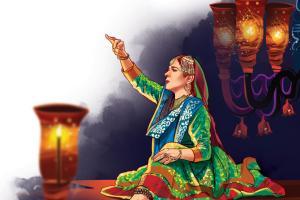
Writer-filmmaker Saba Dewan's new book, a culmination of 20 years of research on tawaifs, explains how this community of culture practitioners was systematically de-legitimatised





Illustration/Uday Mohite
Nineteen years is a long time in an individual's life. It's the time one takes to grow out of infancy and reach adulthood, or switch from the pinnacle of their career to retirement. For Delhi-based filmmaker-writer Saba Dewan, it marked the years she spent engaging with the community of tawaifs, "the courtesans and entertainers who had, until almost the mid-20th century, played a significant role in the cultural and social life of northern India". Starting with 2001, when Dewan began work on her documentary, The Other Song (2009), which dealt with the art and lifestyle of the tawaifs, to her new non-fiction, Tawaifnama (Context, Westland), the journey, says Dewan, has been enlightening.
"There is this tendency to label tawaifs either as victims or simply as survivors, but these are easy categorisations. Because as far as human life is concerned, you cannot see things as black and white," she says, over a telephonic interview. "That is one of the biggest things I learnt [while researching the tawaifs] over the years. I had gone with certain feminist notions, in which you looked at certain things in a certain way, but the fact is that real lived life doesn't quite conform to what one would like it to be. Today, I feel very uncomfortable about such labels."
Trending Stories
Latest Photos
Latest Videos
Latest Web Stories
ADVERTISEMENT
Mid-Day Fast
ADVERTISEMENT