Home / Sunday-mid-day / Article /
Brides for just a day
Updated On: 24 May, 2026 08:20 AM IST | Mumbai | Team SMD
Every April-May, hundreds of trans women throng a quiet village in Tamil Nadu to turn into brides for Mahabharata martyr Aravan. These spell-binding images from photographer Shino Cherian’s new book on the Koovagam festival show how they find divine love for just a day, before mourning the hero’s death





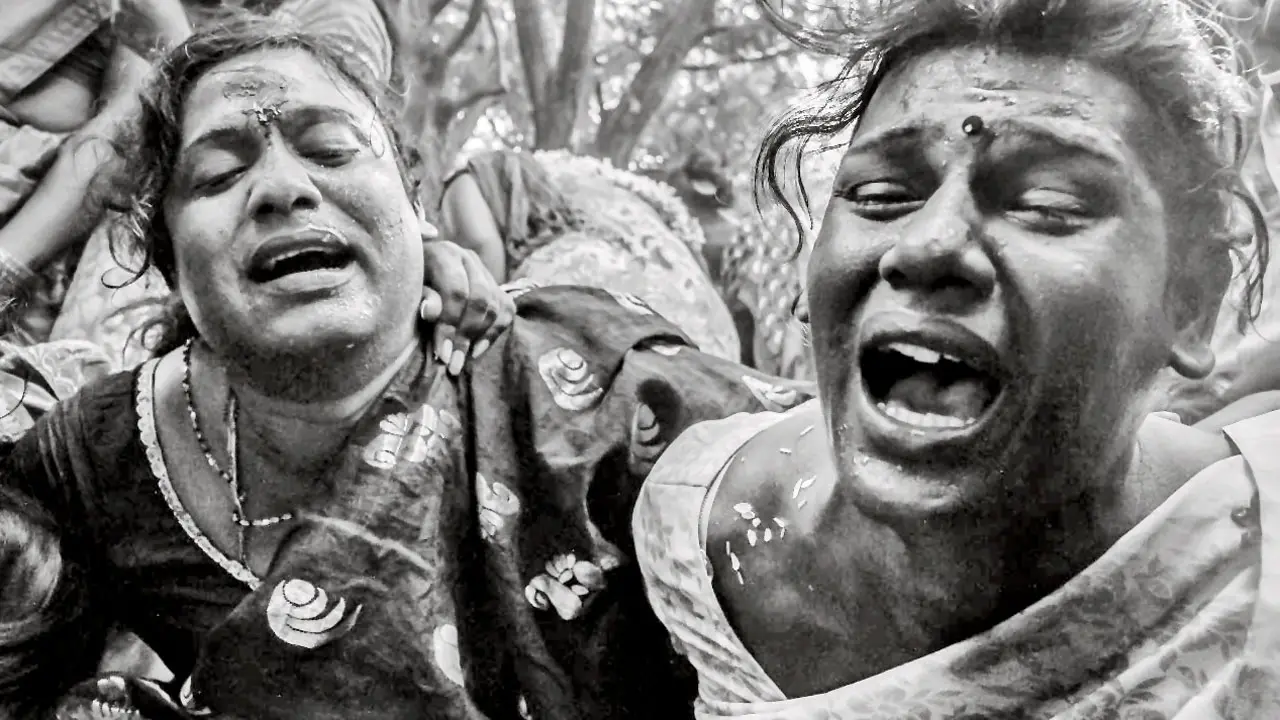
On the final day, the Aravanis go from brides to widows, take the flowers out of their hair and wipe off their make-up. “They cried loudly in groups, hugging each other and expressing their sorrow in the form of an oppari, a traditional Tamil funeral song. While they did indeed grieve the death of Aravan, their voices also seemed to rise in a lament for the pain of every loss, every rejection, every oppression they had ever endured,” writes Shino Cherian. Pics/Shino Cherian
The legend of Aravan and Mohini
Every year, in the Tamil calendar month of Chithirai (April-May), the village of Koovagam (200 km from Chennai) comes alive with thousands of devotees celebrating the wedding of Arjun’s son Aravan and Mohini, the only female avatar of Vishnu and a prime deity for the transgender community.
The legend goes that Aravan had one final wish before he sacrificed his life in the Mahabharata to secure the Pandavas’s victory — he wished to be wed. But as no woman would marry a man only to be widowed the next day, Lord Krishna took the form of Mohini and married the young hero to honour his dying wish. To this day, the 18-day festival celebrates this legend. Thousands of trans women converge at Koothandavar Temple in Koovagam.
“For the first sixteen days, the now-famous Miss Koovagam beauty pageant [for trans women] and other cultural performances and programmes are organised. On the 17th day, the attendees dress up in their finest as symbolic brides of the deity Aravan, with colourful bangles and resplendent jewellery, and celebrate their marriage to the deity,” writes Cherian. “They also tie thalis [mangalsutras] around their necks and apply kumkum on their foreheads. The final day of the festival is marked for mourning the death of their divine husband, in honour of the legend described in the Mahabharata.”
Trending Stories
Latest Photos
Latest Videos
Latest Web Stories
ADVERTISEMENT

Ganeshotsav 2026

ADVERTISEMENT