Home / Sunday-mid-day / Article /
From shame to reform
Updated On: 10 October, 2021 08:01 AM IST | Mumbai | Jane Borges
Writer Daman Singh’s new book shines light on India’s tryst with mental healthcare, how historical events impacted asylums, and why force against patients came to be replaced by empathy





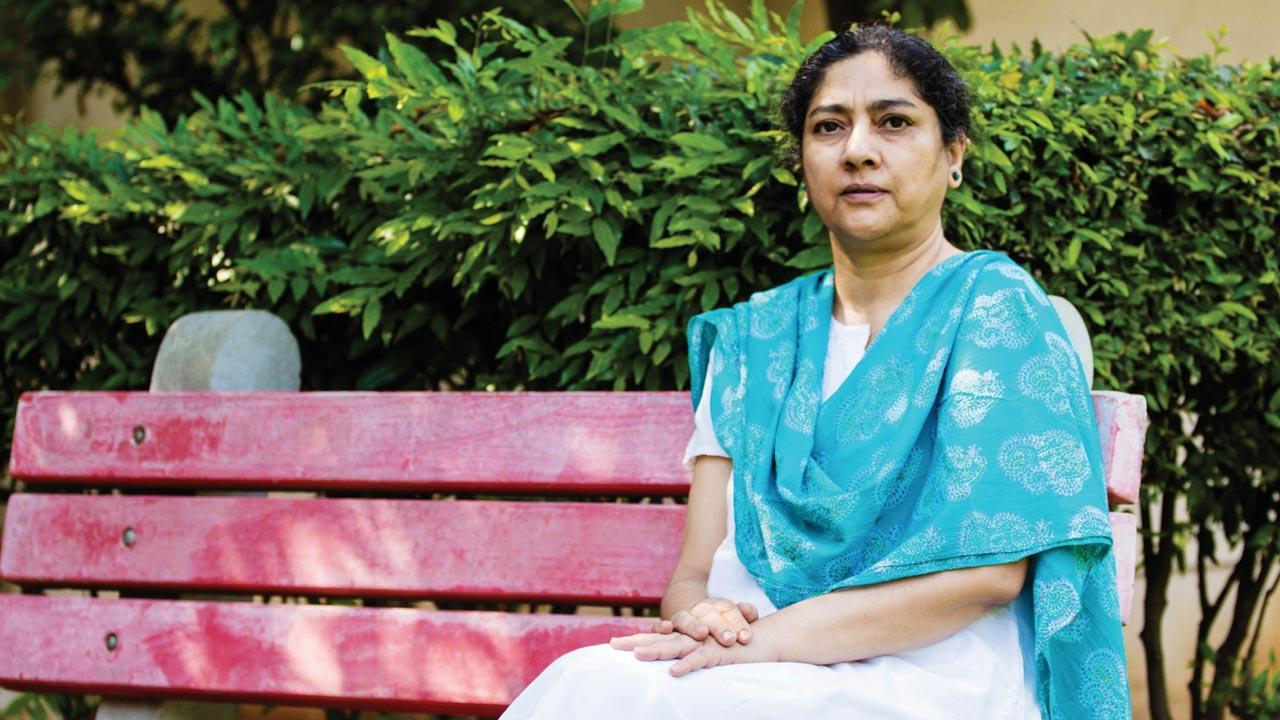
Daman Singh at her New Delhi residence. Pic/Nishad Alam
It was in Saadat Hasan Manto’s gut-wrenching short story Toba Tek Singh that this writer first encountered the plight of inmates in a Lahore asylum. Set a couple of years after the Partition, Manto’s story revolves around Bishan Singh, a Sikh from the town of Toba Tek Singh, who is among those to be shifted, when the governments of India and Pakistan, after much deliberation, decide to exchange some of the Muslim, Sikh and Hindu inmates. When Bishan learns that Toba Tek Singh is now in Pakistan, he refuses to leave. The final scene, as moving and painful as it is, makes known how the Partition spared no one, not even those who could make little sense of it.
Daman Singh’s soon to release non-fiction title, Asylum: The Battle for Mental Healthcare in India (Westland) has us realise that Manto’s fiction wasn’t far removed from reality. It was only a year after India’s Independence, in December 1948, that the two newly-formed governments agreed on what to do with mentally ill patients whose relatives were on the other side. “At this point, India had made a list of 240 patients who were to be sent to Pakistan. And Pakistan had made a list of 513 patients who were to be sent to India,” the author shares in the book. It would take another two years before “the countries exchanged their mentally ill patients in a single simultaneous exercise”. By then, an official list, published in The Tribune, revealed how 143 Indian patients had died at the Lahore mental hospital between August 20, 1947 and July 23, 1950. “The Partition itself was a colossal human tragedy, and in this, the littler tragedy was that of people who were in these mental hospitals. They had been completely forgotten. I think, they were the last to be given attention,” shares Delhi-based Singh in a video call with mid-day. Little is known about these patients. “How did they live? How were they being looked after? These are questions we don’t have answers to.”
Trending Stories
Latest Photos
Latest Videos
Latest Web Stories
ADVERTISEMENT
Mid-Day Fast
ADVERTISEMENT