Home / Sunday-mid-day / Article /
Gamble called Bombay cinema
Updated On: 27 September, 2020 07:43 AM IST | Mumbai | Jane Borges
In her new book, researcher Debashree Mukherjee offers a portrait of the film industry from the 1920s to 40s, the studios which helmed it and the satta bazaar that financed it, as it made a transition from silence to sound





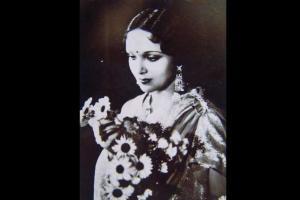
Devika Rani Chaudhuri, who set up Bombay Talkies with Himansu Rai in 1934
Can you tell me why there is not a single film studio in the United Provinces, the home of the Hindi language?" The question was posed in the 'Editor's mail' section of filmindia magazine's 1941 issue. The answer to this was a rather, straightforward one: "Because that province has no official gambling dens like the Share Market and the Cotton Exchange, where easy money can be made and invested in films." In colonial India, the only other province where the satta bazaar flourished unchecked, was Bombay. It's no surprise why it became the beating heart of the movie industry in South Asia.
Debashree Mukherjee's new book, Bombay Hustle: Making Movies in a Colonial City (Columbia University Press), takes us through the juggernaut, which would eventually propel Indian cinema to dizzying heights. Examining the unpredictable, yet exciting decades where films were making a transition from silent to the talkies, Mukherjee, who is assistant professor at the Department of Middle Eastern, South Asian and African Studies in the Columbia University, offers a rare insight into how film studios functioned and were financed, and how actors and crew negotiated this previously, uncharted territory.
Trending Stories
Latest Photos
Latest Videos
Latest Web Stories
ADVERTISEMENT

Ganeshotsav 2026

ADVERTISEMENT