Home / Sunday-mid-day / Article /
Happily Unmarried
Updated On: 14 July, 2019 07:25 AM IST | Mumbai | Jane Borges
Kalpana Sharma, editor of a new anthology by 13 single women from across India, says they are not "advocating or celebrating singleness, just acknowledging it"





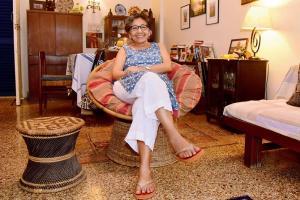
Kalpana Sharma Pic/ Suresh Karkera
At 72, Kalpana Sharma is as old as independent India. "I'm also an independent journalist," she shares with a smile, when we meet at her Nepeansea Road apartment, which with its Warli paintings, cane stools and godhadi quilts, is reminiscent of an Indian handicrafts boutique. The adjective, she so fiercely asserts, is but an apt description of the life that Sharma chose for herself—top on that list was her decision to remain single, when marriage to a friend had been an easier choice to make. "But, I pulled out of it. In hindsight, that decision to first contemplate marriage and then think through it [why it would not work] opened up the gateway to who I am today," she says. It's why Sharma jumped at the idea of editing a book that would include contributions by other single women like her, when approached by publisher Ritu Menon. "Increasingly, I was coming across younger women, who were saying that unless there was a huge value addition to their lives with marriage, they'd not want to go down that road. I thought that this would be interesting to explore," she says. Single By Choice: Happily Unmarried Women! (Women Unlimited) is an anthology of essays by 13 women from varied backgrounds, who arrived at their singledom from different experiences. The common sentiment of the essays are that "being single, is not a grim business". "It is a reality that is now emerging in India," says Sharma. Edited excerpts:
Women from across age groups have contributed to this book. But, who is the outlier?
One very different note has been struck by Tamil writer Bama; her story is searing. She carries the burden of not just being a woman, but also being single, Dalit, and a Christian. She is a minority among minorities. Most of us come from privileged and middle-class backgrounds. So, hers was a reality check for us, too. It was really difficult for her. The rural society is far more conservative, and women, irrespective of whether they are bread-winners, are seen as a burden. Bama describes how it was impossible to find a place to live as a single, Dalit woman in her village in Tamil Nadu. When she built her own house in the same village, she was the centre of a lot of criticism. And then she describes, how she felt alone, when she got ill. The morbid curiosity of this very traditional environment, did not make it easy. After she had a hysterectomy, the women spread a rumour that she had an abortion. Despite facing all of this, she comes through and still speaks about why she values her independence. To me, that is so moving and fantastic.
Trending Stories
Latest Photos
Latest Videos
Latest Web Stories
ADVERTISEMENT

Ganeshotsav 2026

ADVERTISEMENT