Home / Sunday-mid-day / Article /
Sorry, not sorry for Jallianwala Bagh massacre
Updated On: 14 April, 2019 08:51 AM IST | Mumbai | Jane Borges
While a sorry from the UK government still eluded India on the 100th anniversary of the Jallianwala Bagh massacre, historians and politicians feel the debate should not end with a symbolic gesture





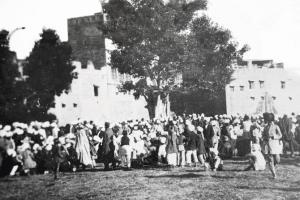
A crowd at Jallianwala Bagh, late summer 1919. PIC Courtesy/The Nehru Memorial Museum and Library for Jallianwala Bagh: An Empire of Fear and The Making of The Amritsar Massacre (Penguin Random House)
Too many historical and literary texts have re-imagined and revisited the horrors of Jallianwala Bagh in Amritsar. But 100 years on, except for a neglected memorial and bullet holes pockmarking the ageing brick walls of the desolate landscape, spread across 6.5 acres, there is nothing to tell you that this continues to be the archetype of the British Empire's ruthless colonial past. The only semblance of the gore, if any, is of the "flowers [growing here] nurtured with blood" as Punjabi poet Sohan Singh Misha wrote in his 1964 poem. "It's the first act of colonial violence that shocked the British public. There were previous incidents, but they didn't give rise to the soul-searching like the incident at Amritsar did. It is difficult to not perceive this as monstrosity. Because, you had 20,000 unarmed civilians on one hand, and British-Indian soldiers mowing them down on the other. As an event itself, it was very stark," says Kim A Wagner, who recently authored Jallianwala Bagh: An Empire of Fear and The Making of The Amritsar Massacre (Penguin Random House).
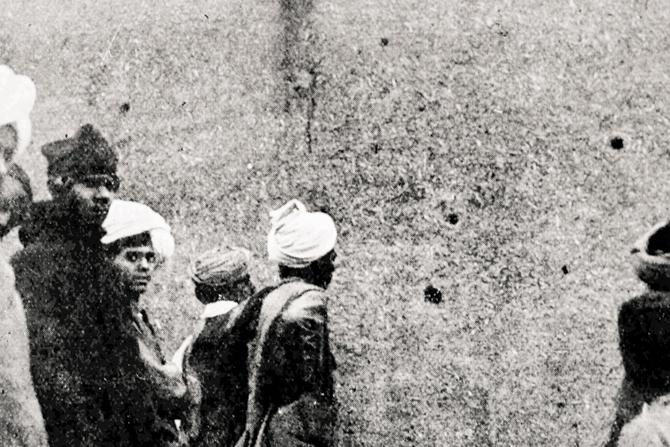
Locals inspecting bullet-holes at Jallianwala Bagh in late 1919. Pic Courtesy/L'Illustration, 20–27 March 1920
Trending Stories
Latest Photos
Latest Videos
Latest Web Stories
ADVERTISEMENT
Mid-Day Fast
ADVERTISEMENT