Home / Sunday-mid-day / Article /
Risky flight
Updated On: 19 September, 2021 08:29 AM IST | Mumbai | Prutha Bhosle
There is an imminent threat to scores of butterfly species found in India. Experts discuss why it should matter to you that the titli survives





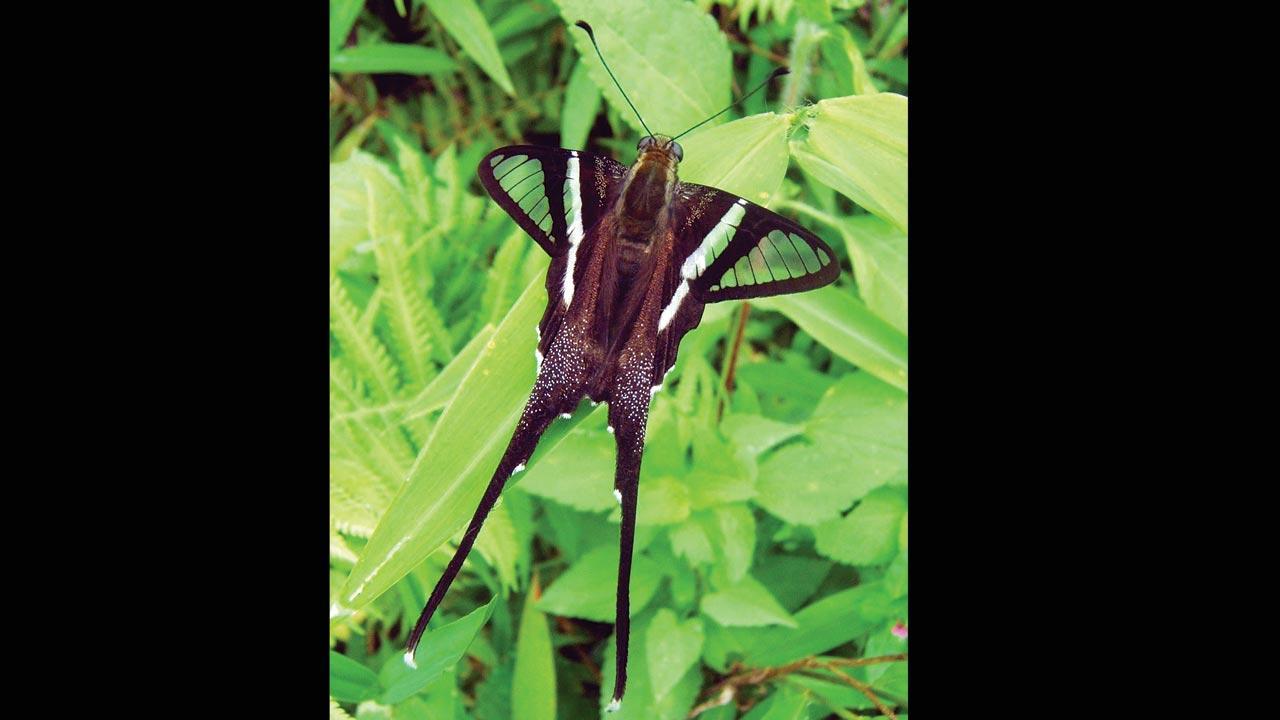
White Dragontail. Pic courtesy/Sohini Vanjari
The population of pollinators, especially butterflies, seem to be on the decline around the world. A new study led by Lynn Dicks, an agro-ecologist at the University of Cambridge, states that disappearing habitats and the use of pesticides are driving the loss of pollinator species, posing a threat to “ecosystem services” that
provide food and well-being to many millions.
India isn’t insulated from this crisis either. With an imminent threat to close to 35 butterfly species in the country, according to the International Union for Conservation of Nature (IUCN), experts say now is the time to act. India is home to around 1,320 butterfly species, but this number keeps changing as new discoveries are made every year. “Officially, nearly 350 species of butterflies were placed under Schedule I and Schedule II under the Wildlife Protection Act during the 1980s, putting them next in line to the tiger, elephant and whale. But most of the species placed in this list were based on the status given to them in the 1930 book, The Identification of Indian Butterflies: Brigadier WH Evans, without proper scrutiny and upgrading. This led to the inclusion of many common species in this list,” says Sohini Vanjari, who has an MSc degree in zoology. Experts agree that this list needs to be updated. “From Himalayas to the Gangetic plains and from the Western Ghats to the Northeast of India, the geographical diversity is well represented by the diversity of the butterfly population. The beautiful Apollo butterflies, which are endemic to the Himalayan regions are considered quite rare. The white dragontail, Bhutan Glory and Kaisar-e-hind are species that are endemic to the Northeast and you might need some luck to even spot them. Whereas the Malabar banded peacock, Malabar tree nymph and Palmking are endemic to the Western Ghats, and you are likely to encounter them by chance,” adds Vanjari.
Trending Stories
Latest Photos
Latest Videos
Latest Web Stories
ADVERTISEMENT
Mid-Day Fast
ADVERTISEMENT