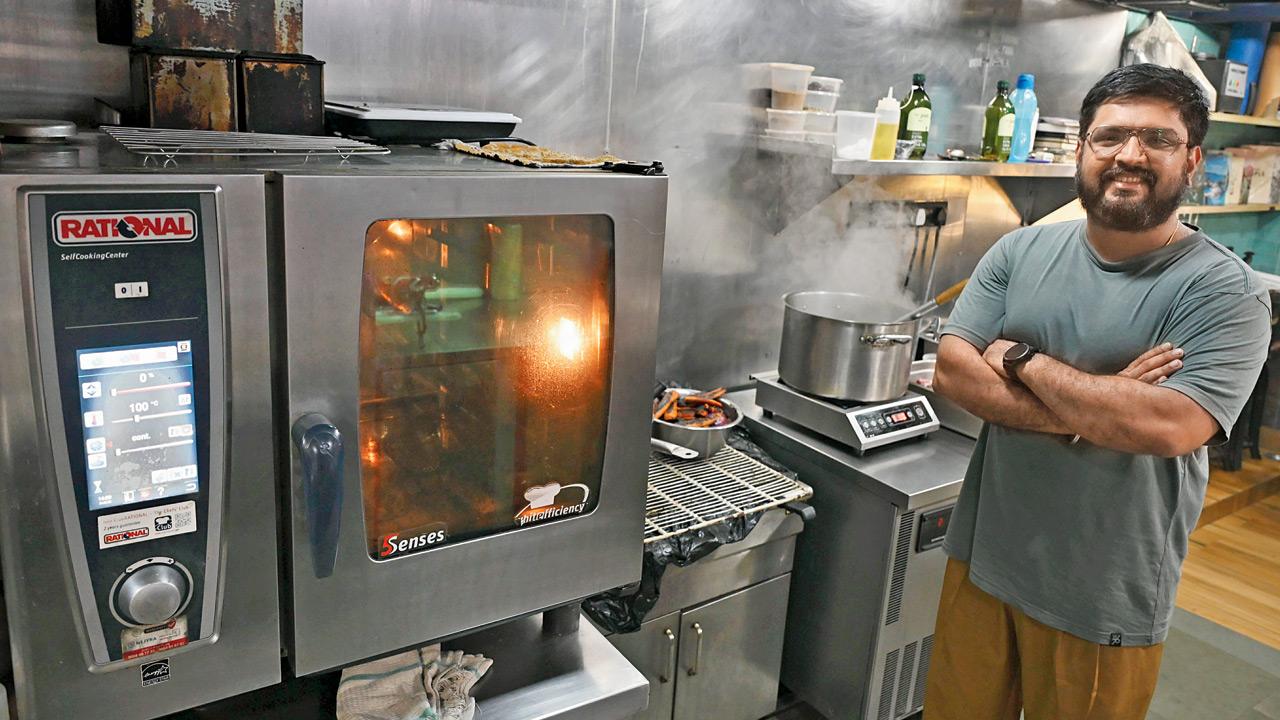
Mumbai’s F&B experts and chefs predict an adjustment, especially given the difference between electric and induction equipment that will pave way for a pivot in kitchen operations in light of the LPG crisis

Pics/Ashish Raje
If you’ve observed an Asian cuisine chef work a wok, it plays out like a transcendental act. In layman’s terms, they work from a space of muscle memory. They know just the right temperature from the sizzle of the veggies; they lift the wok off the fire to manoeuvre a pan swirl so the noodles dance to their tunes. This is possible on high flame. The freedom of following gut instinct is like playing with fire, literally.
“The judgement of playing with the pan for a line chef comes from watching and feeling the heat. That’s the first habit they form. The switch to induction breaks that flow; it will require training,” informs Ravi Wazir, restaurant and F&B strategist-operator.

A chef prepares a dosa on an electric tawa
It’s important, he points out, to understand the difference between electric and induction equipment. “Gas and electricity are two big buckets of energy. Within electricity, there are two kinds of devices — an electrical device that works using an electric coil, for example, a kettle,” he says. “The second type of electric device is induction that works through the electromagnetic field. Only ferromagnetic utensils can be used on it. Compared to gas, its running cost can be 20 to 30 per cent lesser,” Wazir explains.
Right now, the star of modern kitchens is the combination oven that combines dry heat and steam. “This offers convection, conduction and steam. Many kitchens already have it but it is not always optimally used,” Wazir explains. While kitchens have been denied LPG, adopting induction is easier said than done. “There is a silver lining in this transition. Induction causes less heat, and can lead to better cleanliness in the kitchen as temperatures in the kitchen drop,” he concludes.
Lessons from an induction kitchen
Chef Divesh Aswani founded Commis Station during COVID-19. In an industrial estate, it was a safer option, fire compliant and expended less heat. “My best investment was the Rational Combi Oven. It is a different mechanism. It is a work horse and works more than any other team members. It is switched on from 8 am to 5 pm, and at times, when we have catering, we cook roasts and braises overnight, and head home, knowing we’ll have a succulent meat dish the next day.”
Aswani works the Rational Combi Oven to make Hazelnut and Brown Butter Crumble.
This Combi has six trays. It offers grill settings for roast chicken, tandoor, Peking duck, spoke cake, and even breads. “I can control humidity as well as temperature. For example, to make a Bánh Mì, we bake it for 16 minutes, which includes loading, flash steaming, baking cycle at 181 [degrees] and cools automatically to 130.
On the induction, Aswani braises the lamb shoulder. “Turned off, the equipment is stone cold. Within seconds, it shoots to 3500 watts, you’ll hear a sizzle. This is why you can’t keep food on induction for too long as it will burn.” The induction pot takes a few extra steps and grilling of veggies is done separately, and later assembled
If you’re a chef cooking on an open line, you’re doing like four dishes at a time and you miss that step. Or if you miss taking care of that egg, then it’s going to be like papad by the time you get to it. The induction keeps throwing heat, and needs to be controlled.
New normal
“My kitchens ran on LPG. Thanks to prior experience on induction, it took me a week to train the staff and initiate changes. Induction cooking is faster than gas, but demands precision. With Asian wok cooking, the smoky finish is difficult to replicate. We’ve moved a lot of our wok grilling into the combi oven. Initially, we faced issues like undercooking and overcooking. With temperature control, we have achieved 99 per cent of the same flavour.

A chef at Shiv Sagar prepares the sambar. Pics/Atul Kamble
It’s all about recalibration. For instance, chicken takes longer than fish [to be ready], so instead of cooking everything at 200 degrees, we adjust temperatures to around 160 and cook slightly longer for better results. This is no longer a temporary adjustment, but a shift in how modern kitchens will operate going forward.”
Chef Krishna Tiwari, executive chef, KYMA, Shiv Sagar Group
Practice before you roll camera
Especially in India, most professional kitchens function on LPG. In the current situation, low-grade inductions available in the market take longer to cook. There is a seven-to-eight-minute delay due to temperature difference. This increases the amount of time it takes to place the food on the table.

Firstly, you can’t leave an induction on for a long time as it will burn the food. Even on sets of food shows, like Laughter Chef that I consult on, we earlier worked on gas. Now, we conduct trials on induction before we roll the camera, as failure in delivering food is much higher.
Aditi Goel, chef consultant
The big edit
Our Borivli outlet heavily relied on LPG until last month. About 30 to 35 per cent of the menu gives us about 80 per cent of the food revenue. We cut the number of our dishes from 100 to 38. We’ve adapted operations by shifting Indian curries to induction, with minimal impact on taste and consistency. Continental dishes that require high-heat pan cooking have been selectively reduced or modified.

We continue to use gas for wok-based cooking, as Asian cuisine requires a distinct smoky finish, while the rest of the kitchen has moved to electric ovens and tandoor-based cooking. For a dish like Citrus Paprika Chicken, the sauce was cooked on gas, and now can easily be adapted to induction. This shift has proven that the move is not just temporary but a long-term operational change towards more efficient kitchens.
Chef Ameyyaa Mahajani, executive chef, Downtown 29 (BKC and Borivli)
Subscribe today by clicking the link and stay updated with the latest news!" Click here!