Home / Mumbai / Mumbai News / Article /
'Our forecasts are 80–90 per cent accurate': IMD Mumbai chief explains rain alerts, monsoon forecasts
Updated On: 04 July, 2026 07:47 AM IST | Mumbai | Madhulika Ram Kavattur
IMD's Regional Meteorological Centre head Bikram Singh explains how Mumbai's weather forecasts are made, why red alerts are issued and the technology behind monsoon predictions





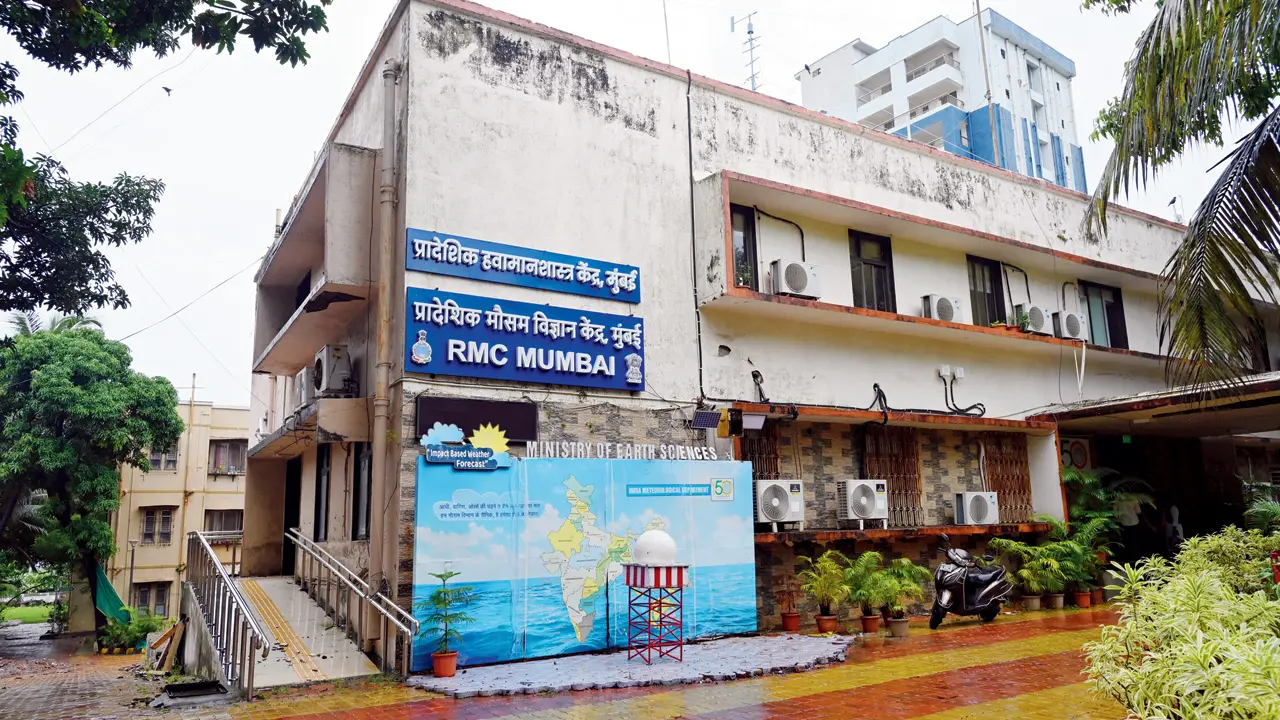
The India Meteorological Department’s Regional Meteorological Centre in Colaba on Friday
Over the past two decades, the India Meteorological Department’s Regional Meteorological Centre (RMC) in Colaba has been helping Mumbaikars plan their days, especially during the monsoon season. mid-day spoke to the head of the RMC, Bikram Singh, who shed light on how the institute functions.
Why is an orange, but not red, alert issued when 200 mm of rainfall is expected?
The red alert is given when the city experiences or is going to experience, according to the weather trend, over 204 mm of rain in the period of 24 hours. So when it is raining heavily, but there’s only 200 mm in 24 hours, it can’t be classified as a red alert. Red alerts lead to major changes. The authorities have to decide whether to close schools and businesses to prevent accidents, so we are careful about the alerts we issue.

Bikram Singh, head of the Regional Meteorological Centre, Mumbai. PICS/ATUL KAMBLE
It was announced that the country would receive below-normal rainfall this year, but Colaba and Santacruz have seen 11 per cent and 18 per cent surpluses, respectively…
The announcement is made according to a forecasted average of what the whole country might receive. Though Mumbai has received its normal amount and is seeing heavy rainfall, other regions in Maharashtra are not. When we say normal, we look at it as 100, but we also consider any number between 81 and 119 as normal. If we look at the Konkan region, it is in a deficit of 25, but in the coming weeks, we expect it to head towards normalcy and maybe even exceed it.
The running joke in the city is that on the days of red alerts, we sometimes see clear skies. Why does this happen?
In such cases, it is possible that it might have rained overnight, but we see a clear sky in the daytime, which is when the city questions the alert. But we issue it as a precautionary measure. There are times when the weather patterns we see or the system measures indicate very heavy to extremely heavy rains. During such situations, we believe issuing a red alert is better because this helps the city authorities decide whether schools and businesses should be closed. Our system has 80 per cent to 90 per cent accuracy, but since it is a machine, issues can always come up.
In the past decade, what upgrades have been made at the centre?
The systems we used have now been upgraded and improved. Previously, we were not able to make fast predictions because observations were weak and were in a range of 50 to 100 km. Now we have multiple observation stations in the city, which send us updates and data every 15 minutes. We have automatic monitoring stations that help with nowcast warnings. These help when we need to immediately update the city about the weather it will be seeing in a few hours. We have enough automatic weather stations in the city, so even if one sensor malfunctions, the other cope easily.
What instruments help the RMC the most?
The automatic weather station network helps us monitor the weather continuously and issue nowcast warnings. E-radars and satellites also help with the nowcast as well as the rainfall intensity data. While these help us predict the weather for the next few hours, numerical weather prediction helps us inform the public and authorities about what the city will experience in the coming days, allowing everyone to plan their weeks out.
For the latest Mumbai Monsoon coverage, including weather forecasts, rain alerts, transport disruptions, lake levels, and civic advisories, visit our Mumbai Monsoon News hub.
Trending Stories
Latest Photos
Latest Videos
Latest Web Stories
ADVERTISEMENT

Ganeshotsav 2026

ADVERTISEMENT