Home / Mumbai / Mumbai News / Article /
Why we won't see red
Updated On: 02 August, 2020 07:43 AM IST | Mumbai | Anju Maskeri
A hygiene brands fight over a recent sanitary pad commercial brings up the curious case of why Indians dont like acknowledging that blood is red





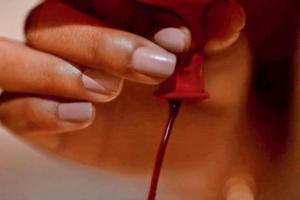
A still from the commercial; Kartik Johari of Nobel Hygiene says, "We were presented with the option of changing the colour to blue. We refused because conversations will begin only after acknowledging reality."
IN 2018, Nobel Hygiene, India's largest manufacturer of adult and baby diapers, started researching the sanitary napkin market to address a hush-hush subject: heavy menstrual bleeding. Their findings were unsettling. "Heavy period flow is often considered a personal complication and not a medical problem, which is why it goes undiagnosed," says Manisha Sain, strategy planner, The Womb Communication, who was part of the research team.
Losing 80 ml or more blood in each period cycle, or/and a cycle that lasts beyond seven days constitutes heavy menstrual bleeding. The cause is often attributed to fibroids or non-cancerous growths that develop in or around the womb and can cause heavy or painful periods, endometriosis, where the tissue that lines the womb (endometrium) is found outside the womb, or polycystic ovary syndrome (PCOS), a condition that affects the functioning of the ovaries. "Heavy menstruation affects 25 per cent women in India and requires them to change their pads every two hours," she adds. The team came across case studies, where women would try not to sit on a sofa or sleep on a bed during their period due to the fear of soiling, aside from experiencing agonising pain. With these insights, the team created a product aimed to absorb heavy flow and called it Rio pad.


Trending Stories
Latest Photos
Latest Videos
Latest Web Stories
ADVERTISEMENT
Mid-Day Fast
ADVERTISEMENT