Home / News / India News / Article /
Indra's rise to kingship
Updated On: 14 April, 2019 07:39 AM IST | | Devdutt Pattanaik
The Brahmana, orally transmitted by priests who came to be known as Brahmins, contains instructions and explanations for the Vedic ritual of yagya





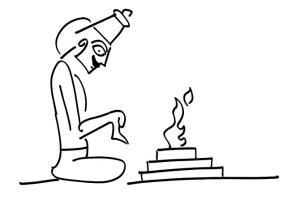
Illustration/Devdutt Pattanaik
%20(1).jpg) The Brahmana, orally transmitted by priests who came to be known as Brahmins, contain instructions and explanations for the Vedic ritual of yagya. All the four Vedic Samhitas have Brahmanas attached to them. The Brahmana associated with Yajurveda is called Taittiriya Brahmana. Here, we find stories related with Indra, which are not commonly told. They explain how kingship was seen in Vedic times, over 3,000 years ago, very different from how kingship came to be seen in Puranic times, in the past 2,000 years, by which time Indra had lost his exalted status and was seen as an insecure god, and inferior to Vishnu.
The Brahmana, orally transmitted by priests who came to be known as Brahmins, contain instructions and explanations for the Vedic ritual of yagya. All the four Vedic Samhitas have Brahmanas attached to them. The Brahmana associated with Yajurveda is called Taittiriya Brahmana. Here, we find stories related with Indra, which are not commonly told. They explain how kingship was seen in Vedic times, over 3,000 years ago, very different from how kingship came to be seen in Puranic times, in the past 2,000 years, by which time Indra had lost his exalted status and was seen as an insecure god, and inferior to Vishnu.
We are told that Prajapati creates the devas and Indra is the youngest deva. He appoints Indra as king, but since he is youngest, his rule is not accepted by his elder brothers. So, he goes back to Prajapati and asks Prajapati to give him his lustre. Prajapati passes on his lustre to Indra. As a result, Indra becomes more powerful than his brothers and they accept his right to rule over them. Prajapati, now lustreless, is eclipsed by Indra. Lustre here is a metaphor for power. Power is more important than seniority to make a king.
Trending Stories
Latest Photos
Latest Videos
Latest Web Stories
ADVERTISEMENT
Mid-Day Fast
ADVERTISEMENT