The Enforcement Directorate on Friday said it has attached assets worth more than Rs 441 crore of various accused involved in the Andhra Pradesh liquor 'scam' case, which allegedly took place during the previous YSRCP regime in the state. The attached properties consist of bank balances, fixed deposits, land parcels and other immovable assets belonging to the prime accused Kessireddy Rajasekhara Reddy, his family members and related entities, other accused like Booneti Chanakya and his related entities and relatives and entities of Donthireddy Vasudeva Reddy apart from some others. The ED said in a statement that after the 2019 assembly elections, the newly-formed state government (led by former chief minister and YSRCP leader Jagan Mohan Reddy) "monopolised" retail liquor outlets through government retail outlets (GROs) operated by the Andhra Pradesh State Beverages Corporation Limited (APSBCL). It alleged that as part of a criminal conspiracy, the automated system was "deliberately" disabled and replaced with a manual system, thereby vesting unfettered discretionary power with APSBCL officials in issuing orders for supply (OFS). The ED claimed that the manual OFS regime was "misused" to discriminate against established liquor brands, which were deliberately marginalised or removed from the market. The YSRCP has always maintained that all such allegations were baseless.The federal probe agency registered a PMLA case in September 2025 to investigate the alleged scam, taking cognisance of an Andhra Pradesh Police SIT complaint. The ED said Kessireddy Rajasekhara Reddy, alongwith other members of the liquor syndicate, orchestrated a "multi-crore scam" for liquor procurement and distribution in Andhra Pradesh and this primarily involved controlling and manipulating the procurement process of APSBCL. The proceeds of crime generated from this scam were laundered and distributed among the syndicate members for personal enrichment. K Rajasekhara Reddy, in collusion with Booneti Chanakya, Muppidi Avinash Reddy, Tukekula Eswar Kiran Kumar Reddy, Paila Dileep, Saif Ahmad and others collected kickbacks totaling Rs 3,500 crore, it claimed. The agency said the accused established and/or acquired control over several distilleries, which were utilised as Special Purpose Vehicles (SPVs) to generate proceeds of crime and were granted "disproportionately" high business volumes by "abusing" political and administrative influence. According to the ED, the alleged scam caused the state government a loss of around Rs 3,500-Rs 4,000 crore. It alleged that preferential and irregular allocations were extended to select "favoured" brands upon receipt of "kickbacks". "As part of the scheme, the syndicate promoted the introduction of similar-sounding brands (SSBs) with artificially inflated basic prices. "This pricing manipulation enabled the distilleries manufacturing such brands to generate surplus margins, which were utilised to meet the illegal monetary demands of the cartel," the agency said. ED's probe found that another source of "illicit" revenue generation was the "manipulation" of liquor transportation contracts awarded through a tender floated by APSBCL. It said a centralised transportation tender was awarded to Sigma Supply Chain Solutions at rates significantly higher than the earlier depot-wise transportation costs. The agency said that through "manipulation" of procurement and supply mechanisms, the liquor syndicate generated illegal revenues of about Rs 100 crore per month, resulting in :"wrongful" personal enrichment and causing a corresponding loss to the state exchequer. The probe found that physical "cash kickbacks" were collected and stored at multiple locations in Hyderabad, from where designated cash handlers of the syndicate subsequently moved or distributed them. A money trail of Rs 1,048.45 crore in bribes has been detected. According to the ED, several distilleries were compelled to pay this amount in cash, gold, etc. and also by allowing the liquor syndicate to control and operate some distilleries. This story has been sourced from a third party syndicated feed, agencies. Mid-day accepts no responsibility or liability for its dependability, trustworthiness, reliability and data of the text. Mid-day management/mid-day.com reserves the sole right to alter, delete or remove (without notice) the content in its absolute discretion for any reason whatsoever.
06 March,2026 09:38 PM IST | Amaravati | PTINCP (SP) MLA Rohit Pawar on Friday said he will meet Aam Aadmi Party (AAP) convenor Arvind Kejriwal and other leaders of the INDIA alliance in New Delhi to urge them to raise the issue of the January 28 plane crash that killed former Maharashtra deputy chief minister Ajit Pawar and four others, reported news agency PTI. Speaking to reporters in Pune, Pawar said he has sought appointments with Leader of Opposition in the Lok Sabha Rahul Gandhi, Samajwadi Party chief Akhilesh Yadav, and Trinamool Congress chief and West Bengal Chief Minister Mamata Banerjee to discuss the matter and push for it to be raised in Parliament. Pawar to raise issue with INDIA bloc leaders Rohit Pawar said he plans to meet several senior opposition leaders in Delhi and request them to highlight the issue during parliamentary proceedings. “The fight will now be taken to Delhi. Tomorrow, I will meet Arvind Kejriwal and other INDIA bloc leaders and urge them to raise this issue in Parliament,” he said, reported PTI. He also expressed disappointment that legislators who had sided with Ajit Pawar during the NCP split in July 2023 have not taken a strong stand on the matter. “I am deeply saddened that the MLAs who went with Ajitdada are not willing to take any stand,” Pawar said. CID delays FIR despite preliminary report: Rohit Pawar The NCP (SP) leader made the remarks after meeting Criminal Investigation Department (CID) officials in Pune, where he submitted documents including the Aircraft Accident Investigation Bureau (AAIB) preliminary report related to the crash, reported PTI. The meeting was held as part of a statement recorded under Section 180 of the Bharatiya Nagarik Suraksha Sanhita (BNSS). According to Pawar, CID officials had earlier indicated that an FIR would be registered once the AAIB preliminary report was submitted. However, during the latest meeting, investigators allegedly said an FIR could only be registered after the final report is released, reported PTI. “During our previous visit, CID officials told us an FIR would be registered after the AAIB report was submitted. Today, they changed their stand, saying an FIR can only be registered after the final report,” Pawar claimed, reported PTI. Questions raised over delay in final report Pawar also highlighted delays in the release of the final investigation report in a separate VSR aircraft crash in 2023, noting that it is still awaited. He said the Directorate General of Civil Aviation (DGCA) has indicated that the report will be issued soon, but the delay raises concerns about the pace of investigations. “This delay shows there is clear dilly-dallying in registering an FIR in the plane crash case,” he alleged. Allegations of preferential treatment during questioning The MLA also raised questions about the treatment given to V.K. Singh, owner of VSR Ventures, the company that operated the aircraft involved in the crash. According to Pawar, Singh was given special treatment when he appeared before the CID for questioning. “He was given royal treatment at the CID office. His security personnel carrying AK-47 rifles were allowed inside, and he was whisked away from the media on his way out,” Pawar alleged, reported PTI. He questioned why the businessman was shielded from journalists after his questioning. Allegations of pressure on investigators Rohit Pawar further alleged that there may be pressure on investigating agencies, claiming that no concrete probe appears to be underway. He alleged that the delay in registering an FIR and the manner in which the investigation is progressing could indicate an attempt to protect the company that operated the aircraft. “This shows something is clearly fishy,” Pawar said, adding that he would continue to push for a thorough investigation into the incident, reported PTI. The plane crash on January 28 claimed the lives of Ajit Pawar and four others, sending shockwaves across Maharashtra’s political landscape and prompting calls for a comprehensive investigation into the circumstances surrounding the accident. (With inputs from PTI)
06 March,2026 08:42 PM IST | Pune | mid-day online correspondentWith the US announcing a temporary waiver to allow Indian refiners to purchase Russian oil, the Congress alleged on Friday that India's strategic autonomy and national sovereignty are under "dire threat" because Prime Minister Narendra Modi is being "blackmailed" by America. Congress leader Rahul Gandhi said India's current foreign policy is the result of the "exploitation of a compromised individual". His attack on Modi came after the US announced the temporary waiver for the purchase of Russian oil. Amid an escalating conflict with Iran, the United States said it is issuing a temporary 30-day waiver on Russian oil purchases."President (Donald) Trump's energy agenda has resulted in oil and gas production reaching the highest levels ever recorded. To enable oil to keep flowing into the global market, the Treasury Department is issuing a temporary 30-day waiver to allow Indian refiners to purchase Russian oil," US Treasury Secretary Scott Bessent said on Thursday. In a post on X, Gandhi said: "India's foreign policy emerges from the collective will of our people. It should be rooted in our history, our geography, and our spiritual ethos based on Satya and Ahimsa." "What we are witnessing today is not policy. It is the result of the exploitation of a compromised individual," the leader of opposition in the Lok Sabha said.He also shared his February 11 speech in the Lok Sabha during a discussion on the budget, where he spoke about India's energy security being compromised. "The US will tell us who we can or cannot buy oil from, if it is Russia or Iran, the US will decide. But our prime minister will not decide," Gandhi had said. The Congress also shared Gandhi's speech on X. "The proof is here to be seen -- and the silence of the compromised Prime Minister is shameful," the party said. Congress president Mallikarjun Kharge alleged that India's strategic autonomy and national sovereignty are under dire threat "because PM Modi is getting blackmailed on Epstein Files and Adani Case". "The US proclamation to 'allow' and grant us 'permission' to buy Russian oil, as a 'waiver for 30-days' clearly demonstrates Modi government is continuously ceding diplomatic space. "This is the kind of language which is used for sanctioned states, and not India, who has been a responsible and an equal partner in global order," he said in a lengthy post on X. "Now, the US grants India a 'temporary 30-day waiver' and 'allows' Indian refineries to buy Russian oil. From trade to oil, from data to India's long-term relationships with friendly countries, Modi ji SURRENDERED it all," Kharge alleged. India, he said, has a proud record of chartering its own destiny and one that has remained unblemished until now."From Jawaharlal Nehru, Indira Gandhi to even Atal Bihari Vajpayee -- No Prime Minister has buckled under pressure of any country and made India a virtual vassal state, except Modi ji," he said. "'Main Desh Nahi Jhukne Doonga' was a mere slogan-cry to win elections. 140 crore Indians stand betrayed. Modi ji SURRENDERED it all," Kharge alleged.In a post in rhyming in Hindi on X, Congress general secretary in-charge communications Jairam Ramesh said, "Trump ka naya khel, Dilli dost ko kaha, Putin se le sakte ho tel, kab tak chalega ye Ameriki blackmail (Trump's new game; told his friend in Delhi you can get oil from Russian President Vladimir Putin; how long will this American blackmail continue)?" Addressing a press conference here, Congress's media and publicity department head Pawan Khera said Gandhi's words have yet again proved to be prophetic that the US would decide from whom "we should be purchasing oil". Referring to the announcement of the one-month waiver granted by the US, allowing India to import Russian oil, Khera asked, "Will the US grant us a licence for importing oil?" He pointed out that the Indo-US trade deal is yet to be signed and still, restrictions are being imposed on New Delhi. Khera said after the US Supreme Court had set aside the Trump tariffs, Gandhi had asked Modi to keep the deal on hold, but he did not. "Prime Minister Modi does not have the courage to back out of the trade deal," the Congress leader said. He said people still remember the days when Indira Gandhi was the prime minister, and "now, with a compromised prime minister", the country's stature has come down. "The prime minister has completely capitulated before the Americans today. What are you scared of?... Maybe the Epstein files make you do whatever America wants you to do," Khera said. "The people of India cannot expect justice from a compromised cabinet with a compromised prime minister, who are compromising the country's interests," he alleged. Trump had imposed 25-per cent punitive tariffs on India for buying Russian oil, with the US administration asserting that Delhi's purchases were helping fuel Russia's war against Ukraine. Last month, the US and India announced that they have prepared a framework for an interim agreement on trade, and Trump issued an executive order removing the 25-per cent tariffs on New Delhi, taking note of the latter's commitment to stop importing energy from Moscow and increase purchasing American energy products. This story has been sourced from a third party syndicated feed, agencies. Mid-day accepts no responsibility or liability for its dependability, trustworthiness, reliability and data of the text. Mid-day management/mid-day.com reserves the sole right to alter, delete or remove (without notice) the content in its absolute discretion for any reason whatsoever.
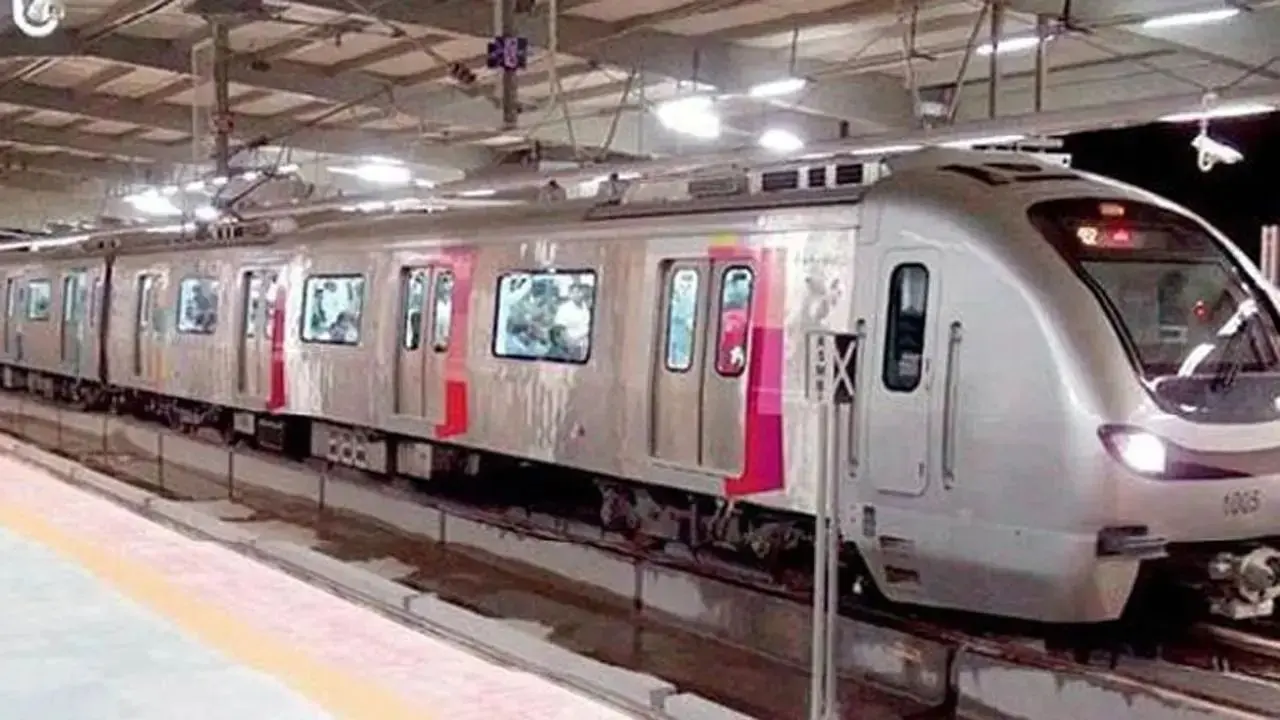
06 March,2026 08:27 PM IST | New Delhi | PTIPrime Minister Narendra Modi will launch and lay the foundation stones of multiple development projects, including inaugurating two new corridors of the Delhi Metro, in the national capital on Sunday. The total cost of the projects is around Rs 33,500 crore. The prime minister will also address a gathering on the occasion. Prior to the programme, Modi will visit the General Pool Residential Accommodation (GPRA) Type-5 quarters in Sarojini Nagar and hand over the keys to female allottees, according to an official statement. The two new Delhi Metro corridors, which will be inaugurated by the prime minister, are the Majlis Park-Maujpur Babarpur (Pink Line) corridor of around 12.3 km and the Deepali Chowk-Majlis Park (Magenta Line) corridor of around 9.9 km. These corridors will benefit several areas of Delhi, including Burari, Jagatpur-Wazirabad, Khajuri Khas, Bhajanpura, Yamuna Vihar, Madhuban Chowk, Haiderpur Badli Mor, Bhalaswa and Majlis Park. Modi will also lay the foundation stone for three new corridors under Phase V-A of the Delhi Metro, covering a route length of around 16.1 km. The three new corridors are R K Ashram Marg to Indraprastha, Aerocity to Indira Gandhi Airport Terminal-1 and Tughlakabad to Kalindi Kunj. These corridors will provide direct connectivity to several important locations in the capital and improve connectivity for those travelling between Noida, south Delhi and the airport. The prime minister will also inaugurate and lay the foundation stone of projects worth Rs 15,200 crore under the GPRA redevelopment plan. Spread across key locations, such as Sarojini Nagar, Netaji Nagar, Kasturba Nagar and Sriniwaspuri, these projects are part of the government's ambitious programme to modernise GPRA colonies and create world-class infrastructure for government employees and administrative offices, the statement said. The projects have been redeveloped through an innovative self-sustainable financial model that ensures that the redevelopment is carried out without burdening the public exchequer. Under this model, the government is developing and monetising a limited portion of the project area for commercial and residential space to finance the entire project. The revenue generated from it is being used to fund the redevelopment of modern government housing, support infrastructure and public facilities. The redevelopment plan will provide more than 9,350 modern flats for government employees, along with the creation of approximately 48 lakh square feet of office space, which will significantly enhance administrative efficiency, while also generating monetisation potential, the statement said. This story has been sourced from a third party syndicated feed, agencies. Mid-day accepts no responsibility or liability for its dependability, trustworthiness, reliability and data of the text. Mid-day management/mid-day.com reserves the sole right to alter, delete or remove (without notice) the content in its absolute discretion for any reason whatsoever.
06 March,2026 08:12 PM IST | New Delhi [India] | PTIThe Enforcement Directorate (ED) carried out coordinated raids on multiple locations associated with industrialist Anil Ambani on Friday, officials said, reported the IANS. The ED said its specialised teams conducted searches at 10-12 sites across Mumbai, focusing on both registered offices and residential premises linked to companies in the Reliance group, particularly the power utility sector. Approximately 15 specialised ED units participated in the early-morning operations. However, the Reliance Power stated that none of its offices or premises were subject to raids. In a stock exchange filing, the company said: "To the best of our knowledge, no ED action has been carried out at any offices or premises of Reliance Power Limited." Investigation The ED is probing multiple companies linked to Anil Ambani over allegations of bank fraud, money laundering, and financial irregularities under the Foreign Exchange Management Act (FEMA). Anil Ambani has been questioned twice under the Prevention of Money Laundering Act (PMLA) in connection with the ongoing investigation. Anil Ambani had earlier appeared at the agency’s headquarters in Delhi last week on Thursday and recorded his statement before investigators at around 11 am. The questioning is part of an ongoing probe into alleged financial irregularities linked to group companies. Earlier the agency had attached Anil Ambani’s residential property ‘Abode’ in Mumbai’s Pali Hill area, valued at Rs 3,716.83 crore. The attachment was carried out under the provisions of the Prevention of Money Laundering Act (PMLA). Earlier, a portion of the same property worth Rs 473.17 crore had already been attached. CBI action The Central Bureau of Investigation (CBI) had also conducted searches at Ambani’s residences and RCom offices last month. This followed the registration of a second case based on a complaint by the Bank of Baroda dated February 24, concerning conspiracy, cheating under the IPC, and criminal misconduct under the Prevention of Corruption Act. The case names Anil Ambani, promoter and former chairman of RCom, and others as accused, the agency stated. The ED has formed a special investigation team (SIT) to probe the cases against Ambani's group companies on the directions of the Supreme Court, reported the PTI. According to information furnished by the ED to the apex court, it has filed three money laundering cases against the Anil Dhirubhai Ambani Group (ADAG) to investigate charges of bank loan fraud and other financial irregularities, the news agency reported. (with IANS and PTI inputs)
06 March,2026 05:54 PM IST | New Delhi | mid-day online correspondentAt least 11 persons, most of them workers, were injured in an explosion at a chemical factory in Ratnagiri district of Maharashtra on Friday, police said, reported the PTI. According to the police, the explosion took place at the Dr Khan Industrial Consultants (DKIC) unit located at Lote Parshuram MIDC (chemical zone), around 250 km from Mumbai. DKIC is a leading manufacturer of various specialty silica based chemicals and chemical intermediates and caters to a wide array of industries ranging from steel, textile, paints and electronics, as per the PTI. The injured have been admitted to local hospital, police said, adding they are probing the cause of the accident. Further details are awaited. 19 killed in Nagpur factory blast The incident comes days after a massive explosion at Nagpur factory that killed 19 people. Maharashtra minister Chandrashekhar Bawankule had earlier this week said that prima facie there was "negligence" on the part of the private company operating the facility as it failed to follow safety measures. Bawankule insisted that besides the firm, SBL Energy Ltd, accountability for the tragedy will also be fixed on officials of the Petroleum and Explosives Safety Organisation (PESO), Directorate of Industrial Safety and Health (DISH) and the labour commissionerate. 23 others were injured Speaking separately, Chief Minister Devendra Fadnavis pitched for 100 per cent automation of certain protocols and processes in manufacturing of explosives, and said the SBL Energy's managing director was among nearly a dozen people who have been arrested in connection with the blast. At least 19 workers died and 23 people were injured in the blast at the detonator assembly unit of SBL Energy, a mining and industrial explosives manufacturer, at Raulgaon in Katol tehsil of Nagpur district on Sunday morning. Eighteen of the workers died on Sunday and one succumbed on Monday. The PESO, DISH and the labour commissionerate have failed to ensure safety practices in explosive manufacturing units in the region, and their accountability must be fixed, Bawankule told reporters in Nagpur. Of the injured persons, 13 were in critical condition, the Nagpur district guardian minister stated. Compensation announced He informed that the company will pay a compensation of Rs 75 lakh to the families of each of the deceased and Rs 25 lakh to every injured person. Besides, the state government will provide Rs 5 lakh each to the families of the deceased, while the Centre will give Rs 2 lakh. Thus, the families of the deceased will get a total compensation of Rs 82 lakh each, Bawankule said, adding a rehabilitation package will be drawn up for those who suffered physical disabilities in the tragedy. He held a meeting with state minister Ashish Jaiswal, Ramtek MP Shyamkumar Barwe, Katol MLA Sharad Singh Thakur, the divisional commissioner, district collector, superintendent of police, and officials of PESO and DISH in connection with the blast. Police have registered a case against 21 directors and shareholders of SBL Energy under Section 105 (culpable homicide not amounting to murder) of the Bharatiya Nyaya Sanhita, officials said. (with PTI inputs)
06 March,2026 05:27 PM IST | Mumbai | mid-day online correspondentNCP (SP) MLA Rohit Pawar on Friday questioned whether the Maharashtra Crime Investigation Department (CID) had actually interrogated V K Singh, the owner of VSR Ventures, or extended him “royal hospitality” during questioning in connection with the January 28 plane crash in Baramati, reported the PTI. Singh was summoned to the CID office in Pune on Thursday and was reportedly questioned for more than seven hours. Officials said his statement was recorded and he was allowed to leave the office around 7.30 pm. The probe relates to the crash of a Learjet 45 aircraft operated by VSR Ventures that killed Maharashtra Deputy Chief Minister Ajit Pawar and four others near Baramati. In a post on social media, Rohit Pawar alleged that although Singh arrived at the CID office at around 11 am and was said to have been questioned for eight hours, most of that time was reportedly spent extending hospitality to him. Rohit Pawar further claimed that Singh was later escorted from the CID office in a police vehicle with black-tinted windows “like a guest”. “No matter how many black curtains are drawn to hide the truth, the sun of truth in this case will eventually rise,” he wrote. Demand for FIR in crash case The NCP (SP) leader also criticised the authorities for not registering a First Information Report (FIR) in connection with the crash. “Despite it being our rightful demand, an FIR has still not been registered. On the other hand, the owner of the aircraft that snatched Ajit Dada away from us is being given VIP treatment. Under whose protection?” he asked, according to the PTI. Pawar also alleged that journalists who had gone to the CID office to cover Singh’s questioning were treated badly by the police. He questioned whether ruling party legislators who had worked closely with Ajit Pawar and described themselves as his “trusted” colleagues would now raise their voices over the issue. Investigation Following the crash, an accidental death report was registered at the Baramati Taluka Police Station, and the case was later transferred to the Maharashtra Crime Investigation Department in Pune. The state agency earlier said its investigation aims to determine whether sabotage or criminal negligence played a role in the Baramati tragedy, the news agenyc reported. Days before Singh’s questioning, the CID had sent a questionnaire to VSR Ventures seeking details related to the aircraft and the incident. AAIB preliminary findings Rohit Pawar had earlier claimed that findings from the preliminary investigation by the Aircraft Accident Investigation Bureau (AAIB) supported concerns he had raised earlier. In its 22-page preliminary report, the AAIB noted that visibility at the time of the crash was below the required level. The report also flagged fading runway markings and loose gravel on the runway surface, which could have contributed to the accident. Investigations into the crash are ongoing. (with PTI inputs)
06 March,2026 05:05 PM IST | Pune | mid-day online correspondentAndhra Pradesh Chief Minister N. Chandrababu Naidu said on Friday that the state government will ban use of social media for children under the age of 13 years and that a decision on whether to bar children in 13-16 age group from using social media will be taken after arriving at a consensus. Speaking on the Appropriation Bill in the State Legislative Assembly, he said steps would be taken within 90 days to ban social media for children under the age of 13. "A discussion is on what to do with regard to the children in 13-16 age group. A decision will be taken after arriving at a consensus," he said. Chief Minister Naidu's announcement came on a day when Karnataka Chief Minister Siddaramaiah declared that use of social media will be banned for those under the age of 16. Last month, Andhra Pradesh Home Minister Vangalapudi Anitha had told the Assembly that the government is considering a legislation to bar school students from using social media. She stated that the sub-committee has met twice so far and discussed various issues at length. The sub-committee reviewed the measures being implemented in states like Tamil Nadu and Karnataka. In January, Minister for Information Technology and Electronics Nara Lokesh had stated that the government will study legal frameworks for ‘age-appropriate access’ to social media. Lokesh said the government would ensure social media becomes a safer space and reduce its damaging impact, especially for women and children. He stated that children are slipping into relentless usage, affecting their attention spans and education. The minister had also revealed that the group of ministers ordered a study of legal frameworks for age-appropriate access. It also invited major platforms like Meta, X, Google and Sharechat to the next meeting, to examine global best practices. “We will ensure social media becomes a safer space and reduce its damaging impact - especially for women and children,” Lokesh had said. The group of ministers is examining the possibility of restricting or banning access to certain social media platforms for children in 13-16 age group. On February 10, the Telugu Desam Party (TDP) had urged the Centre to consider age-based regulation of social media. TDP Parliamentary Party leader Lavu Sri Krishna Devarayalu met Minister of Information and Broadcasting Ashwini Vaishnaw and submitted a memorandum, requesting for policy deliberation on age-based regulation of social media for children. He requested that the Ministry consider constituting a dedicated committee or expert group to study age-based regulation of social media and recommend a comprehensive national policy. This story has been sourced from a third party syndicated feed, agencies. Mid-day accepts no responsibility or liability for its dependability, trustworthiness, reliability and data of the text. Mid-day management/mid-day.com reserves the sole right to alter, delete or remove (without notice) the content in its absolute discretion for any reason whatsoever.
06 March,2026 04:31 PM IST | Amaravati | IANSOnly 18 per cent of young women in India aged 20-29 are in paid employment compared to nearly 79 per cent of young men, despite achieving near gender parity in higher education. A new white paper by the Centre for Finance & Economics Research (CFER) at Great Lakes Institute of Management reveals that fewer than half of young adults are employed, with women's low participation acting as the primary driver of interstate variation. The study, titled 'Young Adults at Work in India: Intense Work for Some, Insufficient Jobs for Many', draws on data from India's nationwide Time Use Survey (TUS) 2024. The report reveals that in several large states, fewer than one in ten young women are employed. Female employment participation is particularly low in Bihar at 6.9 per cent, Uttar Pradesh at 9.8 per cent, Uttarakhand at 11.2 per cent, and Jammu & Kashmir at 12.2 per cent. While higher participation is observed in Telangana at 31.3 per cent and Chhattisgarh at 26.5 per cent, even in these states, less than one in three young women is employed. "India cannot speak of a demographic dividend if half its young women are unable to participate in paid work. Industry has a responsibility to look beyond hiring and examine the structural constraints: housing, mobility, safety, that determine whether women can even enter the workforce," says Gangapriya Chakraverti, India Site Head & Managing Director, Ford Motor Company. The Great Lakes White Paper finds that the formal-informal divide affects women far more severely than men. Young men's daily work hours change by only 28 minutes between formal and informal enterprises. For young women, work hours collapse from 6 hours 50 minutes in formal enterprises to 4 hours 53 minutes in informal ones. However, in Delhi, Tamil Nadu, and Telangana, the gap between men's and women's formal-enterprise work hours falls below 30 minutes. Professor Debasish Sanyal, Director, Great Lakes Institute of Management, states, "When young women get access to formal jobs in states with more job opportunities, their work intensity matches men's almost exactly. The policy implication is clear: the binding constraint is not supply - it is the ecosystem of housing, transport, safety, and institutional support that determines whether women can participate." The study also documents an invisible burden where young women in paid work face a total work time of 9 hours 31 minutes once unpaid care is included, exceeding men's total by over 90 minutes. Vidya Mahambare, Union Bank Chair Professor of Economics and Chairperson, CFER, notes, "India has nearly 200 million young adults aged 20-29 who will remain in the working-age group for at least three decades. Our findings show that barely half are in paid work, and among those who are, there is a disturbing dual reality - excessive hours for some, and insufficient work for many, with young women who are employed, facing dual burden of work," said one of the authors of the papers. To address these gaps, the white paper recommends four interconnected interventions: First, removing binding constraints to women's employment by reducing housing, transport, and safety barriers, and expanding institutional housing such as working women's hostels. Second, accelerating formalisation through simplified regulatory compliance, portable social protection, and rural formal-enterprise infrastructure. Third, addressing overwork and spatial mismatch by co-locating affordable housing with employment centres and investing in public transport with safe last-mile connectivity. Fourth, tackling underemployment through expanded market linkages, structured pathways from informal to formal work via skill certification, and the integration of time-use metrics into national employment monitoring. This story has been sourced from a third party syndicated feed, agencies. Mid-day accepts no responsibility or liability for its dependability, trustworthiness, reliability and data of the text. Mid-day management/mid-day.com reserves the sole right to alter, delete or remove (without notice) the content in its absolute discretion for any reason whatsoever.
06 March,2026 03:59 PM IST | New Delhi [India] | ANIAdani Total Gas Ltd (ATGL) has not raised prices of CNG and piped cooking gas supplied to households, even as it has imposed supply curbs on some large industrial consumers amid the escalating West Asia crisis affecting gas supplies, officials said on Friday. A company official said about 70 per cent of ATGL's gas volumes are sourced domestically and supplied to CNG users and domestic kitchens (called piped natural gas (PNG)-domestic) customers. Prices for these segments of vehicle owners and residential households remain unchanged. ATGL, the city gas joint venture of the Adani Group and French energy major TotalEnergies, sources the remaining around 30 per cent of gas volumes through imported LNG. This is supplied to commercial and industrial users. As the escalating war halted movement of ships through Strait of Hormuz - the narrow sealane through which India gets a bulk of its crude oil and LNG supplies - the imported fuel segment has seen disruption. Due to supply chain disruptions linked to the West Asia crisis, commercial and industrial customers have been asked to curtail consumption to 40 per cent of their contracted volumes, the official said. Customers will continue to be billed at their contracted rates for consumption up to the 40 per cent limit, allowing them flexibility to shift to alternate fuel sources if needed. The contracted price on an average is around Rs 40 per standard cubic meters. Spot market rates will apply only to consumption beyond this threshold, the official added. The spot price reflects the alternate gas sourcing that the company had to do to fill the imported LNG gap. Spot rates are more than double the peace-time LNG prices - USD 24-25 per million British thermal unit as compared to USD 10 per mmBtu previously. For commercial and industrial users that use gas beyond the 40 per cent limit would be charged Rs 119 per scm (Standard Cubic Meter) on the incremental volumes. The company added that it is making all possible efforts to ensure uninterrupted gas supplies while managing supply challenges and protecting consumer interests across segments. This story has been sourced from a third party syndicated feed, agencies. Mid-day accepts no responsibility or liability for its dependability, trustworthiness, reliability and data of the text. Mid-day management/mid-day.com reserves the sole right to alter, delete or remove (without notice) the content in its absolute discretion for any reason whatsoever.
06 March,2026 03:59 PM IST | New Delhi [India] | PTIKarnataka Chief Minister Siddaramaiah on Friday announced that social media will be banned for children under the age of 16, while presenting the 2026-27 State Budget in the Vidhana Soudha. During his Budget speech, Siddaramaiah said the move aims to prevent the adverse effects of increasing mobile usage among children. He also announced that an AI and Technology Park will be set up under the Indian Institute of Science, which will establish a Robotics and AI campus named the "Bangalore Robotics and AI Innovation Zone" in collaboration with Indian Space Research Organisation and Karnataka State Electronics Development Corporation Limited. The Chief Minister further said that the North-South Corridor project from Hebbal Junction to HSR Layout-Silk Board Junction and the East-West Corridor project from K. R. Puram to Mysore Road, covering a total length of 40 km, have been approved at an estimated cost of Rs 40,000 crore under the BOOT model. In the first phase, tenders have been invited for the 17-km North-South Corridor project for Rs 17,780 crore. Siddaramaiah also announced that a tunnel road and an elevated road from Hebbal Junction to Mekhri Circle will be constructed by the Bangalore Development Authority at Rs 2,250 crore. Karnataka State Budget has been pegged at Rs 4,48,004 crore, with a focus on technology-driven growth, infrastructure development, and environmental sustainability. Presenting the Budget, Siddaramaiah said that Karnataka plays a distinctive role in national and international trade, and rapid developments in Artificial Intelligence (AI) are transforming global production systems. He emphasised that innovations in science and technology are increasingly shaping the trajectory of the state. In this context, he said the Budget has been presented with responsibility and foresight to move forward with the resolve to "turn fire into light." The Chief Minister also highlighted the impact of GST rate rationalisation carried out in September 2025. He said the changes have reduced the state's GST collections. Before the rationalisation, Karnataka's average monthly GST revenue growth in 2025-26 was around 10 per cent (net of refunds). However, after the implementation of the revised rates, the average monthly growth has moderated sharply to around 4 per cent. The restructuring is expected to reduce overall GST collections by approximately Rs 10,000 crore in the current financial year and Rs 15,000 crore in the next year. Among the major announcements, Siddaramaiah said that with the objective of establishing a state-of-the-art AI Centre of Excellence in Bengaluru, two centres will be set up in collaboration with the Institute of Bioinformatics and Applied Biotechnology, the Centre for Cellular and Molecular Platforms and NASSCOM at a total cost of Rs 16 crore. He also announced that a Leopard Rehabilitation Centre will be established in Bannerghatta Biological Park to rehabilitate leopards captured from residential areas on the outskirts of Bengaluru, at an estimated cost of Rs 5 crore. Under the Karnataka Water Security and Resilience Programme (KWSRP), a World Bank-funded initiative, disaster management projects will be undertaken over five years for Rs 5,000 crore to address flooding in Bengaluru. Siddaramaiah further announced that, in accordance with revised transfer rules of the Excise Department, transfers of Group-C cadre officers including Excise Inspectors, Excise Sub-Inspectors, and Excise Head Constables/Constables, have been carried out through digital counselling to enhance transparency. The government will also extend digital counselling for transfers of Excise Deputy Superintendents and Excise Superintendents. This story has been sourced from a third party syndicated feed, agencies. Mid-day accepts no responsibility or liability for its dependability, trustworthiness, reliability and data of the text. Mid-day management/mid-day.com reserves the sole right to alter, delete or remove (without notice) the content in its absolute discretion for any reason whatsoever.
06 March,2026 03:58 PM IST | Bengaluru (Karnataka) | ANIADVERTISEMENT