Bedtime stories that are lifetime reserves
Updated On: 23 February, 2020 07:27 AM IST | Mumbai | Sumedha Raikar Mhatre
To celebrate the upcoming Marathi Language Day, the state's Culture Ministry repurposes 19th century Marathi children's fiction to spur interest in a multicultural porous world





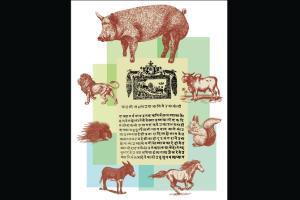
An amusing world of animals comes alive in Balbodh Ratnamala, the compilation of 19th century childrenu00c3u00a2u00c2u0080u00c2u0099s literature in Marathi, a series memorialising the upcoming Marathi Bhasha Din on February 27. Illustration/ Uday Mohite
 A pig is a dirt-loving animal; you shouldn't be like one. Its teeth, snout and a strong sense of smell help in digging the soil for food, which is why in Italy, pigs (legs tied) are unleashed in the forest to scout for delicious radish. In Spain's Menorca island, pigs are luggage carriers; in parts of Europe, some wonder pigs participate in amusement sports; one of them reads alphabets.
The good-to-know pig facts emerge from amusing animal tales (elephants in Delhi, dogs from New Foundland, sheep in Kashmir) by the Ahmednagar-based American missionary Cynthia Farrar who wrote, in simple conversational language, for Marathi school-going children in the first half of the 19th century. Her work, Bal Bodh Goshti (1838), which included moral science lessons and everyday wisdom, opened new doors for children who were unexposed to a wider world. Farrar's select stories are now part of an annotated 19th century children's literature series. The republished storybooks and textbooks clubbed under Balbodh Ratnamala, cherrypicked by the Maharashtra Rajya Sahitya Sankruti Mandal (state Culture Ministry's body) have two purposes. First, to see how Marathi language (and its script) has transformed over 200 years; second, to celebrate the contribution of Indians (not necessarily Maharashtrians) and foreigners alike in the making of modern Marathi phraseology and grammar.
Trending Stories
Latest Photos
Latest Videos
Latest Web Stories
ADVERTISEMENT
Mid-Day Fast
ADVERTISEMENT