Concrete evidence
Updated On: 03 June, 2026 09:13 AM IST | Mumbai | Dr Akshay Deoras
Experts explain why, with 1745 km of concrete roads, more than 2000 hectares of lost tree cover, and a skyline packed with new towers, Mumbai is trapping more heat than ever — making summers feel far hotter than the thermometer suggests





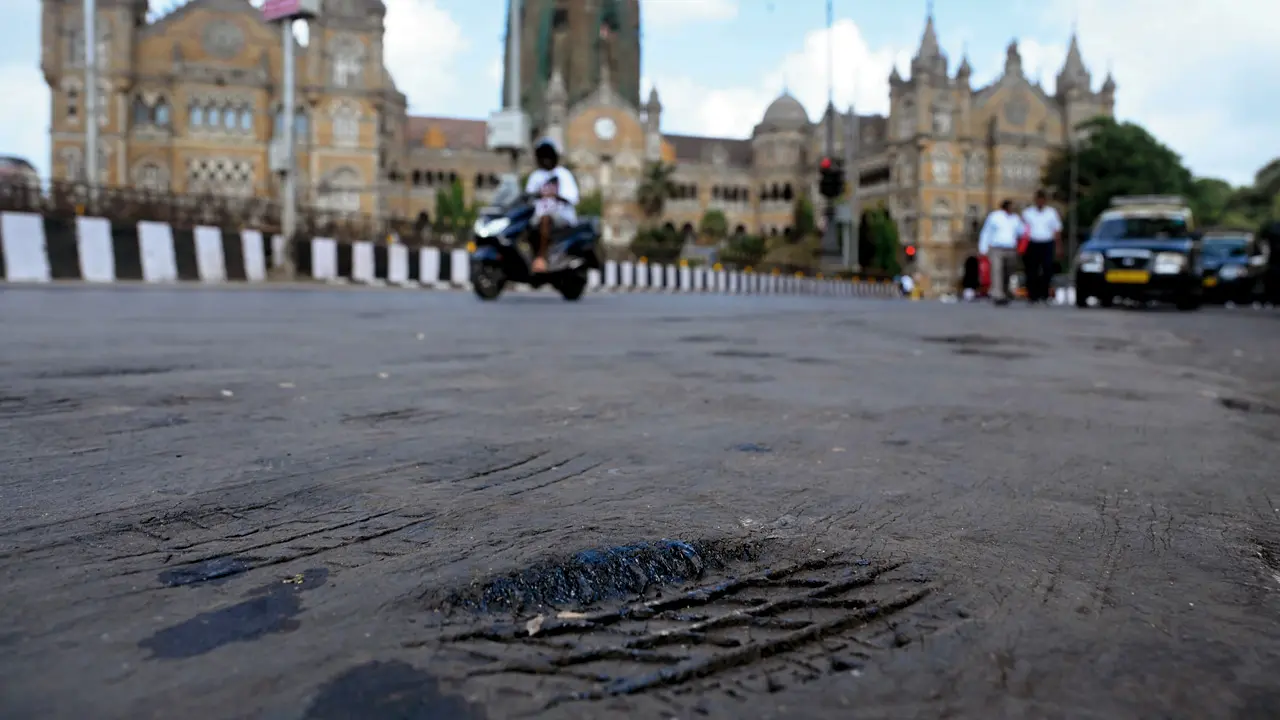
Extreme heat softens the road surface outside the BMC headquarters in Fort, leaving visible tyre impressions on the tar. Pic/Ashish Raje
 When it feels unusually hot, the natural instinct is to check the recorded temperature. However, it is often observed that it feels hotter than what the thermometer shows. What truly matters is not just the air temperature, but also humidity, wind, direct sunlight, and the heat stored within the surrounding urban environment.
Air temperature is typically measured using a dry-bulb thermometer, which is kept in shaded and well-ventilated conditions so that it records the temperature of the surrounding air without being affected by direct sunlight or moisture. Human beings cool themselves mainly through the evaporation of sweat from the skin, which accounts for most of the body’s cooling process. When humidity levels are high, sweat evaporates much more slowly. As a result, the body struggles to release heat efficiently, making conditions feel far hotter and more uncomfortable than the recorded air temperature.
Trending Stories
Latest Photos
Latest Videos
Latest Web Stories
ADVERTISEMENT

Ganeshotsav 2026

ADVERTISEMENT