Devdutt Pattanaik: The rise of Durga
Updated On: 17 June, 2018 06:12 AM IST | Mumbai | Devdutt Pattanaik
Amongst the earliest images we know today are one from Ajanta and Ellora caves in Maharashtra, and from Mammalapuram dated before 7th century





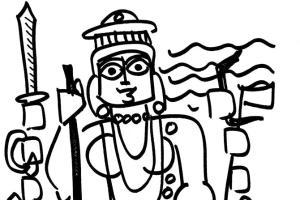
Illustration/ Devdutt Pattanaik
 The image of the buffalo-slaying lion-riding Durga starts appearing in Hindu mythology only in the post-Gupta period, around 1,500 years ago. Amongst the earliest images we know today are one from Ajanta and Ellora caves in Maharashtra, and from Mammalapuram dated before 7th century. Earlier icons have been traced to the Guntur district of Andhra Pradesh. After this, the goddess becomes a popular icon in Hindu temples, so much so, that it is hard to believe that there was once a Hinduism without the story of Mahishasuramardini, the buffalo-slaying goddess.
The Goddess has been worshipped from Vedic times. In the Rig Veda, we do have the Devi Suktam that speaks of the 'power' behind all deities. However, there is no reference to Durga. The word durga in Veda refers to fortress only, or a place that is difficult to approach. The most popular goddess in Vedic times seems to be Shri, the goddess of fortune, venerated by Buddhists and Jains too. She is described as daughter of asuras and beloved of devas, who is fickle, as fortune is supposed to be. Associated with lotus flowers and elephants and pots, there is nothing violent about her.


Trending Stories
Latest Photos
Latest Videos
Latest Web Stories
ADVERTISEMENT
Mid-Day Fast
ADVERTISEMENT