From 'Shri' Ram to 'Siya' Ram
Updated On: 06 September, 2020 07:00 AM IST | Mumbai | Devdutt Pattanaik
Even today, people of Mithila avoid marrying off their daughters in the month that Sita got married. Even today, people of Mithila do not want to marry their daughters into families living in Ayodhya, in fact, anywhere west of Mithila





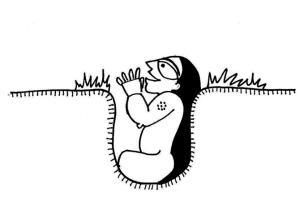
Illustration/Devdutt Pattanaik
 While laying the foundation stone of the Ram Janmabhoomi Temple on August 5, 2020, it was clear that no other Hindutva leader, other than Prime Minister Narendra Modi, was in the photograph that would be part of history. No woman was part of the ceremony, either, which is unusual as orthodox Hindu temple rituals demand the presence of the wife. This acquires significance, considering Hindutva consistently shows Ram in posters, without Sita, and uses 'Jai Shri Ram' as its war cry rather than the traditional call to devotion, 'Jai Siya Ram'. Siya is how Sita is addressed endearingly in North India.
Apologists argue that 'Shri' refers to 'Goddess', but the erasure of womanhood in Hindutva discourse has been noticed by many observers. It is a movement dominated by mahants, male Hindu ascetics, mostly from North India, in keeping with the Hindutva lore of Hindu sanyasis, established by Adi Shankaracharya, to protect Hinduism. These mahants are often referred to as seers (rishis) and saints (sants) in Hindutva literature.
Trending Stories
Latest Photos
Latest Videos
Latest Web Stories
ADVERTISEMENT
Mid-Day Fast
ADVERTISEMENT