Leave the door open
Updated On: 09 August, 2020 07:00 AM IST | Mumbai | Sumedha Raikar Mhatre
Mid Day Short Description





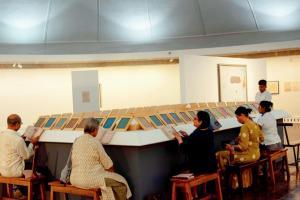
An example of an exhibition that Purohit says was thought through is Prabhakar Barwe's retrospective, Inside the Empty Box, curated by Jesal Thacker at NGMA Mumbai in February 2019. Pic courtesy/Bodhana Arts and Research Foundation
 Visual artist Nikhil Purohit, 35 is unhappy, and the lack of mobility during COVID times is not the cause. The unease is about the conclusions he has arrived at in the research (initiated last June) on visitors' accessibility in contemporary art exhibitions and programming in 74-odd visual arts organisations in Greater Mumbai metropolitan region. His findings clearly state that the visual arts world operates in a closed circuit; its programming is mostly operational in the English language, thereby limiting entry and access to those who communicate in other local Indian tongues. With a few exceptions to the rule—Dr Bhau Daji Lad Mumbai City Museum's free-to-public programming in Marathi—the entire art activity in Mumbai rests on exclusion, not inclusion.
Even before Purohit embarked on the study—which focuses on 16 defining institutions and 22 key voices of Mumbai's art world—the choice of a single instructional language for art appreciation had always bothered him. In his student days at the Sir JJ School of Art, or even during his primary schooling in Pune after his parents migrated from Hubli in the late nineties, the Kannadiga, who struggled with Marathi, has empathised with language issues. "When people are cut off from a discourse, they lose interest. I have sensed that frustration amongst fellow students from mofussil Maharashtra who couldn't spell Nietzsche or get Kant." He says a similar frustration keeps people out of art exhibitions.
Trending Stories
Latest Photos
Latest Videos
Latest Web Stories
ADVERTISEMENT

Ganeshotsav 2026

ADVERTISEMENT