Overworking at home
Updated On: 11 October, 2020 04:31 AM IST | Mumbai | Sumedha Raikar Mhatre
Research on the gender implications of COVID-19 shows a spike in womens work load during home-bound festivals, the upcoming Navratri being no exception





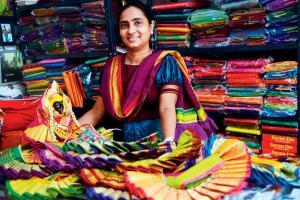
Readymade nauwari saree designer Vaishali Naik says the demand for Devi's clothes are overflowing. Her pre-Navratri gifting packages include the gift of the Devi's attires and jewellery. Pics/Satej Shinde
 Time poverty is a provoking concept, which is deconstructed in the latest UN Women report on the gendered effects of the COVID-19 pandemic. The UN body says plainly: "more bodies at home means more people to feed and care for, often without additional help, increasing tensions and stretching household resources." The concept wakes us to the time-poor women around us who lack me-time due to unpaid intangible house work—be it supervision of online school-goers, cooking for working-from-home spouses or prepping for religious festivals (upcoming Navratri), now to be celebrated indoors.
In fact, time poverty gels beautifully with the sentiment captured in the Marathi adage "kaam nahi kadicha, pan visaava nahi ghadicha," which translates to "no (quantifiable) work done, yet no time for rest." Globally speaking, a homemaker's chores take up extended hours, and yet, assume no definite shape or form. In the local context, religious festivals (currently to be contained in the private family realm due to fear of spread of COVID-19) add to women's work load.
Trending Stories
Latest Photos
Latest Videos
Latest Web Stories
ADVERTISEMENT
Mid-Day Fast
ADVERTISEMENT