Shukriya, meherbani, thenkoo
Updated On: 25 October, 2020 09:00 AM IST | Mumbai | Paromita Vohra
shukriya sayers may be found in sharara, shervani, leather jackets, flannel shirts and of course, sparkly gowns. Boss, were Indian. Sab chalta hai na





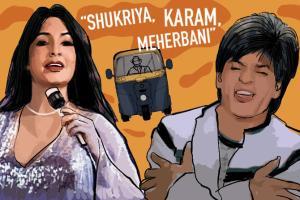
Illustration/Uday Mohite
 My friend A told me something startling, yet unsurprising, yesterday. An auto rickshaw driver advised her not to say "shukriya" when she thanked him: "These are not good times to be using such language", meaning Urdu, instead of Hindi.
This story made me remember my father who used shukriya less, and meherbani more, to say thank you. Like many Hindu North Indian men of his generation, Sunil Dutt and Manmohan Singh famously among them, he was educated in Urdu, both pre- and post- Partition, and never learned what we call Hindi. Then, I remembered Parveen Babi from Shaan (1980) in a shimmering white silver lamé dress saying "shukriya, karam, meherbani" (thanks, gratitude, much obliged) to an excitable audience—including Bindoo in a parrot green glimmering gown, and three chorus girls in sequined black swimsuits playing the shakers—before she started to shimmy to "pyaar karne vale pyaar karte hain, shaan se" (lovers love in style) in Asha Bhosle's voice, one person inside another, kind of like Hindi and Urdu. This made me remember one of my favourite Shah Rukh Khan songs, "mere mehboob mere sanam, shukriya meherbani karam" (love, my beloved, thanks, gratitude, much obliged) from Duplicate (1998), where there are two Shah Rukhs, twins, kind of like Hindi and Urdu. Shukriya sayers may be found in sharara, shervani, leather jackets, flannel shirts and of course, sparkly gowns. Boss, we're Indian. Sab chalta hai na.
Trending Stories
Latest Photos
Latest Videos
Latest Web Stories
ADVERTISEMENT
Mid-Day Fast
ADVERTISEMENT