Sita is not Helen
Updated On: 01 November, 2020 04:15 AM IST | Mumbai | Devdutt Pattanaik
so, they saw the devas of Hindu mythology as the Olympians of Greek mythology. They argued that the asuras were the same as the Giants or the Titans, against whom the Olympians fought





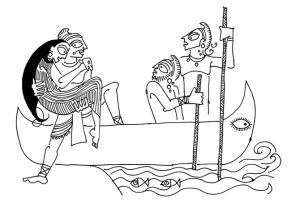
Illustration/Devdutt Pattanaik
 Many people are of the opinion that Greek and Hindu mythologies have much in common. This idea was first proposed by Europeans who believed that all pre-Christian cultures were pagan and so, had a common theme. So, they saw the devas of Hindu mythology as the Olympians of Greek mythology. They argued that the asuras were the same as the Giants or the Titans, against whom the Olympians fought.
Linguists who studied Indo-European themes, like the separation of the earth and sky, argued that Vedas reveal the common root of Greek and Hindu cultures. This idea was popular in colonial times. In Hesiod's Theogony, the Earth goddess, Gaia, is separated from the sky, Uranus, by Cronus. Then, Cronus castrated his father, Uranus. A similar idea exists in the Vedas, where the god of the sky and Prithvi, the god of the earth, are separated by Indra. The Indophile Alain Danielou linked the Greek god, Apollo, who is the god of organisation and order, with Vishnu. And he linked the Greek god of madness and chaos, Dionysus, with Shiva. Chaos/Order is not same as Withdrawal/Engagement, hence equating Dionysus/Apollo with Shiva/Vishnu, simply because Shiva likes narcotics like Dionysus, and his ganas are wild like Greek satyrs, seems rather presumptuous.
Trending Stories
Latest Photos
Latest Videos
Latest Web Stories
ADVERTISEMENT

Ganeshotsav 2026

ADVERTISEMENT