Swastika in the Stars
Updated On: 22 September, 2019 05:51 AM IST | | Devdutt Pattanaik
The outer rim of the ladle, directly, has two stars. When we stretch an imaginary line across these two stars, it reaches the Pole star





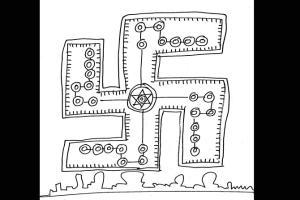
Illustration/Devdutt Pattanaik
%20(1).jpg "Devdutt Pattanaik") If you look to the sky, towards the north and want to identify the Pole Star, you have to first seek the Big Dipper constellation. Dipper means a ladle, the kind used to put ghee in the yagna fire. This ladle-shaped constellation has seven stars. In Hindu scriptures, it is known as Sapta Rishi Mandal, or the constellation of the seven seers. The outer rim of the ladle, directly, has two stars. When we stretch an imaginary line across these two stars, it reaches the Pole star.
If you look to the sky, towards the north and want to identify the Pole Star, you have to first seek the Big Dipper constellation. Dipper means a ladle, the kind used to put ghee in the yagna fire. This ladle-shaped constellation has seven stars. In Hindu scriptures, it is known as Sapta Rishi Mandal, or the constellation of the seven seers. The outer rim of the ladle, directly, has two stars. When we stretch an imaginary line across these two stars, it reaches the Pole star.
The interesting thing to note about the Big Dipper is that it is seen in the sky all through the day and all through the year. All through the day, it rotates around the Pole Star. And all through the year, we notice that the starting position changes, so it is up in winter and down in summer, to the left in spring and to the right in autumn. The Big Dipper, thus mapped around the Pole Star through the year, makes the Swastika sign.


Trending Stories
Latest Photos
Latest Videos
Latest Web Stories
ADVERTISEMENT
Mid-Day Fast
ADVERTISEMENT