The aftermath of a riot
Updated On: 22 February, 2020 07:20 AM IST | Mumbai | Lindsay Pereira
I was first exposed to the rot that lies deep within our country a couple of decades ago, and have never forgotten it





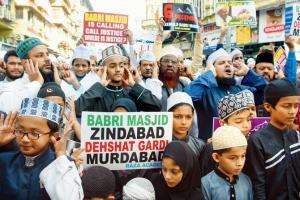
People take part in a protest to mark the 26th anniversary of the demolition of the Babri Masjid, in Mumbai on Dec 6, 2018. Pic/AFP
 I was a teenager when the Babri Masjid came down, bringing the lie of a peaceful nation down with it. Social media didn't exist at the time, and Internet connections were spotty at best. There were no 24-hour news channels either, so much of what happened during those days spread across the country by word of mouth. It's hard to say whether this was good or bad, given that there were horrific consequences nonetheless, but I shudder to think about what could have been if we all had access to WhatsApp in 1992. The only thing I am sure about, when I try and make sense of those days, is the fact that no young person should be exposed to that kind of unbridled, illogical hate.
A few things come to mind almost immediately whenever that dark period in our country's history is mentioned. There were bodies on the street, for one, which is never a sight one can get accustomed to, no matter how often one steels oneself. As a journalist, I would eventually be confronted with more bodies than the average person but, as a teenager, the image of victims covered in white sheets casually along the sides of busy streets is one that has never really gone away. This happened in Malvani, Malad, a place that tore families apart and left scars that may never fade.
Trending Stories
Latest Photos
Latest Videos
Latest Web Stories
ADVERTISEMENT
Mid-Day Fast
ADVERTISEMENT