The aftertaste of leftovers
Updated On: 18 June, 2021 07:07 PM IST | Mumbai | Paromita Vohra
The before word is andaazan, which suggests you put salt, spice, water into a dish, not through a precise measurement, but as a sense impression of what will work for the dish being cooked right then and perhaps those who will eat it





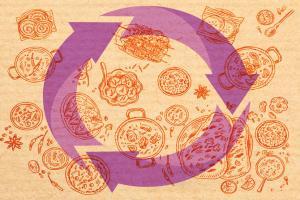
Illustration/Ravi Jadhav
 There are some Hindustani words associated with food that I think of as the before and after of cooking, and for which no equivalents in English really satisfy me. The before word is andaazan, which suggests you put salt, spice, water into a dish, not through a precise measurement, but as a sense impression of what will work for the dish being cooked right then and perhaps those who will eat it. The after word is barkat, which means blessings, but in the sense of having the plenitude that brings gratitude. My mother would often scold me when I ate straight from the pateela as food was being cooked for guests, because of the superstition that when you do this, "Barkat nahi rehti." There is a twinkling quality to these words, both of which imply measurement, but defy the numerical, not unlike the way that kal can mean yesterday or tomorrow.
That's a little like the place, where the two words meet, an English word, for which no Hindustani word satisfies me: leftovers.
Trending Stories
Latest Photos
Latest Videos
Latest Web Stories
ADVERTISEMENT
Mid-Day Fast
ADVERTISEMENT