The city that never speaks
Updated On: 08 June, 2014 06:47 AM IST | | Rahul da Cunha
Five yellow-and-black cabs refuse to stop, almost running me over





Opinion, Rahul da cunha
 Five yellow-and-black cabs refuse to stop, almost running me over. The aggressive guy at the pedestrian crossing spits in front of me. Then, he starts complaining about real estate prices and how he hates living in the city.
“Why don’t you just leave if you’re so unhappy?” I advise stupidly. He looks at me with annoyance, spits again, and mutters under his breath, “This is my home, and Mayor Bill de Blasio keeps me here, you bloody Bangladeshi!”
Ah, I forgot to mention — I’m in the Lower East Side of Manhattan. Not Lower Parel.

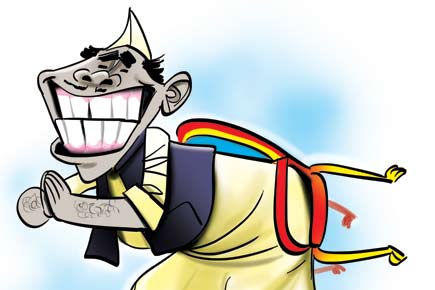
Illustration/ Amit Bandre
For a second, just for a second, you might mistake Manhattan for Mumbai. There’s garbage on the streets, people spit, rudeness rules, incredible energy prevails, and we both have a potpourri of communities co-existing here.
And then, in a flash, the comparison ends.
You suddenly sense the presence of a strong public sector at play. There are invisible leaders at work. Striving to make its citizens live a fruitful life — not stand in their way.
Mayor Bloomberg’s achievements vary from introducing rented cycles in the city to withstanding pressure to convert the gigantic Central Park into real estate.
His predecessor, Mayor Rudy Giuliani, magically cleaned up the crime-ridden city. More importantly, he took control of a city reeling from 9/11, put a district back together brick-by-brick and restored a then shattered psyche. Compare that to RR Patil who, post 26/11, stated, “In large cities, such small incidents are bound to happen.”
Understand — this isn’t a Manhattan vs Mumbai story. Or a ‘where would I rather live?’ argument. I’m interested in the nature of leadership. Specifically, local leadership. What is the point of power when it doesn’t extend to the people? Take Maharashtra, for instance, where men are more concerned about hanging on to a seat rather than serving the people.
Trending Stories
Latest Photos
Latest Videos
Latest Web Stories
ADVERTISEMENT

Ganeshotsav 2026

ADVERTISEMENT