The human factor: architect Dilawar Noorani's enduring legacy
Updated On: 23 July, 2021 01:22 PM IST | Mumbai | Meher Marfatia
The man behind India's first skyscraper and revolving restaurant showed rare integrity of design in his 1960s buildings. The city lost visionary architect Dilawar Noorani 50 years ago this week.





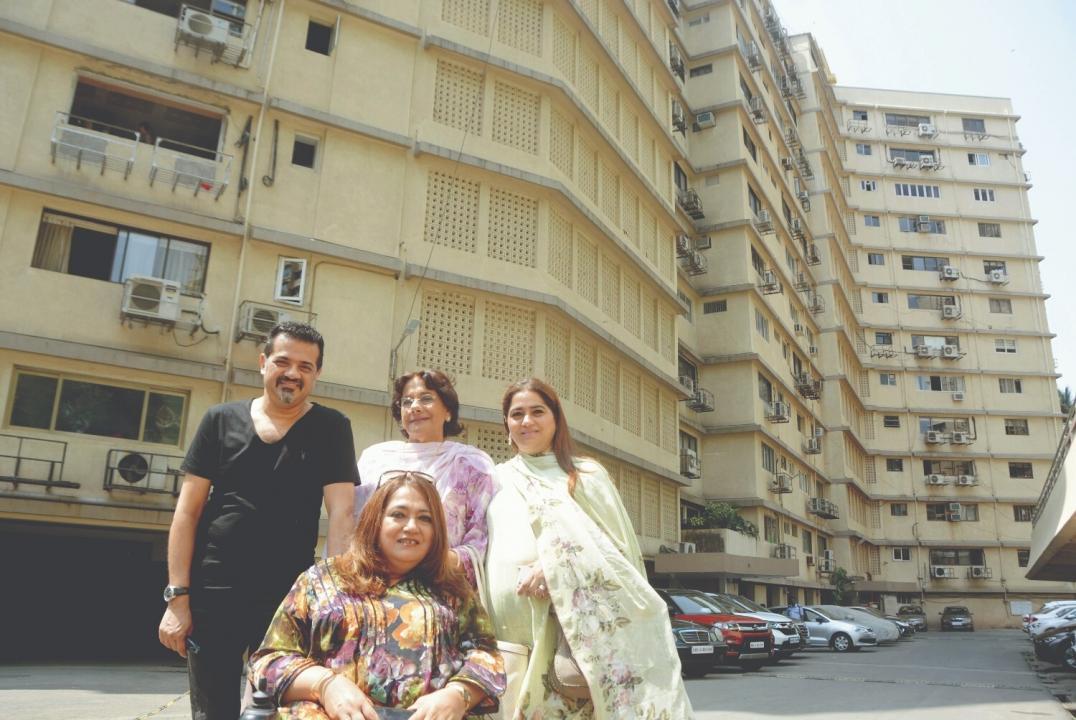
Dilawar Noorani's family - wife Minnat with children Shama (seated), Ehsaan and Rayasha outside the iconic Embassy Apartments at Nepean Sea Road.
 Howard Roark really reminded me of my dad when I read The Fountainhead," says Shama Noorani. Comparing Ayn Rand's iconoclast hero with her architect father, the daughter of Dilawar Noorani adds, "He was brilliant, ahead of his time, conceiving some of Bombay's best buildings with revolutionary ideas in the 1960s."
A post-graduate alumnus of Loughborough College, London, Dilawar Karim Noorani brought a solidity and sensibility to his profession, strikingly evident in buildings like Usha Kiran on Carmichael Road, the country's first skyscraper, with 25 storeys and a swimming pool, in 1966. Executed by his father's firm, Karim Noorani & Co., Dilawar's designs freely reflected his conviction that function should decide form - in Embassy Apartments on Nepean Sea Road, Prabhu Kunj and Crystal on Pedder Road, Prabhu Kutir on Altamont Road, Dalamal Park at Cuffe Parade and Citadel on Malabar Hill. I happily figure that the company also designed the fan-out contours of my building, Peacock Palace at Breach Candy.
Trending Stories
Latest Photos
Latest Videos
Latest Web Stories
ADVERTISEMENT
Mid-Day Fast
ADVERTISEMENT