The lady they call vamp
Updated On: 11 April, 2021 05:38 AM IST | Mumbai | Paromita Vohra
In contrast to the matrimonially ever-ready, emotionally giving heroine, these women were demanding—sexually, emotionally, materially





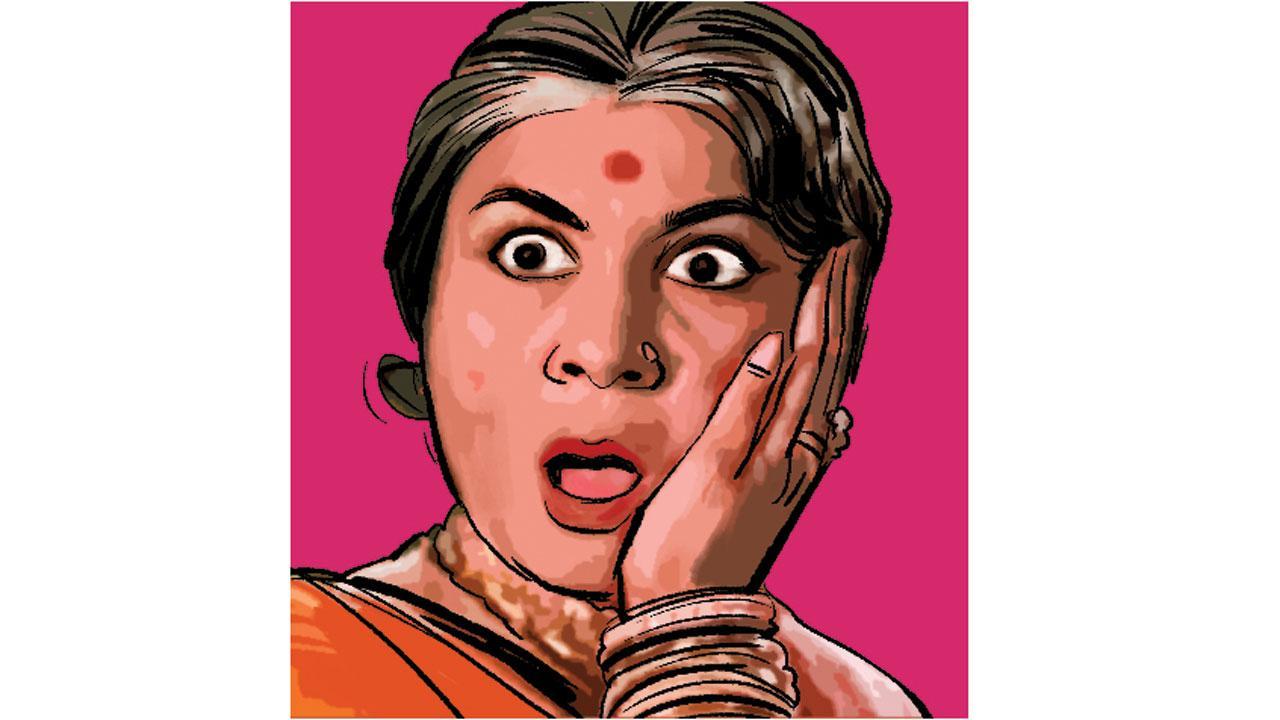
Illustration/Uday Mohite
 The year is 1945, the film Zeenat. The song, a qawwali, “aahen na bhari, shikwe na kiye, kuch bhi na zubaan se kaam liya” (no sighs, nor complaints, no words did I deploy), perhaps the first all-woman qawwali on screen.
If you already know she is there, you will see the actor Shashikala, in the chorus, in her first onscreen appearance, alongside future star Shyama. She was 11 years old and the teekha andaz of her presence is already discernible, along with a child’s slack body language. Shashikala, who passed away last week, was among the few remaining people who began their film careers before independence and represented a complicated history of women. Like others, Shashikala entered films as a child to support a family fallen on bad times. After 18 years in bit parts, negative roles, stunt pictures and the like, a classic mean bhabi role in 1962’s Aarti, inaugurated the most successful phase of her career. Her tight sarees, her sleeveless V-necks, her bouffant with side fringe, her angular eyebrow and dialogue delivery that sliced clean life a knife, defined her style.
How do you like the new new mid-day.com experience? Share your feedback and help us improve.
Trending Stories
Latest Photos
Latest Videos
Latest Web Stories
ADVERTISEMENT
Mid-Day Fast
ADVERTISEMENT

ADVERTISEMENT