To burn or bury
Updated On: 21 March, 2021 07:21 AM IST | Mumbai | Devdutt Pattanaik
While cremation, and the idea of rebirth, remains the dominant mythology of the Hindus, we must not forget that it sits upon an older tradition of burial, from the days of the Harappan cities and even before in prehistoric times. They probably did not believe in rebirth.





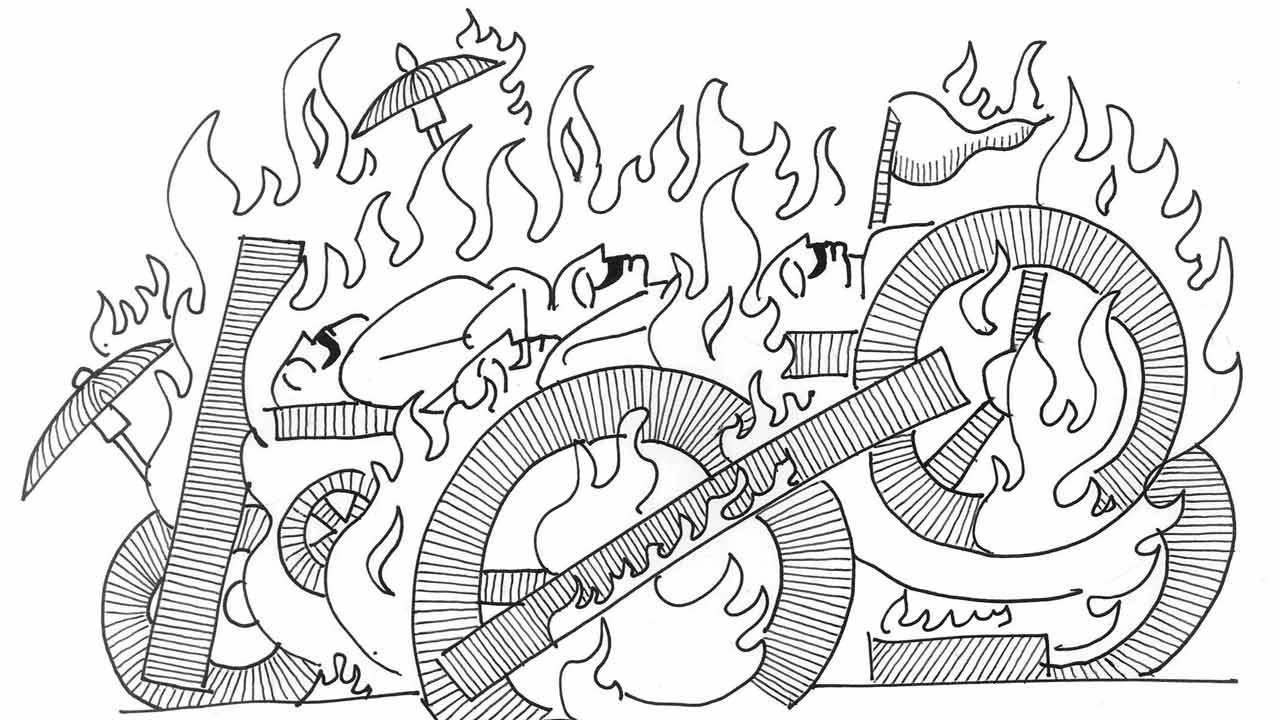
Illustration/Devdutt Pattanaik
 Hindus are constantly reminded of the cycle of life, in ritual after ritual. In Vedic times, 3,000 years ago, bricks would be gathered to build a fire altar where the gods would be invited to come and partake in a meal of soma juice. After the gods had been fed and after they had departed, the entire ritual complex would be dismantled and set aflame. Nowadays, images of Ganesha and Durga made of straw and clay are brought to homes, worshipped elaborately, and then cast into the river, and the cycle repeats year after year after year.
Similarly, Buddhist monks of the Vajrayana order in Ladakh, Shillong and Bhutan create elaborate mandalas with coloured powder only to destroy them at the end of the ceremony, just as Tamil and Telugu housewives create kolam and muggu with rice flour in front of their houses every morning and let it be wiped out during the course of the delay. Those who participate in such rituals are made to experience both the creation as well the destruction, and thus, the idea of impermanence and regeneration. Nothing survives forever. Nothing is lost forever. And this belief is reaffirmed by the Hindu practice of burning the dead, and throwing the bones in a river, leaving no trace of the dead. The dead don’t rest in peace; they move on to the next life. And so, there is no need for a memory, or a tomb.
Trending Stories
Latest Photos
Latest Videos
Latest Web Stories
ADVERTISEMENT

Ganeshotsav 2026

ADVERTISEMENT