When the vedas reached south
Updated On: 19 April, 2020 07:20 AM IST | Mumbai | Devdutt Pattanaik
These are regions associated with Bengal, today known as Jharkhand, Chhattisgarh and even the Godavari delta. It does not refer to Tamil Nadu. Even Panini's book on grammar, in 6th century BCE refers to Kalinga, and nothing beyond





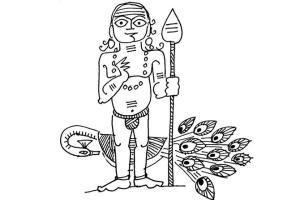
Illustration/Devdutt Pattanaik
%20(1).jpg "Devdutt Pattanaik") The mention of southern states is conspicuously absent in vedic literature. Hymns of the Rig Veda date back to 1500 BCE. They refer to the Saptasindhu or Indus Valley region. Shatapatha Brahmana, dated to 800 BCE refers to a movement towards what is now Bihar. In the Aitreya Brahmana, we come across references to the Andhras, Pulindhas, Sabaras, and the Pundhras. These are regions associated with Bengal, today known as Jharkhand, Chhattisgarh and even the Godavari delta. It does not refer to Tamil Nadu. Even Panini's book on grammar, in 6th century BCE refers to Kalinga, and nothing beyond.
The mention of southern states is conspicuously absent in vedic literature. Hymns of the Rig Veda date back to 1500 BCE. They refer to the Saptasindhu or Indus Valley region. Shatapatha Brahmana, dated to 800 BCE refers to a movement towards what is now Bihar. In the Aitreya Brahmana, we come across references to the Andhras, Pulindhas, Sabaras, and the Pundhras. These are regions associated with Bengal, today known as Jharkhand, Chhattisgarh and even the Godavari delta. It does not refer to Tamil Nadu. Even Panini's book on grammar, in 6th century BCE refers to Kalinga, and nothing beyond.
References to the Cholas, Cheras and Pandyas, the three great kings of south India, come in very clear form, in the Ashoka edicts, in 3rd century BCE. So, we can be confident that north India was familiar with south India 2,300 years ago. So, somewhere between 2,600 and 2,300 years ago, Vedic ideas penetrated far south.
Memory of this migration is available only in mythology, that may be read by proto-history. We hear of Rishi Agastya taking mountains and rivers of the north to the south. Rishi Dirghatama fathers sons who become kings of Anga (Bihar), Vanga (Bengal) and Kalinga (Odisha). We hear of Ram's journey to the south and encounters with vanaras and rakshasas. Rishi Parashuram is linked with reclaiming the Western coast. Rishi Gautama is linked with bringing Ganga to the south and turning her into Godavari. Rishi Atri and his son Dattatreya are linked to the Krishna river. Rishi Kaundinya travels across the sea to Suvarnadvipa (Southeast Asia) and marries a Naga princess there. Sri Lankan chronicles have memory of a Lion-prince travelling from Kalinga to the southern island where he defeated local yakshas and rakshasas and made himself king. The southern tip of India was long associated with Kumari, a virgin-goddess, who awaited her groom, Shiva, who would come for her from the north.
Trending Stories
Latest Photos
Latest Videos
Latest Web Stories
ADVERTISEMENT

Ganeshotsav 2026

ADVERTISEMENT