Why women lead anti-CAA stirs
Updated On: 13 January, 2020 04:58 AM IST | Mumbai | Ajaz Ashraf
A hypermasculinised state, which is what India is unmistakably turning into under Prime Minister Narendra Modi, becomes anxious at the first hint of challenge, particularly from women





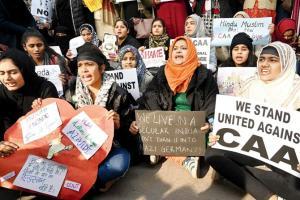
Female students across universities have turned protests against the inequality inherent in CAA, and the grim possibility of exclusion of people through NRC in the future, into a womenu00e2u0080u0099s movement. Representation pic /AFP
 The hypermasculinity of the Bharatiya Janata Party's politics, with its emphasis on strength, aggression and sexuality, has evoked a befitting response from women. They have turned the protests against the inequality inherent in the Citizenship (Amendment) Act, and the grim possibility of exclusion of people through the mechanism of the National Register of Citizens in the future, into a women's movement.
Their everyday experience of inequality and exclusion has prompted them to constitute a substantial segment of those who have been buzzing against the CAA-NRC at the barricades, not at the rear but at the frontline, unafraid of the sharp edge of a masculinised state. Think of the group of women students of Jamia Millia Islamia who protected their male companions from policemen during the brutal dispersal of the December 15 protest; or of Anugya, who resurrected the constitutional ideal of equality through her poignant sound bites to TV channels; or of the 24x7 sit-in at Delhi's Shaheen Bagh which home-makers, in hijab, spearhead; or of Lucknow's Sadaf Jafar, who was beaten and humiliated during her 14 days in jail.
Trending Stories
Latest Photos
Latest Videos
Latest Web Stories
ADVERTISEMENT

Ganeshotsav 2026

ADVERTISEMENT