Home / News / World News / Article /
Families, struggling to cope financially, marry off daughters
Updated On: 15 December, 2020 07:14 AM IST | Koidu | Agencies
In most cases, needy parents receive a dowry for their daughter - a bit of land or livestock that can provide income, or cash and a promise to take over financial responsibility for the young bride.





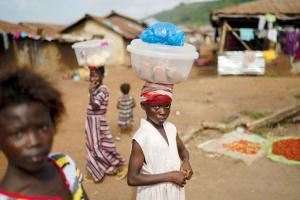
Isatu, 12, carries packets of rice flour to sell at Komao village, on the outskirts of Koidu, Sierra Leone, on Nov. 22. Pic/AP
In a remote corner of Sierra Leone, Marie Kamara a fifth-grader was married off to a small-scale miner in his mid-20s. Nearby mining operations had slowed with the global economy. Business fell off at her stepfather's tailoring shop, where outfits he had sewn now gathered dust. The family needed money. Before long, the groom's family paid 500,000 leones ($50) to Marie's. "The day they paid for me was on a Friday and then I went to his house to stay," she says flatly, adding that at least now she gets to eat something twice a day.
Many countries had made progress against such traditional and transactional marriages of girls in recent decades, but COVID-19's economic havoc has caused significant backsliding: The UN estimates that hardships resulting from COVID-19 will drive 13 million more girls to marry before the age of 18. Though most such marriages take place in secret, Save the Children estimates that this year alone, nearly half a million more girls under 18 are at risk of being married off worldwide, most in Africa and Asia, but also in the Middle East. One aid organisation said staffers in a remote corner of Sierra Leone overheard a relative offering up a girl as young as 8 for marriage earlier this year. When chastised, the grandmother later denied doing so.
Trending Stories
Latest Photos
Latest Videos
Latest Web Stories
ADVERTISEMENT
Mid-Day Fast
ADVERTISEMENT