A fitting tribute to Kochi
Updated On: 24 March, 2019 07:17 AM IST | | Meenakshi Shedde
Fort Kochi island is so civilised, it has ingeniously absorbed all its multiple colonial, religious and trade influences into a rich fabric





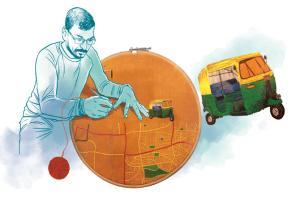
Illustration/Uday Mohite
 Kochi is my most favourite town on earth. I intensely love small towns — the patli galis (there's a Kit Kat Lane here, don't ask), the food (the fish and mango curry at Paragon, which is also in Ernakulam district, is a shortcut to heaven), the scents (cashew flowers), small shop ads (with a man wearing a dishdasha tunic, the 'Abu Dubai' influence), the slang ("Doh!" when calling a buddy) and the graffiti ("Mandir Kab Banega?" with three waiting figures gone skeletal). Well done, Kochi.
Fort Kochi island is so civilised, it has ingeniously absorbed all its multiple colonial, religious and trade influences into a rich fabric. The St Francis Church (built in 1503; Portuguese explorer Vasco da Gama was also initially interred here in 1525), Calvetti Juma Masjid (1384), Paradesi Jewish Synagogue (1568), colonial Dutch Cemetery (1724), Sreekrishna Temple, a Jain mandir and the Chinese fishing nets, all coexist on an island less than 2 km wide. Best of all, this is no big deal. The people of Kochi are how the rest of India should be. What's more, it hosts the brilliant Kochi-Muziris Biennale (KMB), that spectacularly raises the bar for international art events in India.
Trending Stories
Latest Photos
Latest Videos
Latest Web Stories
ADVERTISEMENT
Mid-Day Fast
ADVERTISEMENT