Kartarpur's lesson for Ayodhya
Updated On: 18 November, 2019 04:56 AM IST | Mumbai | Ajaz Ashraf
The outcome of ancient linguistic, spiritual and cultural ties shared between Sikhs and Muslims is not only a watershed in history but also a lesson for us today





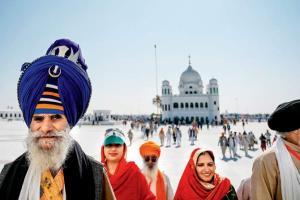
Sikh pilgrims at the Shrine of Baba Guru Nanak Dev at Gurdwara Darbar Sahib in Kartarpur, Pakistan. File pic
 Ayodhya and Kartarpur represent contrasting themes. Ayodhya harnessed history to cast a forbidding shadow on the present. The Kartarpur Corridor symbolises the possibility of people, living on either side of the Radcliffe Line in Punjab, to overcome their traumatic past. Before and after the Line was drawn, in 1947, to partition Punjab, nearly a million people perished. Pakistan's Punjab was ethnically cleansed of Sikhs and Hindus and India's of Muslims.
Delhi justifiably suspects Islamabad of exploiting Kartarpur for nefarious purposes. But what is beyond doubt is the growing bonhomie between the Sikhs and Muslims of the two Punjabs. The inauguration of the Kartarpur Corridor, on November 9, was just the occasion to fathom why they, daggers drawn 72 years ago, have reforged bonds. Alas, the Ayodhya verdict, delivered on November 9 as well, blanked out Kartarpur from discussions.
Trending Stories
Latest Photos
Latest Videos
Latest Web Stories
ADVERTISEMENT
Mid-Day Fast
ADVERTISEMENT