Northeastern love for Krishna
Updated On: 03 February, 2019 07:36 AM IST | Mumbai | Devdutt Pattanaik
When one speaks of Krishna, one usually speaks of North Indian traditions of Surdas and Mirabai, or South Indian traditions of Andal and the Alwars





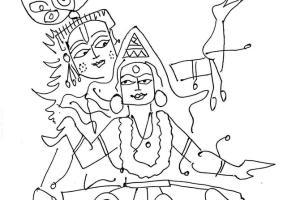
Illustration/Devdutt Pattanaik
%20(1).jpg) When one speaks of Krishna, one usually speaks of North Indian traditions of Surdas and Mirabai, or South Indian traditions of Andal and the Alwars. Chaitanya Mahaprabhu dominates eastern traditions of Krishna, just as Vallabhacharya and Dyaneshwara dominate the Western traditions. But we rarely pay attention to the Northeast of India: Assam and beyond, known from ancient times as Gandharva-desha, and closely connected to the Vedic goddess Usha, who, as per local legend, taught song and dance to the Gandharvas. It is, as per local legend, the land of Rukmini, who married Krishna; Chitrangada, who married Arjuna; and Usha, who married Krishna's grandson Aniruddha.
When one speaks of Krishna, one usually speaks of North Indian traditions of Surdas and Mirabai, or South Indian traditions of Andal and the Alwars. Chaitanya Mahaprabhu dominates eastern traditions of Krishna, just as Vallabhacharya and Dyaneshwara dominate the Western traditions. But we rarely pay attention to the Northeast of India: Assam and beyond, known from ancient times as Gandharva-desha, and closely connected to the Vedic goddess Usha, who, as per local legend, taught song and dance to the Gandharvas. It is, as per local legend, the land of Rukmini, who married Krishna; Chitrangada, who married Arjuna; and Usha, who married Krishna's grandson Aniruddha.
As it happens in India, nothing is homogeneous. Krishna bhakti is practised in Assam as well as Manipur, but the bhakti in both places is very different. When one goes to Assam, one finds the Krishna bhakti propagated by Shankardev, who lived around 500 years ago. But when one travels further east, to Manipur, one finds a different kind of Krishna bhakti, which is based more on Chaitanya's ideas.
Trending Stories
Latest Photos
Latest Videos
Latest Web Stories
ADVERTISEMENT

Ganeshotsav 2026

ADVERTISEMENT