The Nagas' Tree of Unity
Updated On: 04 November, 2019 04:58 AM IST | Mumbai | Ajaz Ashraf
Amid the mist of the Naga peace accord swirls a legend that reminds the community of a Golden Age and exhorts them to recreate it in the future





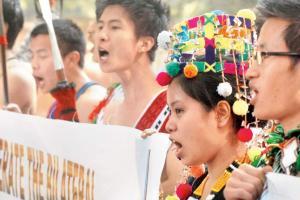
The Constitution-flag demands by the NSCN (I-M) are symbols of Naga nationalism, which we are conditioned to identify as inimical to India's unity. File pic
 The Bharatiya Janata Party's obsession with oneness manifests in slogans like One Nation, One Constitution or One Nation, One Civil Code. Oneness, however, often implies steamrolling differences, fanning anxieties and triggering countervailing reactions. This was perhaps why the Centre's decision to annul Kashmir's special status goaded the National Socialist Council of Nagalim (Isak-Muivah) into demanding a separate Constitution and flag before signing a final peace accord, which couldn't, therefore, be done by the October 31 deadline.
The sudden voicing of the Constitution-flag demands by the NSCN (I-M) was interpreted as its opposition to the BJP's idea of oneness. These are symbols of Naga nationalism, which we are conditioned to identify as inimical to India's unity. Yet identities are reconfigured in response to changing times. This is as true of Naga nationalism, which began as a quest to unite Nagas spread across present-day Nagaland, Manipur, Assam, Arunachal Pradesh and Myanmar into an independent country.
Trending Stories
Latest Photos
Latest Videos
Latest Web Stories
ADVERTISEMENT

Ganeshotsav 2026

ADVERTISEMENT