
India’s credit card market evolves with digital control, transparency, and flexible, app-led financial management.
Credit cards India
For years, India’s credit card market grew on a familiar set of cues. Cards were sold on lifestyle imagery, aspirational travel, or the promise of short-term rewards. Usage followed predictable patterns: large purchases, emergencies, or occasional indulgences.
According to publicly available RBI data, India currently has over 110 million credit cards in circulation, with recent growth increasingly driven by digital acquisition rather than branch-led sourcing.
India’s credit ecosystem is entering a more mature phase, driven less by novelty and more by everyday relevance. A new generation of cardholders is emerging - digitally native, value-conscious, and far less tolerant of opacity. They are not looking for a card to impress, but one that integrates seamlessly into how they already manage money.
This shift is forcing banks to rethink the very role of credit cards. No longer a standalone product, it is increasingly expected to function as a flexible financial tool - one that offers control, transparency, and adaptability across different life stages.
A modern credit card experience increasingly refers to app-led control over spending, repayments, rewards, limits, and usage settings, rather than reliance on static monthly statements.
From credit access to financial control
Across the industry, three broad expectations are becoming clear.
First, flexibility has overtaken rigidity as the defining feature of a good credit card. Consumers want the ability to manage repayments, convert spends when needed, and respond to short-term liquidity needs without punitive complexity.
Second, transparency has become central to trust. Hidden conditions, expiring rewards, or confusing fee structures are increasingly viewed as deal-breakers rather than accepted trade-offs.
Third, digital experience is no longer a differentiator. It is table stakes. A credit card today is judged as much by the quality of its app as by the benefits it offers. Customers expect real-time visibility into spends, simple controls, and intuitive discovery of relevant offers.
Banks that fail on these fundamentals risk irrelevance, regardless of how premium their positioning may appear.
From features to architecture
As credit cards take on a broader role, differentiation is shifting from isolated features to overall product architecture. Consumers now evaluate cards not only on rewards or privileges, but on how intuitively they can track spending, convert transactions into EMIs, manage repayments or discover offers. This has underscored the importance of cohesive design, in which multiple functions operate within a single system rather than across fragmented touchpoints.
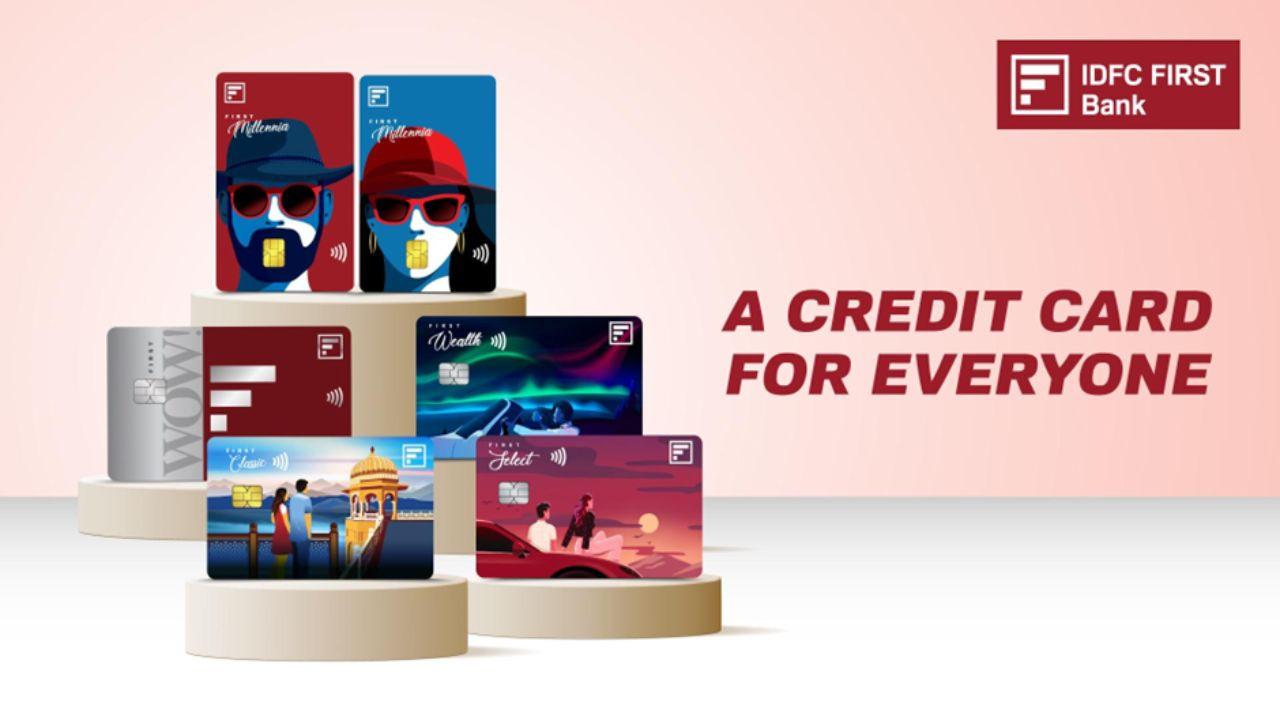
Several banks have begun restructuring their credit card propositions accordingly. IDFC FIRST Bank’s portfolio, for instance, spans lifetime-free cards such as FIRST WOW, FIRST Classic, FIRST Select, and FIRST Millennia, alongside higher-tier offerings such as FIRST WOW Black, FIRST Wealth, Ashva, Mayura and Diamond Reserve. While these cards cater to different lifestyles, they are unified by an app-led management framework that brings together spend tracking, EMI conversion, reward visibility and usage controls. The emphasis is less on isolated perks and more on continuity across the credit lifecycle.
The rise of the app-centric credit card
One of the most visible industry shifts has been the movement of the entire credit card lifecycle onto mobile platforms. Application journeys are becoming fully digital with faster approvals, video-KYC and paperless onboarding.
Leading institutions are investing in app ecosystems that allow customers to manage their cards end-to-end - from tracking transactions and repayments to discovering merchant offers and activating features managing card control as needed. This reflects a deeper understanding that trust in credit cards is built through daily interactions, not one-time sign-ups.
IDFC FIRST Bank’s approach mirrors this direction. Its credit cards are designed to be managed almost entirely through a single digital app, reinforcing a growing industry belief: a credit card is only as good as the experience surrounding it.
This evolution aligns with the RBI’s broader emphasis on transparency, informed consent, and customer control across digital financial products.
Credit meets familiar payment behaviour
Another structural change underway is the convergence of credit cards with India’s dominant payment habits. With UPI now embedded into everyday transactions, consumers increasingly expect credit to fit into familiar flows rather than require separate behaviour.
With UPI now processing over 13 billion transactions every month, banks are increasingly exploring ways to integrate credit into existing payment behaviour rather than introduce parallel systems.
Several banks are responding by enabling credit cards to operate within UPI frameworks. The logic is straightforward. When credit aligns with how people already pay, adoption becomes organic rather than forced.
In practical terms, this means credit cards are increasingly expected to function as extensions of everyday cash flow management, not as isolated borrowing instruments used only on special occasions.
This integration marks a meaningful evolution in how credit is consumed, less as a special occasion instrument, and more as an everyday extension of personal cash flow management.
Inclusion without dilution
The market is also moving beyond a one-size-fits-all definition of creditworthiness. Entry-level and secured cards are playing a growing role in bringing first-time users into the formal credit system, while premium variants continue to serve customers with more complex financial needs.
This layered portfolio approach allows customers to progress over time rather than being locked into static tiers. It reflects a maturing understanding of credit as a journey, not a destination.
IDFC FIRST Bank’s credit card portfolio spans this spectrum - from FD-backed options that enable responsible entry into credit, to travel- and lifestyle-oriented credit cards designed for higher engagement. The emphasis is not on pushing customers into the top tier, but on offering relevance at each stage.
Rewards that respect time
Reward structures are another area where consumer expectations have evolved. The earlier obsession with rapid accumulation and short expiry cycles is giving way to a preference for predictability and longevity.
Never-expiring reward points, increasingly visible across select portfolios, signal a shift in philosophy. Loyalty, in this framework, is not engineered through urgency but earned through consistency. Customers value the freedom to redeem when it suits them, rather than being nudged into transactional behaviour.
Travel-linked rewards continue to matter, but even here the tone has changed.
Travel benefits as infrastructure
Railway and airport lounge access, once positioned as status symbols, are now seen as functional enablers. For frequent travellers, these benefits reduce friction rather than signal privilege.
Tiered lounge access models reflect a more rational alignment between usage patterns and benefits. Instead of blanket promises, banks are calibrating access based on how customers actually travel - domestically, internationally, or via rail.
This utility-led framing marks a departure from aspirational excess toward practical value.
Merchant offers, curated not cluttered
The final piece of the puzzle lies in how offers are surfaced. As partnerships proliferate, discoverability becomes as important as scale. Centralised platforms that curate merchant offers, integrated directly into apps, are replacing fragmented discount communication.
Here again, the industry is converging on a simple insight: relevance beats volume.
A more honest credit card conversation
Taken together, these shifts point to a broader truth. India’s credit card market is entering its second act. The focus is moving away from loud claims and toward quieter confidence. From selling aspirations to enabling everyday financial discipline. From short-term incentives to long-term trust.
In this evolving landscape, institutions that succeed will be those that treat credit cards not as promotional tools, but as financial infrastructure, designed to adapt to how people live, spend, and plan.
Viewed through this lens, IDFC FIRST Bank’s credit card strategy reflects where the market itself is headed. Not by reinventing credit for effect, but by assembling the right fundamentals, flexibility, transparency, digital control, and inclusivity, into a coherent whole.
The future of credit cards in India will not be shaped by who shouts the loudest, but by who listens most closely to how consumers actually use card credit. And that future, quietly, is already taking shape.
Disclaimer: The information provided on the Website does not constitute investment advice, financial advice, trading advice, or any other form of advice, and you should not interpret any of the financial content as such. Please conduct your own due diligence and consult with a financial advisor before making any investment decisions. Midday does not endorse or promote any such activities, and you access them at your own risk, fully understanding the monetary and legal consequences involved. Midday shall not be held responsible for any losses you may incur as a result of using any such apps or websites.
 Subscribe today by clicking the link and stay updated with the latest news!" Click here!