Timeless beauty Aditi Bhatia on Madhubala It is a poetic alignment of eras when one screen enchantress sees her reflection in the ‘Venus of Indian Cinema.’ Aditi Bhatia — whose own presence carries a delicate blend of contemporary spark and classic refinement — finds her muse in the legendary Madhubala. This week, The Kerala Story 2 actress pays a soulful homage to the mesmerising Mahal star. Aditi Bhatia “I think Madhubala is the definition of ‘timeless beauty.’ There was an effortless charm and lightness about her… she could be playful, graceful, and deeply expressive all at once. It wasn’t just how she looked, but the feeling she left behind, that makes her unforgettable even today. There was a rare radiance about her, almost ethereal, and a feeling she evoked on screen that continues to stay with people across generations,” says Aditi. A fitting tribute to a grace that remains achingly eternal. Healing on a detour We’ve always known Bhumi Pednekar was made for more — even her penmanship proves it. Earlier this week, the cerebral star found herself (literally and figuratively) in Rishikesh, and wrote a wonderful self-reflective piece to mark the trip. The road was supposed to end in Dehradun (where Bhumi had an event to attend), but the soul has a way of hijacking the map when it hears a higher calling. For the actor, as we’ve discovered, Rishikesh isn’t just a destination, it is a sacred archive of her own life. Bhumi Pednekar “My first time at the Ganga was to say goodbye to my father. And then, to shoot for my first film. And maybe that’s why this place never feels like just a place. It feels like a conversation I keep returning to,” says Bhumi, adding, “Healing isn’t linear. Sometimes it looks like an unplanned detour at 6 am, to a river that already knows your name.” Between the grief of loss and the glow of a beginning, it seems the Ganga is Bhumi’s witness — her detour not a run, but a rhythmic prayer. And if her experience is anything to go by, life’s best journeys aren’t the ones we plan, but the ones that lead us back to ourselves. The midnight manifesto It seems the corridors of power in Mantralaya are fuelled by moonlight and midnight oil rather than morning chai. During a recent candid chat with Aamir Khan, CM Devendra Fadnavis dropped a relatable truth bomb for night owls: he is strictly not a morning person. “I sleep late and wake up late,” he confessed, effectively resigning from the 5 am club and joining the ranks of those who find their groove only after the sun dips below the Arabian Sea. Devendra Fadnavis While most politicians performatively appear to be early-rising fitness enthusiasts, Fadnavis’ admission brings to mind another world leader famous for his nocturnal stamina. US President Donald Trump recently went on a digital marathon, firing off 12 posts between 9.49 pm and 4.10 am — a timeframe most people reserve for REM sleep or questionable late-night snacking. One can almost imagine the two of them crossing paths in the ethereal glow of a smartphone screen while the rest of the world snores. Donald Trump However, before we start manufacturing ‘Make Maharashtra Great Again’ caps, let’s maintain some perspective. While their biological clocks might tick to the same late-night rhythm, the content of their character remains worlds apart. Thank the good lord for that! A time for titans Time magazine dropped its 100 Most Influential People of 2026 list on April 15, and my jaw had the same reaction. While the global stage is crowded, the Indian spotlight is effectively an ultra-exclusive club of two. Ranbir Kapoor and Vikas Khanna are our dual pillars this year, representing the very best of our soft power — from the silver screen to the Michelin-star kitchen. Ranbir Kapoor and Vikas Khanna As the only Indian film personality on the 2026 list, Ranbir joins the hallowed ranks of past honourees including Aishwarya Rai Bachchan, Aamir Khan, Priyanka Chopra Jonas, Deepika Padukone, Shah Rukh Khan, and wife Alia Bhatt. It’s a tight guest list, but let’s be real: that’s what makes the invite covetable. Add to that the ultimate ‘game recognising game’ moment: Ranbir’s TIME tribute is penned by Ayushmann Khurrana. Himself a 2020 alum, Ayushmann essentially welcomes the Animal star into this elite global group with a note that bypasses box-office fluff. He lauds Ranbir’s “quiet restraint” and “authenticity,” calling him a “cultural bridge” for an India that is finally learning to listen to itself. It’s the kind of high-brow professional kinship that makes the usual industry rivalries look positively amateur. Chef Vikas, on the other hand, finds kind words coming his way from award-winning French chef Eric Ripert. In the piece for TIME, Eric says Vikas is “above all a man of extraordinary heart.” It’s a sentiment I echoed in this column only yesterday — not a premonition, just well-deserved praise. Global desi Zohran Mamdani The diaspora also did some heavy lifting to keep our desi quota respectable. Neal Mohan makes it to the ‘Innovators’ section, for architecting our digital lives at YouTube, while Zohran Mamdani brings that unmistakable South Asian grit to the New York political hustle on the ‘Leaders’ list (that also features Donald Trump). Google CEO Sundar Pichai makes his presence felt amongst other ‘Titans,’ rounding off our claimed-by-association quota. The numbers might be small, but the impact? Absolute.
17 April,2026 09:38 AM IST | Mumbai | Sonali Velinker KamatThronies assemble This is the premier fansite for the book that inspired the hit show, George RR Martin’s A Song of Ice and Fire. With a dedicated domain for the HBO series, it offers episode-wise breakdowns and character studies.Log on to: westeros.org Dig out the archives With decades’ worth of fan theories to unravel, this website dedicates itself to archiving all the conspiracies the fandom has cooked up. It also gives a deep-dive into the behind the scenes of the offers from the show’s intricate costume design to a look into the cast’s audition tapes. Log on to: throneverse.com Reliving GoT Rahul Jadhav at the spot where Robb Stark was made the King in the North I started Wiki of Thrones back in 2016 on April 10, so the site recently turned 10. My journey with Game of Thrones (GoT) started in 2013, and from 2016, it became an integral part of my life as that’s been the main source of my income. Recently, I visited Belfast where I took the Official GoT Studio Tour. It was an incredible experience, seeing the sets of the show, and understanding how it was brought to life. I also met the crew who worked on the show and joined them on a tour of some of the filming locations. It’s been 10 years for Wiki of Thrones, and 13 years since I started my first GoT fan page. I can see myself working on this theme for at least 10-15 years. Rahul Jadhav, fan, founder, Wiki of Thrones, India’s first GoT fanpage Final goodbye If you want to take a look into the making of the much controversial last season of the show, Game of Thrones: The Last Watch is a documentary worth delving into. It takes the fandom on a journey of the show’s final stretch as they bid farewell to the people who helped build the universe. Log on to: hotstar.com From the horse’s mouth George RR Martin’s official website is where fans can find out what their beloved author is up to. He gives updates regarding his work, his life, and of course the show itself. Log on to: georgerrmartin.com A typical day in GoT town A snippet from Game of Thrones: Day in the Life While it might not be possible to visit the phantasmal land of Westeros, fans can certainly check out the sets that bring it to life in this universe. Game of Thrones: A Day in the Life follows the HBO shows cast and crew as they shoot its fifth season across three countries.Log on to: @gameofthrones on Youtube
17 April,2026 09:13 AM IST | Mumbai | Saanvi BhosaleWhat does it take to fall in love with space? Sometimes, just a photograph, of a rocket slicing through a heart-shaped cloud, can do the job,” says Umesh Kumar Rustagi, director of the Nehru Science Centre. Yuri Gagarin To mark the 65th anniversary of the first human spaceflight, the Nehru Science Centre is hosting a week-long exhibition titled Gagarin to Gaganyaan, in collaboration with the Consulate General of Russia and Russian House. Space in reflection. Launch of the Proton-M launch vehicle carrying the Yamal-601 satellite, 2019 The exhibition pays tribute to Soviet cosmonaut Yuri Gagarin, who became the first human in space on April 12, 1961, after completing an 108-minute orbital flight aboard Vostok 1. The then 27-year-old pilot launched from Baikonur Cosmodrome in Kazakhstan, completed one orbit of the Earth, and safely parachuted back to the ground. Passionate about space Nearly 40 photographs are on display, documenting rocket launches, space missions, and the rigorous training of cosmonauts. “This exhibition is essentially a collection of photographs related to the Russian space programme, beginning with Yuri Gagarin,” reiterates Rustagi. “We have also included training photographs of cosmonauts so that people can understand the extensive preparation required for space travel.” In the centrifuge. A cosmonaut prepares for training on the TsF-7 centrifuge at the Gagarin Cosmonaut Training Centre Explaining the idea behind the exhibition Rustagi emphasises, “That the aim is not only to inform but also to engage visitors emotionally. “There are some beautiful pictures here, from a photographic point of view that can make people fall in love with space.” Umesh Kumar Rustagi The exhibition also connects Russia’s space journey with India’s, referencing milestones such as the launch of India’s first satellite, Aryabhata, on 19 April 1975, using a Kosmos-3M launch vehicle from the Kapustin Yar cosmodrome in Russia. “India and Russia have collaborated extensively in space programmes,” Rustagi informs us, adding that such partnerships were crucial to India’s early advancements. Final integration. Technicians prepare the payload stack for mating with the core stages “A documentary titled To Be a Cosmonaut is also being screened, offering a detailed look at the training process from day one and highlighting the discipline and endurance required to qualify for space missions,” concludes Rustagi. Through the snow to orbit. Winter launch of the Progress MS-09 spacecraft, 2018 TILL April 19; 10 am to 6 pm AT Nehru Science Centre (NSC), Dr Annie Besant Road, Worli. CALL 24900518ENTRY NSC ticket prices apply
17 April,2026 09:07 AM IST | Mumbai | Rumani GabhareThursdayCamping fun If your kids are always complaining of boredom during the summer break, Cradle & Swings Preschool’s Story Ka Pitara summer camp will keep them engaged all summer. TIME 4.30 pm to 6 pmAT Cradle & Swings Preschool, JB Nagar, Andheri East. CALL 9820150447ENTRY Rs 400 onwards FridayMaestro’s memories NCPA will bring mridangam maestro Palghat Raghu’s (right) artistry back to life. Nad Ninad is an erudite listening session guided by the maestro’s grandchildren Anantha R Krishnan (below) and Abhishek Raghuraman, featuring audio and video excerpts of Raghu’s recordings from the 1980s.TIME 6.30 pmAT Experimental Theatre, NCPA, Nariman Point. LOG ON TO ncpamumbai.com SaturdayTrippy tunes Pic Courtesy/@spryk.in Experience Spryk’s audiovisual extravaganza as he blends electro-folk sounds with techno-magic visuals in his aims to scratch your brain with his ineffable multimedia performance Neural Natak as part of G5A’s Imaginative Intelligences. TIME 9.30 pm AT G5A Warehouse, Mahalaxmi West. LOG ON TO urbanaut.appENTRY Rs 1499 onwards Walk into change Participants discuss observations during a walk in Dadar Although we are four months into 2026, you can still take up that New Year’s resolution to walk more. The Walking Project aims to engage both your brain and your body with their community walk which encourages its pedestrians to assess the walkability of the city, and observe its changing nature, as they saunter along their neighbourhood.Meeting tIme 9 pmMeeting point BKC Metro Station, Government Colony, Bandra East. LOG ON TO @walkingprojectindia SundayJump into action Pic Courtesy/mischieftreks If you feel a little adventurous, add cliff jumping to your list. Join this one-day trek to Kalmandavi waterfall in Maharashtra’s Palghar district, and let your inner explorer go wild. TIME 5.30 am MEETING POINT Virar Phata, Palghar. LOG ON TO mischieftreks.comENTRY Rs 750 onwards Laugh attack Pic Courtesy/@inder.sahani1 Inder Sahani brings his nation-wide stand up tour, Ab Hai Aapki Bari, to Mumbai. If you are a fan of side-splitting crowd work and snarky punchlines, this is the place to be.TIME 8.30 pmMEETING POINT Backspace, Majiwada, Thane West. LOG ON TO in.bookmyshow.comENTRY Rs 699
16 April,2026 09:39 AM IST | Mumbai | Saanvi BhosaleThe G5A Foundation and Seagull Books have collaborated to celebrate the 100th birth anniversary of the Bengali legend Mahasweta Devi. The event will consist of a screening of Talking Writing, a documentary directed by Pushan Kripalani, featuring the writer in conversation with author and theatre practitioner Naveen Kishore. It will be followed by a performance by Kishore and Anubha Fatehpuria and a conversation with Kripalani. The ‘performative’ aspect, Kishore tells us, is “to extend the older time of the film into this newer time by voicing on stage our memories and reading from her writing”. Pushan Kripalani and Naveen Kishore Kripalani recalls his early memories of reading the writer. “We all have read the occasional short story like Draupadi and Mother of 1084 in school.” In 2003, while sitting in Kishore’s office, he came across a transcript of Kishore’s interview with Mahasweta Devi. “What seemed to me was that this wasn’t simply a publisher speaking to his author. This was a complicated, interesting relationship of depth, trust, and knowledge,” he tells us. This relationship was built over the years. When Kishore had started his publishing house, it featured books on theatre, art and cinema. A volume of five plays by Devi was published too. “Little did we know that this would become a rock-solid relationship, not just between a publisher and author but also a friendship. An intimate one, where anything and everything was a conversation of relevance,” reveals Kishore. Mahasweta Devi during a felicitation in New Delhi. File Pic In the documentary, the format of the long conversation is maintained. “There’s a lot that happens when people speak to each other, unencumbered by the structure of a regular interview. I thought how interesting it would be if I could possibly find a balance between Kishore’s gaze of her and my gaze of them,” shares Kripalani. The two are heard switching seamlessly between English and Bengali during the interview, having achieved a level of comfort. As the artistes pay tribute, they believe Devi remains relevant today. “The thematics are the same — the thematics of oppression, power, and personal revolution. She was very clever with looking at individual stories which are reflective of larger problems; I miss that,” Kripalani concludes. ON April 17; 7 pm to 9 pmAT G5A Warehouse, Laxmi Mills Estate, Mahalaxmi West. LOG ON TO g5afoundation.org (for event tickets)ENTRY Rs 499 Reading reccos >> Mother of 1084>> Chotti Munda>> Breast Stories>> Truth/Untruth- Naveen Kishore
16 April,2026 09:35 AM IST | Mumbai | Nandini VarmaRain check Antarctic expedition Take a sip every time you learn something new at this bar lecture that explores how Polar waters in the Southern Ocean might have a domino effect on Mumbai’s monsoon. Marine biogeochemist Dr Amber Annett will investigate how ocean mixing in the Polar regions impacts climate worldwide.ON April 19; 4 pmAT Woodside Inn, Pali Naka, Bandra West.LOG ON TO urbanaut.appENTRY Rs 699 Tickle your brain A previous improv comedy class. PIC COURTESY/Krishan Hooda Being funny takes practice. Join the Improv 101 class by The Negative to learn the basics of stage comedy. Led by theatre actors Krishan Hooda and Neeltarni Pratap, the session helps you shed stage fear and think on your feet.ON April 18; 10 amAT Veda Black Box, Veda Factory, Aram Nagar Part 2, Versova. LOG ON TO @thenegativeschoolENTRY Revealed on registration Ctrl+P A linocut print of a fish. PIC COURTESY/@BDLMUSEUM Learn the secrets of linocut, the handmade printmaking technique that intrigued greats like Pablo Picasso. Layer your stamps, and bring your designs to life at this workshop that runs parallel to the vibrant Ticket Tika Chaap exhibition.ON April 19; 11.30 amAT Dr Bhau Daji Lad Museum, Byculla. LOG ON TO @bdlmuseumENTRY Rs 158 Meet your matcha Matcha Latte. PIC COURTESY/SUBKO What exactly is matcha, and why is everyone around you suddenly obsessed with it? This workshop at a city café breaks down its types, history and cultural roots, before showing you how to whisk a proper cup.ON April 19; 10 amAT Subko HQ – The Workery, Ramaji Talekar Chowk, Byculla East.LOG ON TO subko.coffeeENTRY Rs 595 Is that a bird? Sighting a bird in the urban forest is not pure luck. Grab your binoculars and head to the Sanjay Gandhi National Park where a workshop for young enthusiasts will decode the art of hearing, sighting and identifying birds.ON April 18; 9 amAT Nature Interpretation Centre, Sanjay Gandhi National Park, Borivli East. CALL 8655202903LOG ON TO @sanjaygandhi nationalparkENTRY Rs 700
16 April,2026 09:31 AM IST | Mumbai | Devashish KambleIt began as a way to celebrate the little indie record store, you know?” reminisces Jude de Souza over a phone call. In the last decade, he has overseen the Mahim hub of The Revolver Club evolve from a niche hangout for vinyl collectors to the place to be for a generation looking to stand out in a digital-friendly world. On Saturday, the club will mark their 10th Record Store Day with a celebration that expands across the country. Visitors browse through vinyl records at previous Record Store Day celebrations The event will be celebrated simultaneously across Mumbai, Delhi, Hyderabad, Chennai, Bengaluru, and their new space in Fontainhas, Goa. “A key part this year is the celebration of Gauhar Jaan. She was the first Indian face on a 78 RPM,” de Souza emphasises. Born in 1873 in Kolkata, she became the first Indian singer to agree to record her voice for The Gramophone Company of Fred Gaisberg in 1902. But it was the use of her image, on record covers, matchboxes in Austria and Switzerland, as well as on cigarette cards that immortalised her as a cult figure. Gauhar Jaan. PICS COURTESY/THE REVOLVER CLUB; Wikimedia Commons To this end, the club has reached out to India Post to petition the inclusion of the 19th Century singer on a stamp. “The year 2030 will mark the 100th anniversary of her passing, and we hope to help publish a stamp in her name. We will hold a signatory campaign at the clubs over the weekend,” he shares. The weekend will also witness some rare collectibles on display — from Jimi Hendrix to Pink Floyd and Dire Straits — for a younger generation to savour. DJ Dave Switchenko will turn the vinyl sound into a communal experience for visitors. “Many of them have not heard of these bands, but are curious and embracing the sense of ownership, of listening to whole albums as a collective experience,” de Souza reveals. Jude de Souza ON April 18; 12 pm onwardsAT The Revolver Club, Lady Jamshedji Road, Mahim West.LOG ON TO therevolverclub.com (to register) ENTRY RSVP mandatory Get your collectible fix Gauhar Jaan imprintDo not miss the special edition artistic recreation of the iconic singer’s likeness that was once present on matchboxes across Europe. It’s memorabilia worth taking home. Dire Straits-1978Aside from the New Wave aesthetic, the back cover comes with mugshots of Mark Knopfler and the band, with song lyrics to boot. Pink Floyd - Obscured by Clouds, 1972This is a collector’s special, and one of the band’s more complete bluesy, melodic compilations with tracks like Free Four and Wot’s…Uh The Deal included. The Jimi Hendrix Experience-Smash HitsThe name alone should draw collectors to this record. The vinyl pressing, with its Rastafarian colour text, is certainly catchy to say the least. Pink Floyd-RelicsGrotesque masks? Check. This rare album cover is a throwback to a time when not everything had to be aesthetically pleasing and curated.
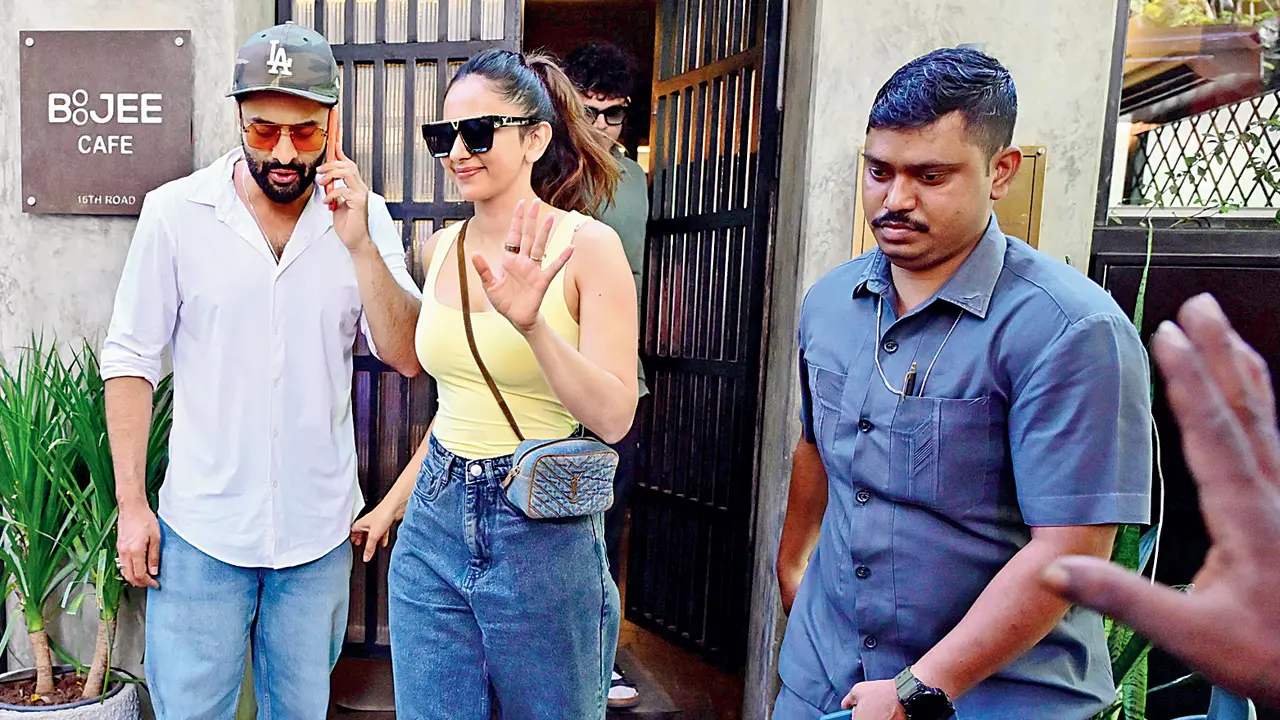
16 April,2026 09:26 AM IST | Mumbai | Shriram IyengarBougie brigade Rakul Preet Singh served up sunshine in Bandra on Wednesday, stepping out of a cosy café with husband Jackky Bhagnani. While her logo-loaded shades and crossbody made their statement, her Birkenstocks quietly stole the show — flats are Rakul’s new go-to since a spinal injury last year, and she’s wearing them with unapologetic ease History served hot While Mumbai was awash in the signature blue of Ambedkar Jayanti on April 14 — complete with a glowing tribute in lights across the Sea Link — a similar gravity was felt thousands of miles away in Manhattan’s East Village, albeit on a smaller scale. Chef Vikas Khanna transformed the glass facade of his acclaimed NYC eatery, Bungalow, with a floral tribute to Dr BR Ambedkar, marking the milestone with a resonance that transcends fine dining. It is a bold, beautiful move that anchors the restaurant’s soaring ambition in the very foundations of Indian democracy and social justice. Vikas Khanna “Ambedkar’s ideals have deeply shaped my journey — both in life and in the kitchen,” Vikas notes, his usual high-energy charm giving way to a grounded solemnity. While the words are wonderful, Vikas truly leads with action. He has long been our most eloquent culinary diplomat, but with Bungalow, he has graduated from merely serving food to curating culture. With a blue lotus designed lovingly, petal by petal, on the roof of his restaurant in honour of Babasaheb, he asserts that the India he represents is as progressive as it is flavourful. Bungalow — a space already heavy with sentiment, dedicated to his late sister Radhika — has quickly become the premier flagbearer for the subcontinent. Whether it’s the impossible-to-get reservations or the Michelin-nodded menus, Vikas proves that for an eatery to be truly world-class, it must first have a soul. And that, he appears to deliver in spades. Cyber Sabotage? In the high-stakes arena of Bigg Boss Marathi, the drama has officially spilled off the screen and into the digital trenches. On April 13, the Instagram handle of fan-favourite Vishaal Kotian went dark, deactivated after a coordinated blitz of ‘rights violation’ reports. Vishaal’s PR machinery immediately went into overdrive, screaming sabotage and crying foul over what they claim is a desperate attempt to derail his momentum during the final, frantic days of voting. Vishaal Kotian To keep the ‘Kotian Cult’ from scattering, his team scrambled to launch a backup account, proving that in the world of reality TV, traction is more precious than oxygen. Vishaal isn’t the only victim of this alleged cyber-hit — Ruchita Jamdar reportedly saw her account vanish in a similar puff of ‘community guidelines’ smoke. Whether this is genuine digital warfare or a coordinated coincidence, one thing is clear: the knives — and the report buttons — are out. As of April 15, Vishaal’s original account is back, but the saltiness remains. As the SoBo set will tell you (from the lofty heights of their ivory towers where they’d sooner admit to a botched filler than to watching Marathi reality TV), keep your friends close, and your login credentials closer. Reel romance In a world where some stars orchestrate ‘leaked’ coffee dates to manufacture chemistry for the cameras, we hear of a Gen-Z pair playing a much more discreet game. They’ve already tasted box-office success together, but while their professional partnership is public record, their private life remains strictly off the grid. In a classic case of ‘reverse PR,’ these two aren’t faking a romance to sell tickets — instead, they are hiding a very real one now that the promotional heavy lifting is over. Insiders whisper that ‘just friends’ doesn’t quite cover the current situation, but that’s about as much as these young lovebirds are willing to admit at the moment. While the world waits for an official ‘hard launch,’ these two are busy keeping their best scenes for a private screening. Apex predators and April bunnies From the snow-draped slopes of Gulmarg in February to Rajasthan’s sun-scorched sands in April, Lisa Haydon — the quintessential boho-chic cover star — seems to be on a spirited quest to curate the ultimate family scrapbook. Trading red carpets for rugged landscapes, she and her husband, British businessman Dino Lalvani, have embraced a more untamed rhythm of life, with Lisa seamlessly evolving from style icon to chief architect of her family’s adventures. Lisa and Dino with their three tots Their latest chapter unfolds at Sujan Jawai, a remote jewel tucked away within the Aravalli hills. There, guided by a seasoned ranger, the couple experienced the rarest of safari sightings this month: a mother leopard with her two cubs. For Lisa, the moment was a stirring reminder of the universality of maternal instinct — though the leopard’s piercing gaze felt almost like an unspoken, high-fashion standoff. Lisa goes leopard on safari And yet, in true parenting fashion, it was a simpler encounter that stole the show. Amidst the drama of apex predators and the luxury of the wild, Lisa’s four-year-old remained most enchanted by a humble local rabbit. A gentle reminder that whether you’re raising little Lalvanis or leopard cubs, children have an uncanny way of keeping life grounded.
16 April,2026 09:21 AM IST | Mumbai | Sonali Velinker KamatGifs are passe. If you are trying to keep up with the new age texting lingo, may we suggest the Bird Decoys app. It started when a friend began adding a swan call ‘to diss the group’ on voice notes. Annoying as it was, one had to admire the creativity. The app is a repository of recorded bird calls — alarm, flight, attack, or flocking calls. Excellent if you want to attract a bird for your wildlife photograph; annoying on voice notes though. Available: Bird Decoys on Playstore
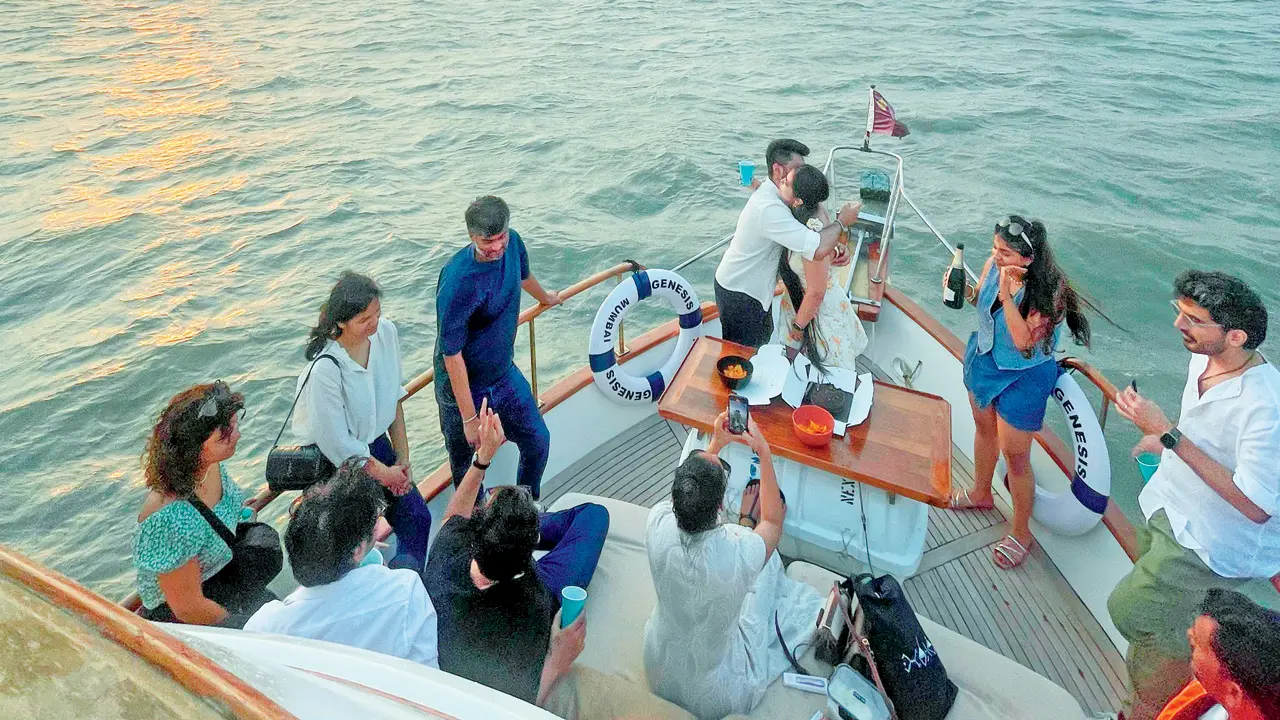
15 April,2026 09:14 AM IST | Mumbai | Shriram IyengarSlip into a dreamy weekend, where the combination of the sea, music, and F&B delights make for the perfect getaway. Cruising in a 25-seater luxury yacht in the middle of the Arabian Sea, the sundowner will rock to DJ Suggahunny’s Afrobeats set. The organiser and founder of The Bombay Gypsea, Shaun D’sounza adds that they aim to give a taste of Ibiza’s nightlife to Mumbai, explaining, “While places like Ibiza have seamlessly blended music, sunsets, and the ocean into a way of life, Mumbai has largely kept that experience on land. Our music sundowners aim to change that by turning the sea into a social and cultural space.” DJ Suggahunny. PICS COURTESY/The Bombay Gypsea The Mediterranean spirit is elevated by complimentary beers and cheese boards for revellers to snack on. If you are interested in breaking the usual terrestrial party animal routine, hop onto this yacht for a serving of Ghanaian beats, a Mediterranean milieu with Mumbai’s groovy set. ON April 19; 5 pm to 8 pmMEETING POINT Jetty 5, Apollo Bunder, Colaba.CALL 9930086252ENTRY Rs 4250 onwards
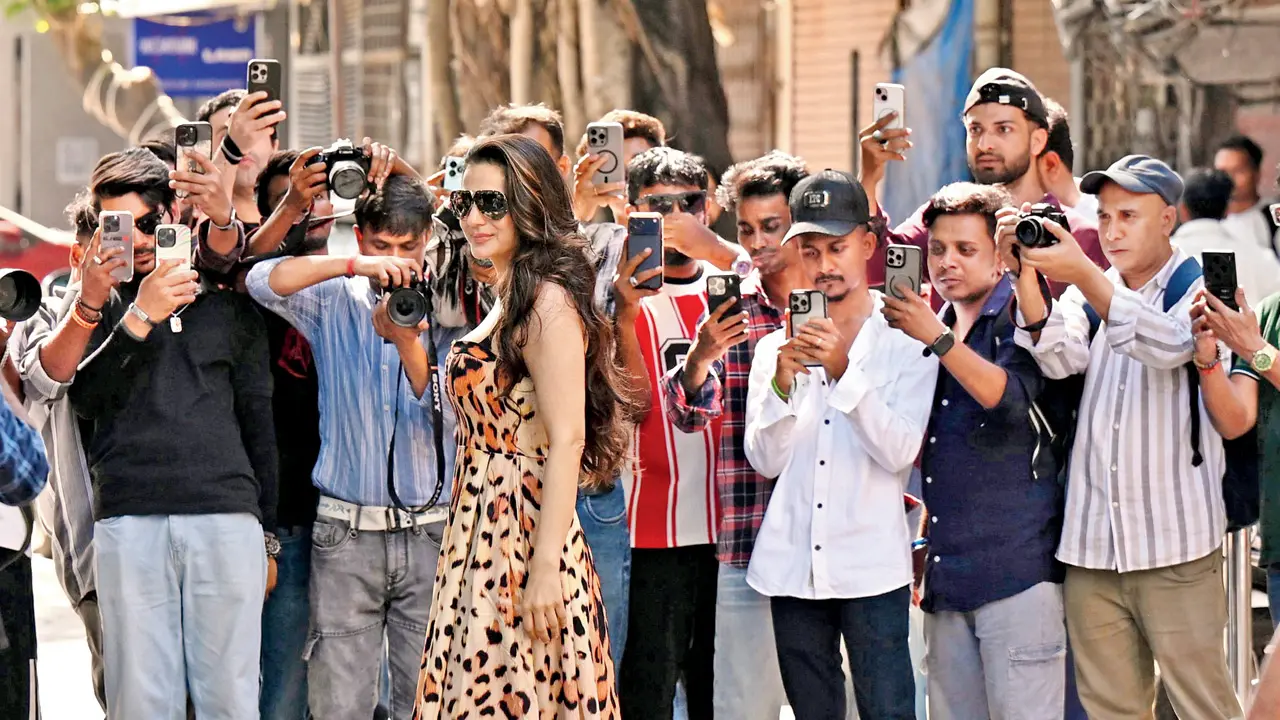
15 April,2026 09:12 AM IST | Mumbai | Saanvi BhosaleAnimal Attraction It’s a jungle out there, and Ameesha Patel appears to be the one in charge. Turning the pavement into a concrete runway for paps on Tuesday, the actor strutted into an Andheri studio sporting a fierce leopard-print dress that practically roared. Trends come and go, but one thing is for certain — a true alpha female always knows her angles. From masters to modernists Hooked to all the action on the sidelines of the IPL, one thing is clear: the ‘gentleman’s game’ hasn’t just evolved — it’s had a complete personality transplant. If one needed proof, it came on Sunday with Virat Kohli’s latest outburst serving as a flashing neon sign of the new era. Virat Kohli During the high-octane Mumbai Indians vs Royal Challengers Bangalore clash, Kohli didn’t just lose his wicket to a full toss outside off stump, he lost his zen, too. Despite reaching a 38-ball 50, he skipped the celebration in favour of a mini meltdown — hurling his helmet and gloves in frustration as he stormed toward the dugout. While the purists are in a tailspin, this isn’t just a ‘Kohli moment’ — it’s a symbol of a shifting baseline, where aggression has become the new acceptable. If anything, Kohli is the prototype for a game that has traded quiet reverence for raw, unfiltered emotion. We are miles away from the stoic elegance of the past. Stalwarts like Sachin Tendulkar famously championed a deep, almost spiritual respect for their gear, once noting he would never dream of disrespecting the tools of the trade. To the Master Blaster, the bat was sacred. To the modern player, it’s a casualty of war. Killing it at Coachella Just yesterday I was lamenting the lack of Indian representation at Coachella — and while there’s still no surprise homegrown act on the lineup, one desi girl is definitely bringing the heat to the desert. Enter Alanna Panday, daughter to Deanne and Chikki, and super-glam sibling to Ahaan Panday. With both looks and lineage lined up in her favour, Alanna could easily have been a movie star in aamchi Mumbai, but instead she chooses to carve her own path as a Los Angeles-based influencer. Alanna Panday A seasoned Coachella regular, Alanna made a high-octane return to the music festival this year after a two-year hiatus to focus on her baby. While most of the world would pay crazy money just for a glimpse of headliners like Justin Bieber, Sabrina Carpenter, and Karol G, Alanna is in the enviable position of being paid to be there. On Weekend 1, she served a stunning wardrobe of looks curated for her brand partners, Magnum and Revolve, proving her fashion game is as sharp as ever. Beyond the sponsorships though, we hear she has the ultimate ‘access all areas’ pass — her husband Ivor’s childhood friend manages one of the festival’s top performers. With her global aesthetic and a vibe to match, Alanna isn’t just attending Coachella — she’s defining her moment there. Anniversary Escape It’s been four years since the internet nearly capsized over their ‘balcony wedding,’ and frankly, Alia Bhatt and Ranbir Kapoor are still giving us the ultimate masterclass in low-key high-glam. Alia Bhatt and Ranbir Kapoor To celebrate another trip around the sun (for their wedding, that is), the industry’s ‘it’ couple traded Mumbai’s chaos for the powdery calm of Lech. Alia’s April 14 photo dump is all things snowy and serene — cosy selfies in a chic black turtleneck, playful skiing clips that prove they’re quite literally “gliding and falling” through life together, and a mood that feels like Yeh Jawaani Hai Deewani — just grown up. The real scene-stealer, though, is Ranbir on alpaca-feeding duty with little Raha — wholesome enough to momentarily distract from his upcoming turn as Lord Ram. Add to that Alia’s nostalgic nod to Highway — “Tu saath hain toh din raat hain” — and the message is clear: beyond the films, the fashion, and the frenzy, they’ve already built what looks like a pretty wonderful life. And maybe that’s the real charm. While the spotlight follows their next big-screen moves, it’s these unguarded, in-between moments that keep the fascination alive — effortless, intimate, and just a little bit aspirational. The Wankhede Hangover While the scoreboard at the Wankhede left Mumbai fans cold on Sunday night, the social heat in the stands was just beginning to simmer. The talk of the last 48 hours hasn’t been about Hardik Pandya’s bowling changes, but rather a ‘hard launch’ at the stadium gates. YouTuber Ranveer Allahbadia (aka BeerBiceps) effectively confirmed his relationship with influencer Juhi Bhatt while navigating the crowds — politely declining a fan’s selfie because he was “with his girlfriend.” That simple statement sent the city’s digital elite into a full-on frenzy. Ranveer Allahbadia But the real power move happened post-match. While the MI squad retreated for a sombre ‘healing meal’ to process their latest loss, the city’s corporate OGs and discerning diners were spotted drifting toward Flint at the NCPA. Over Rahul Akerkar’s wood-fired plates, the conversation wasn’t about run rates, but the electric anticipation of the upcoming Met Gala guest list and which of our own will be representing the city in New York. Here in Mumbai, the game may end at 11 pm, but the real play always begins at midnight.
15 April,2026 09:11 AM IST | Mumbai | Sonali Velinker KamatADVERTISEMENT