


Amol Patil pours the memories of a Bombay past, its chawl culture, and the erasure of its landscape into his next solo exhibition in Colaba
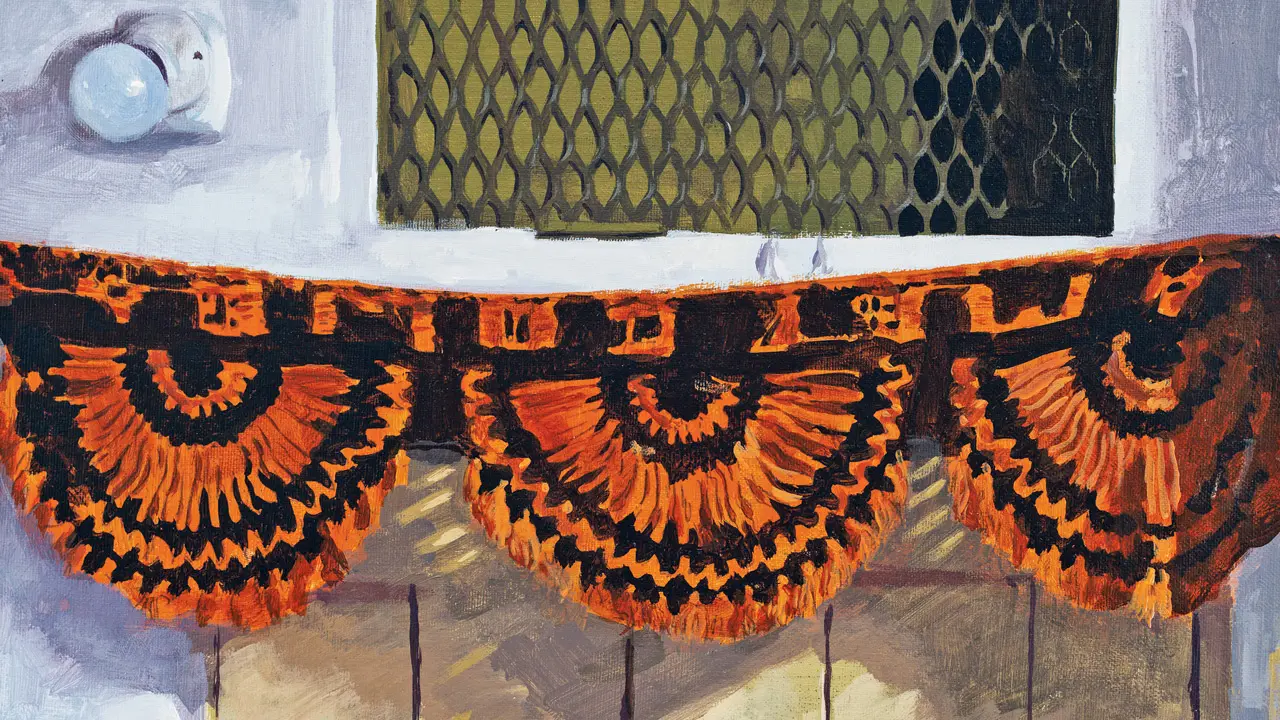
A Forest of Remembrance D2, 2024, acrylic on canvas. Pics Courtesy/Amol K Patil; Project 88
Faded blue plaster. A mandap situated on a parapet. Festoons above the door. For a generation of Mumbaikars who grew up in chawls, these images carry memories of walking in and out of open doors. “I grew up in Dadar and Parel. I have seen the chawls, and the mills change over the years. The landscape has slowly been redrawn,” shares Amol K Patil. The artist’s latest solo, A Forest of Remembrance, opens today at Project 88 in Colaba.
The exhibition is part of Patil’s larger project of the same title exhibited at the Berkeley Art Museum and Pacific Film Archive (BAMPFA), and curated by Victoria Sung, Margot Norton, and Tausif Noor in January. “The work is a reaction to the slow erasure of the BDD Chawls from the city’s landscape,” the artist reveals. The chawls were a part of Patil’s memory of the Bombay of his childhood.

A Forest of Remembrance- D13, 2024, acrylic on canvas
“My grandfather first arrived in Bombay, and lived near the Crawford Market, off the now-demolished fish market. He was a poet, and began a theatre community there,” he shares. The powadas he sang, and the performances he participated in were part of the Dalit revival culture, led by names such as Namdeo Dhasal. Even after the family moved to Parel, Patil would commute to the theatre space, participate, and observe the people in the chawl.
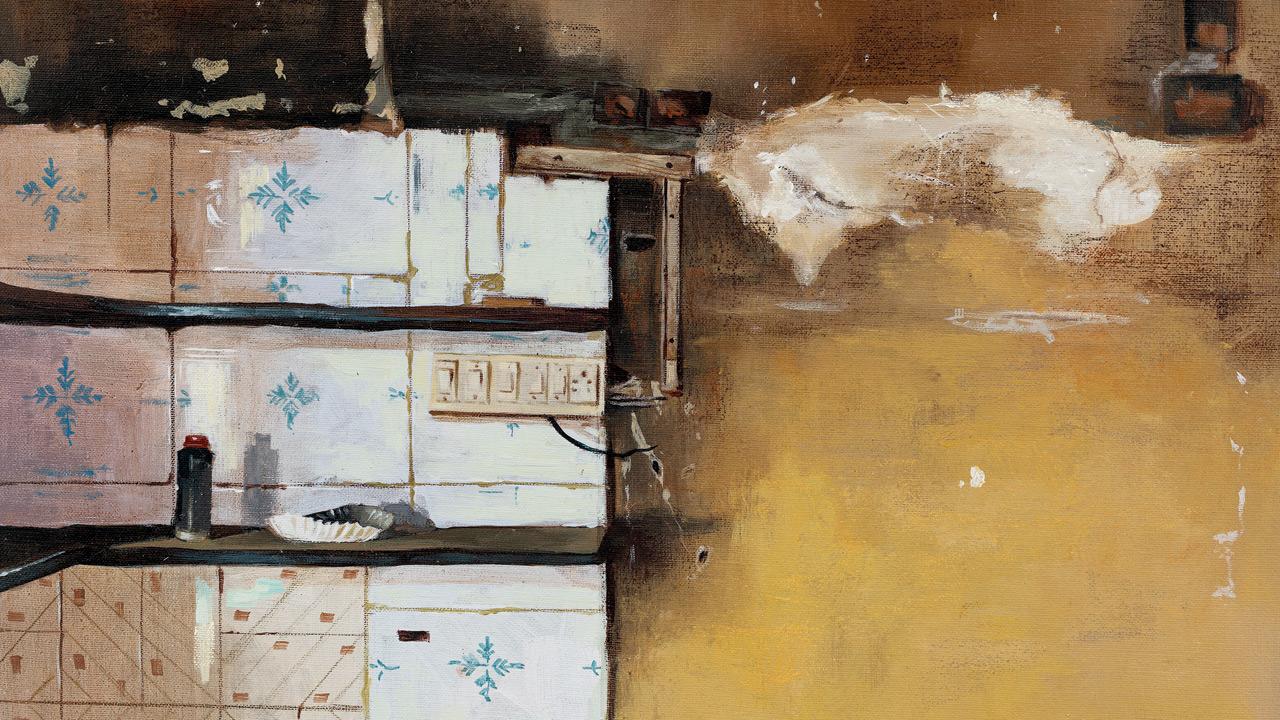
A Forest of Remembrance- D16, 2024, acrylic on canvas
The building in Crawford Market no longer exists. It was demolished in 2023, to make way for towers — a sign of the city’s rapid gentrification. “If you look at it, historically, the British created the BDD Chawls to attract manual workforce to the city. They would be housed in 10x12 ft houses. When India gained Independence, the system remained,” he explains.
Now, the city no longer has a place for this workforce, or its culture. “Many have been offered a place in Mahul, which is far away. Countless struggle to rent a house in the neighbourhood, or even in Dadar or Parel, owing to their surname,” Patil says. This unspoken casteism is part of the systematic erasure, he adds.

A Forest of Remembrance S9, 2025, Bronze
Yet, the memories survive, and find a way into his creation. The exhibition features 19 paintings, or documents as Patil calls them, and 11 sculptural installations. “The works capture those little spaces within those 10x12 rooms; each room has a different colour, a different language — from Konkan to Kolhapur,” he says.

Amol K Patil
The sculptures capture movement and are performative, Patil suggests. “They show people trapped in the debris, the dust, the bricks, the system, and yet appear in motion,” he adds. The 38-year-old calls these people ‘a forest’. “They are the crowd of people who moved to Mumbai, and built its landscape — from its theatre, poetry, food, even the city. A community that was created around this, is slowly being erased in the name of development,” he points out. Sadly, somewhere far off from Crawford Market, in the forests of Aarey, this urban conundrum finds itself reflected.
TILL December 27; 11 am to 7 pm
AT Project 88, ground floor, BMP Building, Colaba
 Subscribe today by clicking the link and stay updated with the latest news!" Click here!