Would you binge on a stem as an appetiser? It might not top your list, but the savoury, fried Crispy Lotus Stem (Rs 665) at this outlet could possibly have you rethinking the idea. Thin slices of the stem, a key ingredient in traditional Chinese cuisine, are sprinkled with black pepper and garnished with curry leaves, giving it a desi tweak. It has a hint of sweetness, and is crunchy, but sits satisfyingly on the palate, almost instantly. Be careful though: Just like with any light, addictive fried appetiser, it is easy to binge on the dish. At: Mainland China (outlets across Mumbai).Call: 9320478302 (Andheri West)Log on to: @mainlandchina
02 March,2026 09:39 AM IST | Mumbai | Trisha GhoshRead >> Oh, the Places You’ll Go: AN uplifting book that encourages children to go on, despite the ‘bang-ups’ and ‘hang-ups’. It tells them that great things lie ahead for them. There will be ‘lurches’ and ‘slumps’; there will be days when they have to ‘play lonely games’, but they’ll move mountains if they learn to take things in their stride. >> Horton Hears a Who! In the jungle of Nool, Horton the elephant hears a noise. He follows the sound, and initially finds no one, except for a speck of dust. He believes there is certainly a small person, or perhaps even a family of small persons, on the speck, who must be saved from the kangaroos, monkeys, and eagles in the jungle. Find out what Horton discovers when he puts his ear closer to the speck, and remarks, ‘a person’s a person, no matter how small’. >> Green Eggs and Ham: Sam-I-Am wants the protagonist to try green eggs and ham, but the protagonist refuses it. Sam-I-Am continues to make several attempts at offering the dish, with new ideas like eating at different locations or with different animals. The protagonist rejects them all: “Not in a box, not with a fox, not in a house, not with a mouse.” The book is an endearing adventure about the joy of trying new things. AVAILABLE Leading bookstores & e-storesLOG ON TO youtube.com/@DrSeuss (to read-along) Watch >> The Secret Darker Art of Dr Seuss: Apart from giving us whimsical rhymes, Dr Seuss also illustrated his books. He began as a cartoonist for magazines in the 1920s. By the 1930s, he had begun illustrating books for children. Interestingly, one can find many of his characters appearing in political cartoons, taking on new meanings in new settings. Stylistically unique, Dr Seuss’s characters are easily identifiable, whether they appear in an advertisement, such as for Ford or General Electric, or in a picture book. Theodor Geisel sketches The Grinch. Pics Courtesy/WIKIMEDIA, Amazon In the video, we’re introduced to their simple round faces with intricate crosshatching on their clothes and fur. The most fascinating moment in the video, however, is the discovery of Dr Seuss’s secret Midnight Paintings, which were released only after his death. Radically different from his cartoons, they use darker ideas and landscapes. For example, the famous cat in the hat turns into The Cat Behind the Hat, depicting the writer’s mischievous alter-ego. Log on to: YouTube; drseuss-art.com/secretandarchive
02 March,2026 09:30 AM IST | Mumbai | Nandini Varma1 The Social Life of Indian Trains (Aleph) If you are obsessed with the idea of the Indian Railways and cannot seem to have enough rides, Amitava Kumar’s tribute to iconic rail journeys, interesting histories and the magic of train travel, will satiate the senses and keep you on track, literally. 2 Blistering Barnacles (Farshore) If you are a fan of Captain Haddock, pick up this A-Z of rants and rambles crafted by Albert Algoud. It is a witty, illustrated salute to the bumbling captain’s utterances, each uniquely more insulting than the previous one. Enjoy the gobbledegook. 3 How To Forget (HarperCollins) Meera Ganapathi has combined the ideas of taking walks and writing poetry in refreshing fashion with this curation of 55 walks including insightful, sensitively written observations about Mumbai. Appreciate the poetry sans the weight of overwhelming language.
02 March,2026 09:24 AM IST | Mumbai | The Guide TeamOffer them space Festivals can be difficult for these babies, especially streeties. As a pet parent and feeder, one of the concerns during festivals is the loud noises and crowds. With Charlie, my three-year-old indie, I try to take her out in the early mornings before the crowds take over. We spend the rest of the day indoors. We use flowers instead of colours for our own Holi. Checklist >> A long early morning walk or engaging in games can work away their nervous energy>> Feed them on time, and away from the crowd.>> Keep them indoors if you can on such days. >> Build a refuge space where they can take shelter Khushali Chauhan, 20, pet parent and feeder, Wadala Step out to help Holi might seem fun as a kid, but for streeties and pets at home, it is stressful. The loud noise, the crowds, water balloons flying in from everywhere. It is scary. We [my husband and I] spend the day cooking dog-friendly sweets for our furries, Loki, Luna, and Tofu. This distracts them from the chaos. Community dogs tend to go into hiding. We usually spend our evening looking for them. We use coconut oil and a towel to clean them. Checklist >> Create a small shelter>> Educate kids in your community about mindful ways to celebrate>> Step out to look for the community dogs, and help them>> Use coconut oil to gently rub off the colour. Give them a wash if you can>> Reach out to animal welfare associations when needed Prateeksha Khot, 34, pet parent and feeder, Mulund Play mindfully Colours can cause severe skin problems among streeties. They lack the facility, ability, or knowledge to know how to care for themselves. It is a terrible idea to use toxic chemical colours on human skin, let alone animals. After every Holi, I go around with a wet cloth trying to wipe away the colours. But that is often late. Holi was about natural colours, not loud sounds or crackers. If we can go back to using natural materials, it would be better. We need collective effort by people to educate others and take measures. Checklist >> Where possible, use natural colours like turmeric or fruit extracts>> Keep a wet cloth handy to wipe the colours off them>> Spread awareness among kids, and adults>> Ask people to not play with colours in feeding areas >> Call out people applying colours on streeties Taronish Bulsara, founder, World for All Animal Care and Adoptions Get help >> Paw DiariesLOG ON TO @teampawdiariesCALL 9960145333 >> Trimurti Paws AmbulanceCALL 9833666616 >> World For All Animal Care and AdoptionsCALL 9820191321 >> In Defense of Animals (IDA)CALL 9320056588 >> YODALOG ON TO @yodamumbaiCALL 8899997704
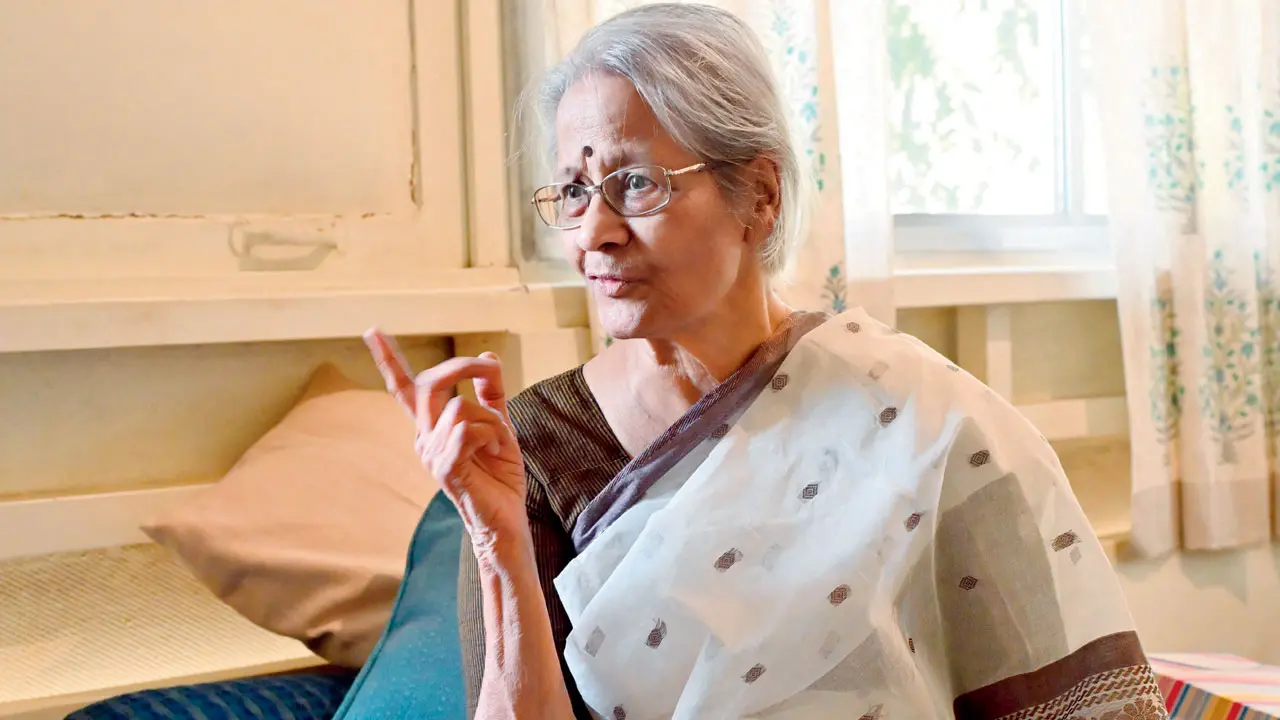
02 March,2026 09:17 AM IST | Mumbai | Shriram IyengarShanta Gokhale, Sahitya Akademi award winner, author, theatre person and translator, has a confession to make. “I haven’t read all the books in my bookshelf,” adding that she requests people to not give her titles. “Unlike the Japanese term ‘tsundoku’, of stacking up books without reading them, we need to find a term for this because I want to read all of them,” she chuckles, offering us snatches into her literary conundrum. We’re at her sunlit Art Deco residence in Shivaji Park, to discuss The Woman Who Wore A Hat (Speaking Tiger), her recent translation of the landmark feminist Marathi novella by Kamal Desai, Hat Ghalnari Bai. But when one is in the company of the octogenarian wordsmith, the conversation takes a life of its own. The Woman Who Wore a Hat Excerpts from the interview. Eight decades in Shivaji Park. Tell us about the change that you have witnessed as a resident?The change is constant. My family moved from a wadi to a fully developed locality here. It had strict regulations regarding building heights, and the surrounding space. It was the Shivaji Park that stayed with us for 40 years — from the late 1940s to the 1990s. Then, development began. Some buildings were allowed to construct external lifts, or build two extra floors. A decade had elapsed. People began to question the CRZ (Coastal Regulation Zone) rules. Those rules had kept heights down because of the proximity to the shore but they got bent, eventually. Dadar Sea Face became Mahim Bay, leading to another set of rules. Developers had a field day. Many original buildings have been razed, and in its place 20-22-floor towers have emerged. Shivaji Park, Dadar 28: History, Places, People The loss is not just for us, old residents. We will soon pass on, and fewer will be left with those memories. New residents will never experience the sense of openness that we did. Every building in this neighbourhood had one regulation — a view of the park. Progressive builders and architects ensured we lived in an airy, healthy, green and beautiful neighbourhood. How did Shivaji Park become a cultural nucleus for theatre wallahs, literary voices, and musicians?Many Shivaji Park residents were originally from Girgaum, which was the hub for educated Marathi people, as well as mill workers. There were two classes: mill workers with strong cultural roots in villages, and clerks who had their culture. They were huge followers of classical music and theatre. Theatre has always been a part of Marathi culture. So, when they came here, they brought that culture. They couldn’t live anywhere unless it had a library, and venues for concerts and plays.Shivaji Park residents didn’t sit back and wait for things to happen. They raised funds, and set up venues. I recall three residences that hosted some of the finest music concerts. I’ve attended a few shows as a child because my parents were extremely fond of classical music, and were regulars at these concerts. I have fond memories of those performances. It was an invigorating time to interact with likeminded people in this neighbourhood. The Engaged Observer This neighbourhood and parts of Mumbai have inspired your writing…Writers like me prefer to have a lot of concrete detail in our writing. I should have personally experienced this concrete detail, which occurs only in your little part of the city. Many of my stories are located in places that I knew, like Girgaum, Lamington Road, and South Mumbai, including the iconic Jehangir Art Gallery and Rhythm House, and old bookshops. They were our beats when I was a lecturer at Elphinstone. And then, this other culture was around me [Shivaji Park]. I was lucky to have been exposed to different Mumbais. Crow Fall Hat Ghalnari Bai has an unconventional storyline. How did you approach the translation?I read it as a classic. It was on my wishlist of translations I wanted to work on. Being a slim novella, I wasn’t sure if putting it out by itself made sense. On a visit, Ravi Singh (Speaking Tiger) mentioned publishing a set of five translated novellas from various languages, and asked me to suggest a Marathi title. I obviously suggested this book! The book had challenged me even as a reader. None of the characters are stereotypical; her [Kamal Desai] style is unconventional, and can create actual hurdles to understanding it, so translating it meant interpreting what she meant. I’ve always said, “Kamal tai, you want to deliberately prevent us from understanding what’s on your mind!” Despite reading it several times, and also poring over discussions and analyses, I couldn’t decode the novel. The final way of cracking it was to translate it because when you translate, you are literally getting under the skin of the author and their work. Nirmala Patil Yanche Atmakathan …And, were there any un-learnings from the translation?Your word [un-learning] is important, because I have a very logical mind. Cause and effect are critical to me. That’s why I cannot let myself go in my writing (laughs). I am incapable of writing fantasy. So, I had to unlearn that aspect to be faithful to the book. It was a huge challenge. It took me about three months to write the first draft; it was a struggle every day, every line, every word. To this day, there is one line where I am unsure about what she meant! And there is no way to find out since she has passed… Smritichitre, The Memoirs of a Spirited Wife, for which she received the Sahitya Akademi For English Translation (2021) Do all translators face this dilemma?Writers want to be clear, unlike her. How do translators retain the original story’s sanctity?The question is of inviting these characters to acquire as close a life as to the ones that she [Kamal Desai] created. So, it means understanding them, loving them, and bringing them to life in another language. It is almost the same kind of process followed by the author and translator. Characters don’t pop up in their mind fully; maybe, a gesture or a line of conversation emerges, and then, the character takes shape. For the translation, the character has to be created such that you can feed it the kind of English it would speak. There is a lot of creative joy to craft this without interfering in the way the original character was envisaged, which is sacrosanct. The Scenes We Made, An Oral History of Experimental Theatre in Mumbai How do you shift from being a writer and translator?Sometimes, they run parallel. Because, even as I translate, I get ideas for something else that I could do, which might not have a direct link. Right now, I am inspired by a set of stories by Hindi writer, VK Shukla, who passed away recently. A stream of thought has taken shape, built around moments, and has stayed with me.Meanwhile, I’ve finished translating 250 pages of the work of Marathi progressive writers of the early 20th century, which is heavy-duty Victorian-like prose, and here I was, diving into these snapshot-like stories (chuckles). It offers creative relief because you are constantly tied to a way of writing, which isn’t yours but you are immersed in it. You do feel bound [by translations], and this offers escape. Hat Ghalnari Bai was a feminist novel. What is your take on writing such novels? There is women’s writing and feminist writing. Women are writing a lot, and automatically, if they are basing it on personal experience, something ephemeral can wean into it. Every woman writer is not necessarily feminist. Some writers who are feminist aren’t able to get away from theory and ideology into seeing it translated into real life, to make those lives real. So, you constantly feel that this is being written with a theory in mind. [With this book] you have to be the kind of writer whose feminist belief is so completely part of herself that she is hardly conscious of it, and yet it is that consciousness that comes into her writing. But she is thinking of stories. It’s organic. She [Kamal Desai] is a creative writer – she thinks of stories and characters but when she writes about them, her beliefs enter by default. The manner in which the unnamed protagonist challenges those five men is remarkable just by being the kind of person who doesn’t seem to care that she has no family, no memory. Writing for books and for theatre…how do you approach both? The reader and audience don’t exist. I like to challenge myself. I want to try, irrespective of if it works. The idea tells me what I should do with it. I see it as a play or as a novel. From college lecturer, to Arts Editor and a PR professional — you dabbled in many professions. What did each teach you?All the other jobs were part of my upbringing. It grew within the space that I knew well. But Glaxo was alien to me. Many writers don’t experience how the cogs in the business wheel work. It was necessary to understand this process — the priorities in corporate life, and what is important to me – the moral part of life. The ethics of living are so far away from profit-making. And then, to realise that if we have chosen this system [capitalism], it has to be part of our life. I will not be judgemental about it because the bottom-line is that I chose to do it to earn money. If Glaxo offered it, I was happy because my children were growing up, and it was a requirement. Back then, some journalist friends pooh-poohed the idea. What about Shivaji Park makes you smile every day?On my walks, I notice a ‘gang’ of Gujarati women who chat all at once; they enjoy themselves by talking about money while passing around farsan. Some of their husbands also walk around the park. In my private life, there is no place for fafda or for money, so I am amused each time I pass by this group. I am also constantly amused by our idea of beauty. Each time they decide to beautify a section [of the park], I wonder what’s in store. There is an obsession with statues at the gate posts; these are of a cricketer, a footballer, and so on. I see these people in action, so why the statues? Then, in the name of ‘art’, there are paintings of grass, flowers, toadstools and frogs. Where do they [toadstools] figure in our lives? Only those who read Enid Blyton’s books would know, and I’m sure not many of them live in Shivaji Park! It makes me laugh all the time. Rapid fire An author you’d love to interview: Amitav Ghosh. I have lots of questions to ask him after having read his work. A recent read that excited you: Please Look After My Mother by Korean writer Kyung-sook Shin that was well translated into English by Chi-young Kim. It’s a beautifully written, moving book. Advice for upcoming writers: I don’t give advice. People have to learn by themselves the way we did. AI in writing AI is the enemy of good human work. I believe in the human struggle, which has brought us this far. If we are going to have it ready-made; if we are going to trust [it] completely that we don’t bother to find things out for ourselves, it’s a different kind of human life. Those who participate in it will have to deal with it, resist it, and do what they think is best. I am worried for young people, like my grandsons who are growing up firmly about certain values [of avoiding its use], but they will constantly be challenged by the outside world. The Glaxo years While working as a PR professional at Glaxo [1979-88], I directed plays for employees during lunch breaks. I would choose one-act plays, and cut it to 30-minute durations. We had staggered lunch breaks, where each break was for 45 minutes. Rehearsals were done at that time. The actual staging was half-an-hour. Ms Jane Swamy, HOD of my department, warned me that it wasn’t part of my job so I couldn’t ask for extra time, or budgets! It was a huge responsibility but an enriching experience. Employers would have 10-minute lunches, rush to the auditorium, watch plays, and rush back to work. I’m still in touch with a few actors from that time.
28 February,2026 01:56 PM IST | Mumbai | Fiona FernandezIn a city obsessed with new restaurants and fancy cafés, it is doubtful that people pause to consider what actually goes into building a good restaurant or truly ‘making it’ in the hospitality industry. To mark the 10th anniversary of The Bombay Canteen, Yash Bhanage, founder and COO of Hunger Inc. Hospitality, is expanding the long-running Canteen Class into Canteen Open House. What initially began in 2017 as an intimate, classroom-style session gradually evolved into a day-long takeover of the restaurant, transforming the space for dialogue and interactive sessions. “I hail from a hospitality school background myself, and I often felt that while school teaches you technique, it does not always prepare you for the realities of the industry — the pressure, the pace, the failures, and reinventions. Those lessons are harder to find in textbooks,” Bhanage emphasises. With the second edition, titled The Chef’s Edit, the ambition is sharper. “At its core, I hope the Canteen Open House creates momentum. Not just excitement for a day, but a shift in perspective that lasts,” he adds. Yash Bhanage, Dina Weber, Hussain Shahzad and Prateek Sadhu The Chef’s Edit brings together multiple chefs under one roof. The line-up includes Thai-Indian chef and restaurateur Chalee Kader in conversation with chef Hussain Shahzad, followed by Himanshu Saini on building context-driven businesses and American pastry chef, Will Goldfarb on redefining failure. Baker Dina Weber and Singapore-based chef Prateek Sadhu discuss turning distance into demand in their fields, while chef Rishi Naleendra examines consistency in leadership. The day will conclude with chefs Saylee Padwal and Shruti Purandare in dialogue with Shahzad, reflecting on the journey of young chefs and their philosophy regarding the ‘never give up’ attitude needed in the cut-throat industry. ON Today; 9.30 am to 6.30 pmAT The Bombay Canteen, Unit-1, Kamala Mills, Lower Parel. LOG ON TO @thebombaycanteen CALL 8880802424ENTRY Free
28 February,2026 08:47 AM IST | Mumbai | Rumani GabhareOld school rules Krunal Ghorpade aka DJ Kratex Trend forecast: 2026 is a big year for Techno. The recent Dhurandar soundtrack had hints of the genre, and Indian audiences seemed to love it. What’s hot?. Cham Cham by Ajay-Atul and Vaishali Samant. Chandu ke Chacha by Aasma. Taambdi Chaamdi by Shreyas Sagvekar and Kratex What’s not?Songs that are built around trending memes and movie dialogues. They’re an excuse for creativity and leave the audience feeling like they’re watching Instagram reels all over again. Give me a breakParth Taco aka Magic Salad Trend forecast: Hip-hop and house will top the roster, but this year DJs will bring some fun between the tracks with groovy breaks What’s hot?. Drip by Moktar. Muita by Yo Speed. Make a Dance by Mad Queen What’s not?Music that’s on the nose, psychedelic tracks. Minimal techno can take a back seat as well, alongside Holi-themed Bollywood hits. Filmi farewell DJ Ruchir Kulkarni Trend forecast: While Bollywood will remain a favourite, Afro House will get the dancers in the audience on their feet What’s hot?. Madhubala by Ali Zafar, Shweta Pandit, and Sreerama Chandra. Blessings by Calvin Harris. Rang by Satinder Sartaj and Zahrah Khan. Turn the Lights Off by Kato What’s not?Bollywood staples like Rang Barse by Amitabh Bachchan and Do Me A Favour by Anu Malik and Sunidhi Chauhan
28 February,2026 08:47 AM IST | Mumbai | Devashish Kamble | Devashish KambleAnxious People Paree Jambhekar, psychologist, AndheriFredrik Backman’s book is a brilliant look at how our inner world — thoughts, feelings, experiences — propel us towards choices, both helpful and unhelpful. The stories are interconnected, and run parallel to a police investigation. One theme that recurs is how we, humans, need support and someone to understand us, in all our messy and chaotic ways. The Loneliness of Sonia and Sunny Neha Mathews, media professional, ChemburI’m inching through Kiran Desai’s 700-page book because the prose is so luscious you want to savour every page. It’s a delicately told story of belonging and othering of Indians abroad and at home, of hyper self-awareness colliding with inertia. As chapters zigzag between characters’ inner worlds, entering each one feels like stepping into a new room in a vast house. Desai was in no rush to finish writing this book, and I’m in no rush to finish reading it. The Picture of Dorian Gray Meera Desai, singer-songwriter, VersovaAfter being sick of instinctively reaching for Instagram, I decided to replace it with my e-reader app. I had been drawn to Oscar Wilde since I was exposed to one of his poems by an elderly Irishman. I’ve loved reading it leisurely with lots of highlighting and rereading. It’s made me realise how homogenous and clinical my own speech and writing have become, and made me appreciate and strive to be the most ‘chalant’ version of myself. Kutch ni Rasdhar Rohan Mehta, film professional, VersovaDuleray Karani’s book is a collection of oral narratives from the Kutch. It’s one of the most comprehensive anthologies capturing the local folklore that has been passed down through generations rather than formal history. The stories are the human interpretation of the land, and that is what I like. Folklore somehow reads like fictionalised history lessons. Nothing is ever absolute. It’s always a version, a Chinese whisper, which morphs through time. You understand the psychology of the people and the form of society — sociology and history merged into one. Those Who Eat the Cascadura Gautam Vegda, PhD Scholar, Chembur Set in the abundant and redolent terrains of Trinidad, Samuel Selvon’s book is a well-crafted blend of Caribbean folklore and fervent interracial romance. The novel hinges on the spellbinding legend that those who eat the Cascadura fish are destined to return to the island to end their days, a destiny that fuels an enthralling romance between an English visitor and a local village girl in the colonial era. Available All titles at leading bookstores & e-stores
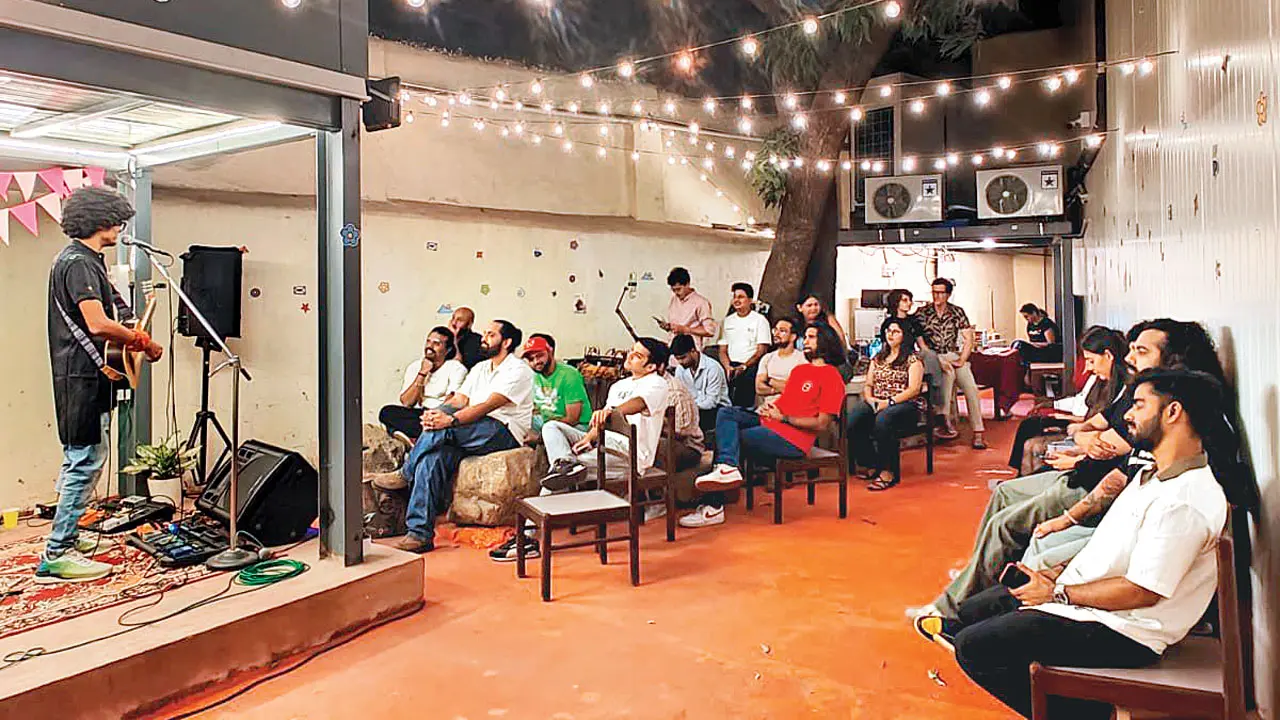
27 February,2026 09:55 AM IST | Mumbai | Nandini ShahGive Mumbaikars a low concrete platform, and they’ll turn it into a social hub. Think the Marine Drive promenade, Shivaji Park, or this writer’s college that prided itself for its popular Ruparel Katta, where students happily bunked many a day’s lecture. When we heard that a new one had popped up in Thane, our ears perked up. Atrangi Katta is psychologist-artist duo Vedanti Shinde and Renuka Patil’s ambitious effort to make music, literature, and craft accessible for Thanekars. Rocks and tree stumps are repurposed into seats for the audience The 30 to 40 occupancy outdoor space near R-Mall on Ghodbunder Road stays true to its name. The katta itself is built around an old mango tree that the duo deemed cruel to chop down for a few extra square feet. As for atrangi (unusual/quirky), the seats do the talking. At a recent gig, the audience was perched comfortably on rocks created by the early construction work. Others settled on stumps of an old Ashoka tree that fell to its natural death last year.“We want people who never imagined art to be a part of their life to tap into their creative side. That calls for a space where they feel safe and free of judgement,” says Shinde. At a music event earlier this month planned by musician Joshua D’Souza, children belted out Metallica hits. The seniors in their 60s preferred to sing along and twist to their own favourites, we learn. An art corner is set up around the old mango tree This space is also openly queer-friendly, and intends to host one queer-centric event every month. The founders tell us the katta will be an alternate space for LGBTQiA+ individuals who prefer slow conversations over loud parties. Renuka Patil and Vedanti Shinde Patil reveals plans to open an indoor space in the same premises soon. “We’ll gladly host literature talks and theatre plays that can be adapted to our space. As of now, we haven’t heard from any theatre groups. That might change soon, with word of mouth” she hopes. In what might send larger venues with robust marketing teams into a tizzy, the duo has spent a sum total of R800 on marketing since they opened in January. Without the backing of big sponsors, and only three years’ experience of running an art collective before this idea took shape, the duo is wearing many hats at once to keep their first physical space running. We’re tipping ours to their creative spirit. AT Atrangi Katta, Kalpataru Industrial Estate, Manorama Nagar, Thane West.LOG ON TO @atrangi.katta Upcoming events Open jam: Music gathering where you play without the pressure of perfection. ON February 28; 7 pm Quiet craft social: Quiet time to practise your hobby at your own pace.ON March 5; 7 pm Psych mixers: Space for established as well as aspiring mental health practitioners to network.ON March 7; 7 pm
27 February,2026 09:54 AM IST | Mumbai | Devashish KambleSmoke on the Water by Deep Purple Hop along for this ride back in time with a rock and roll classic. This title might or might not be inspired by true events in the city this week Mumbhai by Ashutosh Phatak and Dhruv GhanekarThe chaos of Mumbai, and Jaaved Jaffery’s wit come alive in this retro track that still has a vibe. A reminder that the city remains just the same, even in the 21st Century Beautiful People by David Guetta and SiaThis high-energy, pop track extols the concept of living in the moment, with an upbeat electronic rhythm, perfect for the dance floor You really got a hold on me by Smokey Robinson and Sheryl CrowA soulful rendition that reimagines a classic track, artfully, minus the bells and whistles. Smooth and easygoing for your weekend listening pleasure Stay another day by Anant GoyalThe song grows on you like a slow morning, where you make a good breakfast and journal before starting a busy work day
27 February,2026 09:52 AM IST | Mumbai | The Guide TeamHome and the hearth The nostalgia of heartbreak, friendships and eccentricity of Old Delhi form the crux of Vibhu Puri’s play 305 Galli Mantola. ON Today; 7.30 pmAT Rangshila Theatre, Versova. LOG ON TO in.bookmyshow.comCOST Rs 300 onwards The Dame in Andheri Thrills, chills, and a kill. Agatha Christie’s The Mousetrap finds a new adaptation set in the cooler climes of a Shimla guesthouse. Talk about murder in the hills. ON March 1; 8 pm AT Veda Factory, Aram Nagar Part 2, Versova.LOG ON TO @darakhttheatrecompanyCOST Rs 250 onwards Family trouble Pic Courtesy/@aanjjan.srivastav Featuring the familiar faces of Anjjan Srivastav and Sulabha Arya, Kashmakash is an adaptation of Debasis Majumder’s masterpiece that tells of a middle-class man’s struggle to survive. ON March 1; 7 pm AT Rangshila Theatre, Versova. LOG ON TO in.bookmyshow.com COST Rs 700 onwards A legend on stage Lillette Dubey brings alive Gauhar, the tale and the music of the famed singer Gauhar Jaan to the Mumbai stage with the latest run of the work by Mahesh Dattani. ON Tomorrow, 7.30 pm AT Royal Opera House Mumbai, Charni Road East, Girgaon. LOG ON TO in.bookmyshow.com COST Rs 500 onwards
27 February,2026 09:51 AM IST | Mumbai | The Guide TeamADVERTISEMENT