











The rotunda of Chhatrapati Shivaji Maharaj Vastu Sangrahalaya (CSMVS) offers visitors an evocative glimpse into the Harappan civilisation through a replica tableau of Dholavira, setting the tone for the expansive Networks of the Past gallery. The exhibition connects ancient worlds — from Egypt and Mesopotamia to Persia, the Mediterranean and China

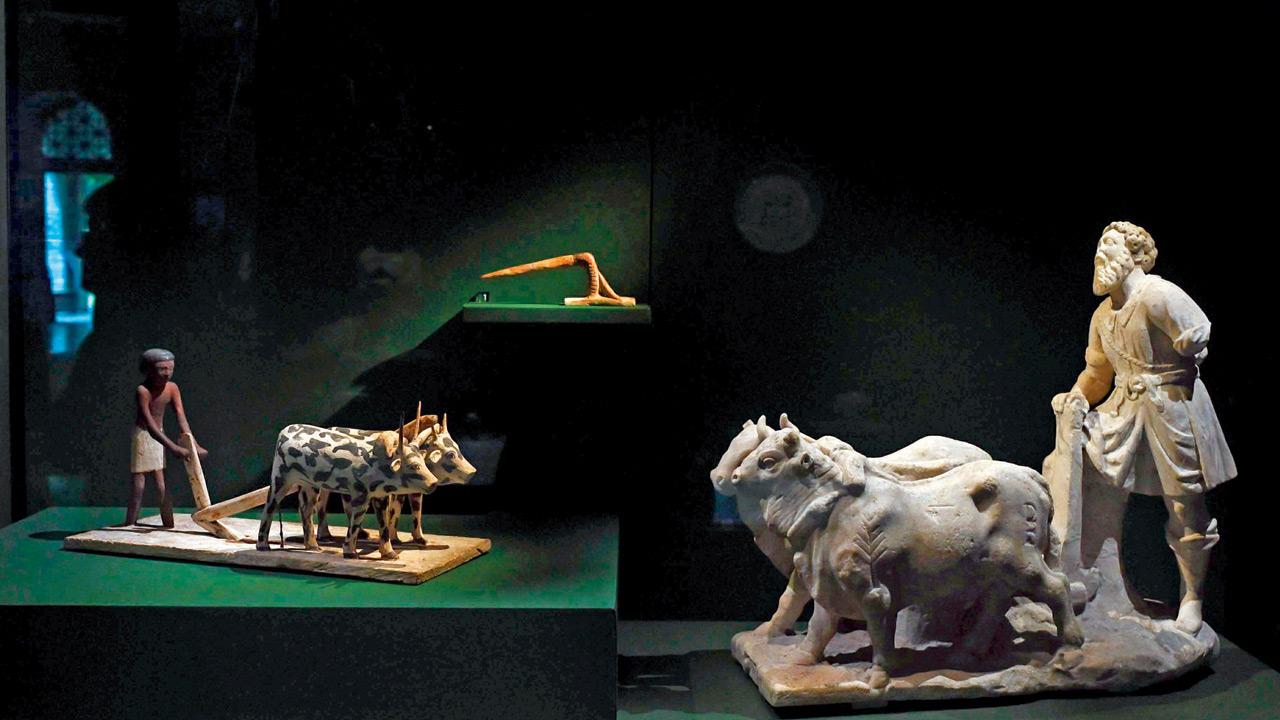
A view of the exhibits in the Networks of the Past gallery. Pics/Ashish Raje
Visitors who step into the rotunda section of the Chhatrapati Shivaji Maharaj Vastu Sangrahalaya (CSMVS) are bound to discover an instant imagery of life in the Harappan civilisation, thanks to the replica tableau of the model town of Dholavira ((3000 to 1500 BCE). It sufficiently piques the imagination to tread into further mystique and exploration in the main section of the Networks of the Past gallery, which teleports one to the ancient worlds of Egypt, Mesopotamia, Persia, the Mediterranean, and China. This ongoing collaborative effort has ensured that over 250 objects are on display for three years, from leading museums across India and the world.

Fabricators matter: Examples of complex placement of differently-shaped objects. Materials play a key role - paints, fabrics, materials used for partitions and pedestals. “All of it has to be approved internationally, and had to be stable enough to meet certain standards as set by the museums internationally,” explains Ramesh
Nikhil Ramesh, Curator (Conservation), CSMVS, is relieved and excited that the pieces of the giant puzzle came together. He relives the procedural challenges, “The museum had to raise the bar with this exhibition gallery because the borrowed objects are going to live in this space. The British Museum [which lent the maximum number of objects] had created certain tests, and these exhibits had to pass it. We had to find a balance between specified parameters (see box right), and the dialogue continues until we realise that there is a safe space for these objects. This began well before the gallery was set up, and continues till these objects are here.”
Parameters
1) Temperature controls: Stable values are of paramount importance for the health of every object.
2) Relative humidity: Different materials including wood, linen, sandstone, terracotta, and paper behave differently. “We have to find their sweet spot keeping in mind these parameters,” informs Ramesh.
3) Display cases: Objects from different museums have different specifications like height, weight, and material and guidelines for movement. “We have to satisfy these requirements as closely as possible; this is factored in while designing display cases and placing them in it. Sequencing the object placement into the case is also important,” he adds. Ramesh and his team had a tight turnaround time of just one month to install all the objects in this gallery. Machines like the manual stacker installed objects, where a hydraulic system was used to gently place them across varying heights in their respective display cases.
Backstory Files

(From left) The cat’s brain as viewed in the scan; the highlighted molars
1 CAT SCAN WONDER: This tissue and linen-shrouded exhibit (1st Century CE) from Egypt was CT scanned at the British Museum. It wasn’t originally part of this show, but Ramesh insisted that it would be a great addition.

The scans reveal that part of the brain is present; the eye socket is visible; the neck is broken, highlighting how it died. The molars were still in the jaw, and hadn’t popped out. This helps gauge when it died (not more than four months). This object is bound to encourage the medical, student, and scientific community to engage with it.

Display at the gallery (right) conservators realign broken pieces
2 HARAPPAN TERRACOTA POTTERY: This was from the museum’s collection. One of the pots was originally in 15 pieces. Most of the pottery had minimal interventions by CSMVS’s conservators in the past. “We’ve tried to reduce the crudeness on its surfaces. We want the visitor to see the painted surface, and its patterns.

An adhesive being introduced into the cracks
The challenge was its size and shape; we had to handle it carefully, and put the pieces back together. For this, the team had to test the right adhesive using the correct measures and concentration. The restoration took 2.5 months,” he shares.

Before conservation, the pot was held together with metal wwires and metal clips. Pics Courtesy/Conservation Lab, CSMVS
3 KING-SIZE: This object of Gudea (ruled 2144-2124 BCE), king of the Sumerian city of Lagash, was deposited at the foundation of a temple. At 350 kgs, it is one of the heaviest exhibits. The team required a compact forklift so that it could be moved alongside other objects within a narrow radius of its pedestal.

It had to be installed face-front keeping in mind the space in front and behind.
4 STELA’S COLOURS: This painted limestone panel found in Greek-ruled Alexandria dates to 2nd Century BCE. This reveals a little girl (named Stela) holding a bird, while playing with a pet dog. Scientific investigations at the British Museum revealed pigment present on the surface not entirely visible to the naked eye. “We see only the visible spectrum; but it doesn’t mean that the rays are not interacting with objects. They tapped into other spectrums during conservation and found tons of Egyptian blue made from a specific pigment,” he shares, excitedly.
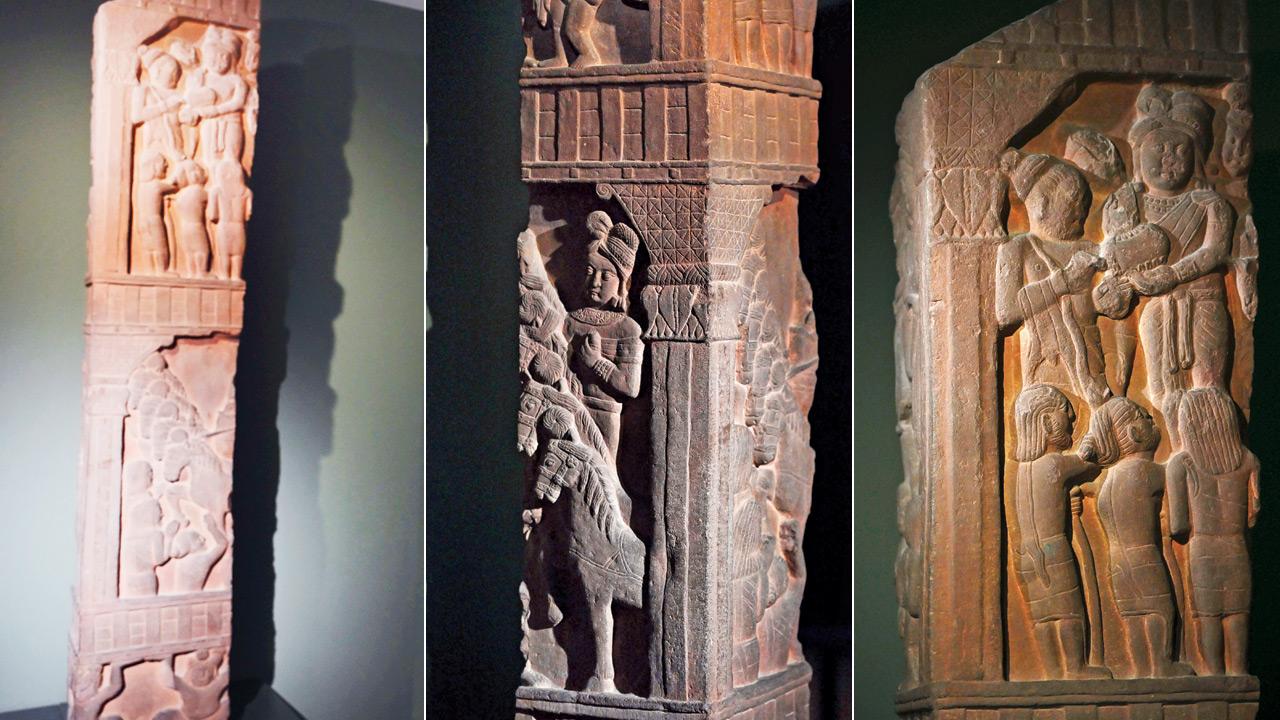
5 PILLAR TO POST: The CSMVS team went to Allahabad Museum to initially survey this sandstone fragment of a railing (1-100 CE) that resembles a pillar. Originally from Bharhut, Madhya Pradesh, it was embedded in the wooden pedestal at the museum, but they were unable to gauge its depth since officials mentioned that it had been standing in the same spot for 50 years. So, they fabricated the pedestal design at CSMVS on the assumption that it was one foot, also aware that there was a height restriction at the gallery. When the packers went to dismantle it at the museum, it turned out to be two feet! “We had to alter our pedestal here. This pillar was packed vertically. Extreme care had to be taken while handling it. Knowing that we had limited movement within the gallery, we created a structure around it to offer support,” he elaborates.
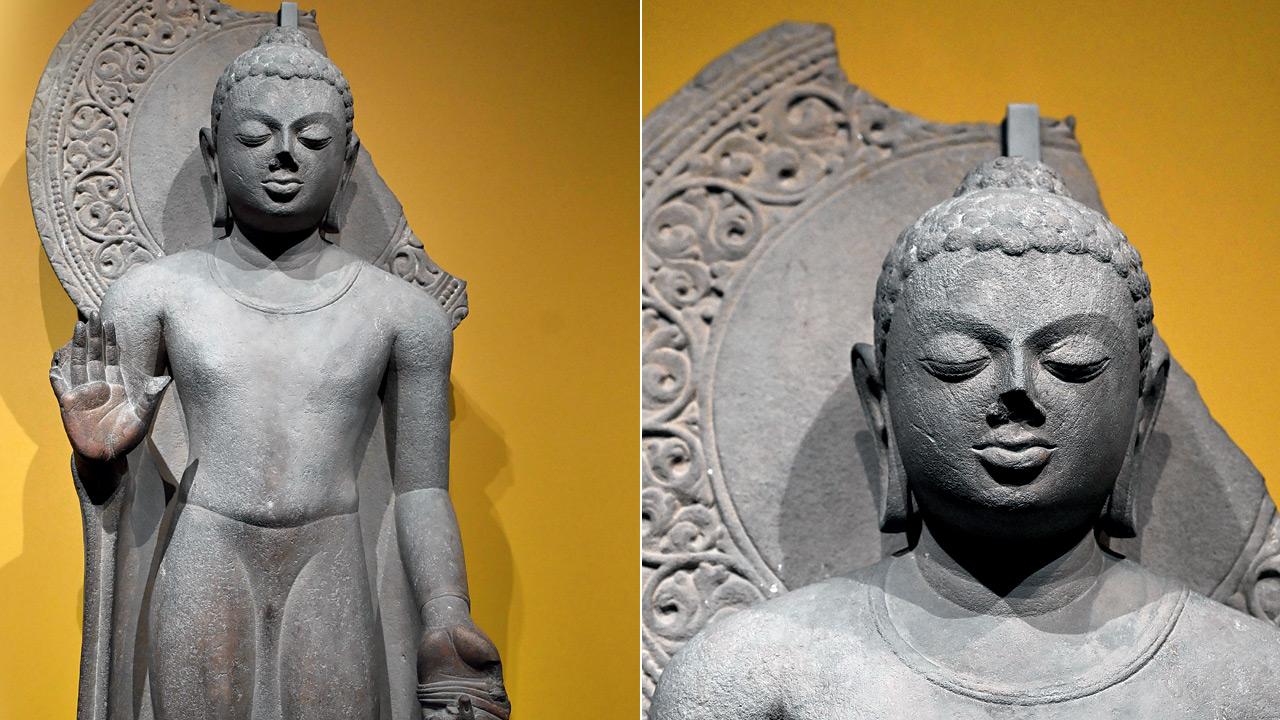
6 BUDDHA’S GRACE: This decorated statue in local buff sandstone of The Buddha (400-500 CE) was sourced from the onsite Sarnath Museum. Ramesh personally visited the site to select it, and realised that the base would have to be constructed when the object arrives at CSMVS. When a team conservator arrived to secure it, it was revealed that there was no base! As a result, the planned design had to be altered. Heavy lifting equipment was used to move it to its final spot. A security clamp supports it on the back. This fragile statue had to be mounted with care by holding it in places that didn’t have carvings or etchings. “We assembled the entire unit on the ground as it would have been risky to do this at a height,” he recalls.
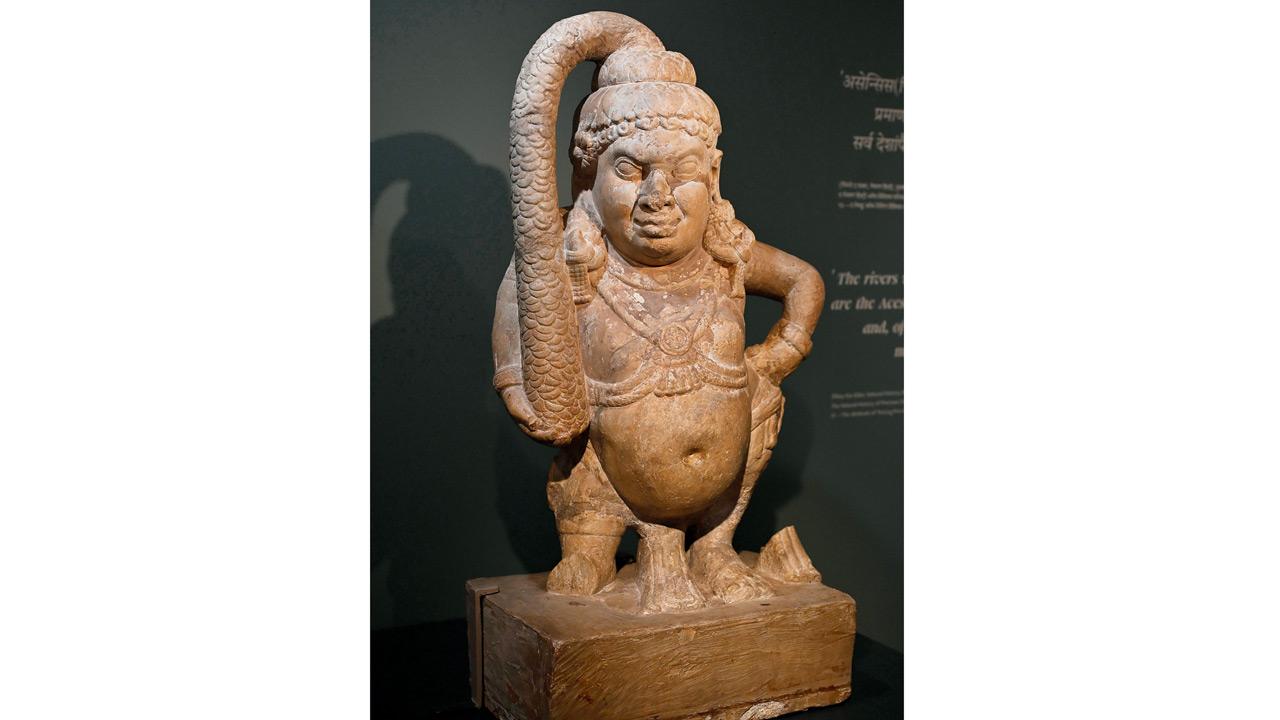
7 RIVER ADVENTURE: This bejewelled and pot-bellied Padamanidhi (‘lotus-treasure’) dating to 200-400 CE travelled by boat all the way from a museum in Nagarjunakonda. A CSMVS team member had to accompany the object on its journey. It was crated; a standard method was followed to ensure there was no movement within. Luckily, the shift could happen on the same day as the waters of the river were placid for its movement to the other side of the riverbank, after which it arrived at CSMVS via road.
 Subscribe today by clicking the link and stay updated with the latest news!" Click here!


