Ever wonder what your grandparents grooved to on the radio as teenagers? Or about the bands that were playing alongside The Beatles in London in the 1960s? Well, Radiooooo is a time-travel miracle for music lovers. The curation of songs across languages, regions, and time. Pick a country and a decade, and it curates a playlist of the most popular songs from the era. From Ali Akbar Khan’s instrumentals or George Formby’s Auntie Maggie’s Remedy, take your pick. Log on to: Radiooooo on Playstore
01 April,2026 09:33 AM IST | Mumbai | Shriram IyengarWhat about kabaddi appeals to you? We were discussing ideas, and the Pratham team suggested kabaddi because they wanted to focus on sports. I’m not a sports person but I got excited because it’s a sport from India; it comes from the villages. I also really like drawing human figures. I thought kabaddi, which is so much about bodies interacting with each other, will be interesting to explore. The vivid illustrations by Kabini Amin captures the local flavour of the game Was it always planned as a wordless picture book? It didn’t start out as an only-picture book. I was struggling to frame a narrative and was going back and forth figuring out what kind of a story this should be. I didn’t want to make it a linear story with a strongly defined protagonist and antagonist. Then I thought the game is so interesting because all you’ve to say is kabaddi, so I decided to work around that. A friend had introduced me to John Sir, a state-level cricket coach and veteran sportsperson. When speaking to him, there were many fun anecdotes that came about. Like when there’s a tournament, people come from different schools and states, and there’s a bit of rivalry. At the end of it, though, you celebrate whoever wins because that’s the spirit of a sport. Another thing I learnt was that before cricket became huge, the India-Pakistan rivalry was commonly witnessed in kabaddi matches. The story built from there, with the scene of the two buses and the children throwing paper planes at each other being a direct reference to that history. Tell us about some of the artistic choices you took.I have to thank Canato Jimo, the art director on this book, who gave me an encouraging push to step out of my comfort zone. We talked about how to bring a local flavour to the art. I really love the screen-printed circus posters with neon colours and black backgrounds. Kabini Amin The ideas for the colours came from there, with pink and yellow as the colours for the teams, and the backgrounds really simple. With the white lines of the court, the images started to look funky, which is what you see in the book. Log on to: prathambooks.org
01 April,2026 09:27 AM IST | Mumbai | Nandini VarmaWednesday100 Ways of Representing Mumbai by Students A joint exhibition by the students of the Sir JJ Schools of Art, Architecture, and Design, the curated panels, “are a portrayal of the city through many of its facets, from food to artefacts, locations, and objects,” shared professor Mustansir Dalvi. TILL April 2; 11 am onwardsAT Claude Batley Gallery, Sir JJ School of Art, Architecture and Design, Fort. ThursdayThe Sun Rises in The East by Ronny Sen Catchment Node VII, 2026. Pic Courtesy/Ronny Sen, Tarq Art Gallery The reality of Artificial Intelligence (AI), war, and the conundrum of an unsustainable world in the near future drives this solo showcase by Ronny Sen.TILL April 18, 11 am to 6.30 pm (Tuesday to Saturday) AT Tarq Art Gallery, KK (Navsari) Chambers, AK Nayak Marg, Fort. FridayThe Last Rust by Archana Hande Discarded dumbbells, sieves, knives, and hammers might feel like the byproducts of a yard sale. But for Archana Hande, they carry a deeper significance. The artist turns to her visit to the nomadic Gurjari markets to transform them into totemic symbols with a history of class, caste, and gender.TILL April 25; 10 am to 6 pm (Monday to Saturday) AT Chemould Prescott Road, Queens Mansion, Fort. SaturdayPrimordial by Parvathi Nayar Balance of Trade. Pics Courtesy/ Parvathi Nayar, Muziris Contemporary Marking a return to the city after two decades, Nayar’s rendered graphite compositions flow from the idea of the ‘primordial soup’ of the universe. The work “…is between structure and dissolution, between conscious construction and something more intuitive,” says the writer.TILL May 1; 11 am to 7 pm (except Mondays) AT Muziris Contemporary, Arsiwala Mansion, Colaba. SundayTicket Tika Chaap (Clockwise from above) Textile labels, late 19th-20th Century; (above right) Royal warrior, 19th Century. Pics Courtesy/Dr BDL Museum, MAP Bengaluru Colourful, fascinating, and historically quirky, this show is to be enjoyed at leisure. Presented in collaboration with Museum of Art and Photography (MAP) Bengaluru, and Impart, the exhibition is a treasure trove of the aesthetic, art, and colour. Curators Nathaniel Gaskell and Shrey Maurya bring together the glossy and vividly rendered images on textile tickets that serve as a window into Colonial history, artistic identity, technology, and visual culture.TILL June 7; 10 am to 5.30 pm (except Wednesdays)AT Special Project Space, Dr Bhau Daji Lad Museum, Byculla West.Entry Museum tickets apply Landscape Plays by Heiner Goebbels The Last Painting, 2023. Pic Courtesy/ Heiner Goebbels, Dr BDL Museum, Goethe Institut/Max Mueller Bhavan Light, movement, and sound are at the heart of Heiner Goebbels’ Indian debut. In collaboration with the Goethe Institut/Max Mueller Bhavan Mumbai, the conductor takes inspiration from the author Gertrude Stein. “I am especially excited, how the sounds and all the things and objects in the Landscape Plays: monuments, instruments, paintings, and the elements: water, wind, fog and ice — communicate with the precious objects of the museum,” he says. TILL May 31; 10 am to 5.30 pm (except Wednesdays)AT Kamalnayan Bajaj Special Exhibitions Gallery, Dr BDL Museum, Byculla West. ENTRY Museum tickets apply
01 April,2026 09:17 AM IST | Mumbai | Shriram IyengarKnit happens It’s not quite sweater weather, but Saqib Saleem gets a pass for the loose knit he debuted on Tuesday. Because when he’s busy blowing kisses to the camera, who cares about a little thing like the dew point? Portrait of a scandal The art world is currently navigating a scene more dramatic than a durational performance piece, and frankly, far more sordid. While the Kochi-Muziris Biennale was busy trying to reinvent itself under the curation of artist Nikhil Chopra, its co-founder and long-time face, Bose Krishnamachari, was making a brisk backdoor exit. Jitish Kallat Though his January resignation was initially wrapped in the polite gauze of “personal and family reasons,” troubling allegations leaked late last month: an Internal Complaints Committee was investigating a sexual harassment complaint against him. The claim — involving unwelcome physical advances toward a female colleague at his Fort Kochi apartment — is a grim sequel to the Riyas Komu scandal of 2018 (which ended in a resignation but no official resolution). Bose Krishnamachari A redacted copy of the complaint letter landed on our desk only days ago and details a chilling power dynamic — making this purported episode with Bose feel like a #MeToo sequel nobody asked for. Enter Jitish Kallat. The Mumbai-based artist has been tapped to step into the debris as the new president. His job? To scrub the stain off the brand and chair the selection for the next edition. Jitish is respected, cerebral, and — crucially — not currently under investigation. He’s stepping in to provide a “rigorous” transition, but let’s be real: he’s the designated adult in a room where the founders keep getting sent to the principal’s office. A legacy of love “Even when memory fades, love doesn’t,” wrote author and educationist Lina Ashar, as her aunt Tina Ambani tended to her mother, Zarna Somaia, in hospital on March 3. “Tina masi, the youngest of eight sisters, sits beside my mother who is the eldest and sings to her. Soft bhajans. Stories from another lifetime,” Lina shared, detailing her aunt’s daily visits and expressing profound gratitude for the quiet grace of this bond. In an era of performative gestures, this was the real thing: the youngest sister anchoring the eldest as the tide went out. Tina Ambani (right) and her sister, the late Zarna Somaia On March 29, after a prolonged illness, Zarna Somaia said a quiet goodbye. She left with the same dignity that defined her life, leaving Tina, Lina, and the family to carry forward a formidable legacy. Through the Somaia Family Foundation — dedicated to empowering ‘dreamers’ and providing education to those the world often overlooks — Zarna’s impact remains active, rather than just remembered. It is a transition from presence to purpose, proving that while a life may end, a legacy of giving never stays silent. Director’s cut Watching Sussanne Khan and Hrithik Roshan’s boys grow up, we always suspected those top-tier genes weren’t just going to sit around looking pretty — though, let’s be honest, they’re doing a stellar job at that too. Now the news is out: younger son Hridhaan is trading Mumbai’s humidity for LA’s sunshine to study filmmaking at the University of Southern California. Hridhaan Roshan It’s a refreshing pivot to a story that has us hooked: while the rest of the world expects every star kid to spend their late teens perfecting a brooding hero entry, Hridhaan is heading behind the lens to actually learn the mechanics of the craft. On Monday, mum Sussanne shared a heartfelt note on Instagram congratulating her ‘Ridz’ and basically confirming that the Roshan DNA is evolving from Greek God acting to cinematic mastermind. It was the kind of heartfelt tribute that makes you want to reach for a tissue and a glass of Chardonnay simultaneously. With big brother Hrehaan already making waves at Berklee, this household is proving to be a private talent incubator. Honestly, it’s a total power move — after all, why settle for being the face of the franchise when you can own the director’s chair and the soundtrack too? Djs, Darshans, and dosas When the Keinemusik trio landed in the city last week, they didn’t just rock Mahalakshmi Racecourse — they staged a full-blown cultural takeover. And from what we hear, they came prepped for it. Days in advance, Adam Port hit up his Insta family for the ultimate ‘Aamchi Mumbai’ hit list. The recommendations poured in thick and fast: while the masses shouted for pav bhaji and butter chicken, the ‘if you know, you know’ crowd curated a high-low gastronomic map featuring Boojee Café, Benne, Gigi, Swati Snacks, Masque, Trishna, Rameshwaram Café, Vanilla Miel, and The Bombay Canteen. &ME and Rampa in Mumbai The fans spoke, and Keinemusik listened. A few days later, DJs &ME, Rampa, and Adam were spotted crushing it at Rameshwaram Café before pivoting to a sophisticated, multi-course marathon at Masque. Trading their techno caves for the chaotic charm of Maximum City, the Berlin boys also explored sun-drenched bylanes and bustling markets, before the architects of the ‘Kloud’ officially descended on Siddhivinayak Temple for a darshan. Watching the global elite of Afro-house tackle ghee-soaked idlis and filter coffee like seasoned locals was a total mood. From temple bells to surprise Bollywood remixes, the Keinemusik collective proved one thing: if you haven’t traded the turntable for tikas and a plate of podi idlis, you haven’t truly tasted Mumbai.
01 April,2026 09:09 AM IST | Mumbai | Sonali Velinker KamatHarry PotterJustice to the books What excites me most is the possibility of a more detailed and faithful adaptation of the books. Several important aspects were overlooked in the films, including deeper character motivations on certain parts — like why Voldemort became who he is, or the significance of the Half-Blood Prince. Characters such as Peeves and Winky were ignored. Hermione, too, was far more complex in the books since she had a noticeably mean streak, such as when she trapped Rita Skeeter in her animagus form. I also feel certain creative decisions in adaptations can be distracting if not handled thoughtfully. Additionally, given the controversial remarks JK Rowling seems to make these days, this generation may engage differently with the merchandise.Arshia Gulrays, 28, public relations executive, Malad CommunityA richer Hogwarts I’ve always been team Gryffindor, so I’m really excited to see Harry Potter’s world again, with new characters and villains. I hope the series shows one book in each season, because the movies missed a lot of important parts. Like in the first book, there were many different challenges before the end, which made the story more fun and interesting. But in the movie, it felt very fast, and mostly just showed the chess sections. I hope the series will show all those missing parts, and take its time to tell the story as it should be told.Aarav Mathur, 10, student, Vikhroli Magic reimagined I’m looking forward to seeing the story unfold from a fresh perspective, with Harry and Ron taking on more layered roles. I hope the series leans into richer detail, offering a more immersive experience than the films. What excites me the most is seeing the magic of the books brought to life faithfully, preserving the essence that made them so special. Moments like Hermione receiving her letter, which felt vivid while reading will be wonderful to watch on screen. I’m also curious about unexplored spaces like the girls’ dormitory. Above all, I want the series to reflect what we imagined while reading and retain that original sense of wonder.Jainee Shah, 34, homemaker, Dadar Spider-manThe rebirth arc I’m excited about the emotional arc centred on Peter and MJ. Their relationship has been carefully developed; I hope it avoids a tragic turn, especially after Gwen’s fate in The Amazing Spider-Man 2. The trailer hints at a shift, with Peter shooting webs without web-shooters, suggesting a more instinctive, organic Spider-Man. This feels symbolic of a deeper transformation — stripping him back to his essence. The inclusion of Bruce Banner adds an unexpected layer, while subtle visuals hint at a broader narrative.Vaibhavee Bhatt, 24, designer, Tardeo All about action The focus on action and the scale of effort is a key takeaway. There are rumours that the Jackie Chan Stunt Team is choreographing sequences, which could bring a grounded, acrobatic style. I’m intrigued by hints that Peter may be developing organic webs, reducing reliance on mechanical shooters, and signalling a shift away from Stark technology. Reports also suggest gadgets may still feature, so the final approach remains unclear. Either way, it points to a more physically driven and immersive Spider-Man, which is exciting.Praveen Pandya, 34, stand-up comedian and engineer, Mira Road Start from scratch My expectations are high. Peter Parker appears to have lost all connections within the Marvel Cinematic Universe, and with several years since the last release, this feels like a crucial reset. The film might set a new benchmark for action, especially with multiple villains involved. I’m particularly curious about the visual shift in the suit, especially the move from red to black. More importantly, I’m interested in seeing Peter rebuild himself from the ground up, without relying on other superheroes. That sense of independence and gradual growth could define this new phase.Indranil Mukherjee, 42, consultant, Ulwe
31 March,2026 09:34 AM IST | Mumbai | Rumani GabhareIn Versova’s creative hub Aaram Nagar, Ishaan Gupta and Mansi Harkisandas, co-creators of content studio The Preface, have redone the two-storeyed bungalow that they work out of. It’s a lavish 1800 sq ft floor with vintage brass embellishments, shiny chandeliers, and an airy, naturally lit courtyard. This weekend, they invite you to a grand party to raise a toast, the kind where you’d want to show up dressed to the nines. There’s a catch, though. The soiree will soon turn into a Hollywood-inspired whodunit, with every guest (we’re looking at you) a possible suspect. Titled Murder Mystery Night, the session will have you decode clues, question invitees, and crack the code behind the murder in the property. “I was bored of going to the same few cafes in the city that look different but feel the same. We built Sira to offer creative minds who want a meaningful, immersive experience in a carefully thought out and intentionally designed space,” says Gupta. Head to their new home for a tour; just don’t forget to carry along your thinking cap. On April 5; 6 pm to 8 pmAt Sira, Bungalow 62, Jeet Nagar, Aram Nagar Part 2, Versova.Log on to @onlyatsiraEntry Rs 943 Home tour The bungalow features four spaces, each serving a purpose for Mumbai’s inventive creative minds. Here’s how the duo reimagined it. Lehk: No phones here, please. This corner of the bungalow with books aims to help you kick the digital addiction. Read a book with friends, or sit down for a boardgame night. Zamaana: The heart of the property, a hall inspired by old homes in the hills of North India. Think high ceilings, chandeliers, antique brass telephones and vinyl players. The duo imagines readings, listening sessions, and supper clubs. Baag: An airy outdoor space, with ample natural light flowing in. Perfect for baithaks and intimate group jams. Dastaan: A cosy screening room with couches and bean bags. Indie filmmakers who wish to screen their flicks for a select audience will love this one. Also check out Have you been holding on to a story you wish you could share? Head to an intimate candle-lit session at the bungalow where participants will be encouraged to share real, untold stories in a safe space. ON April 1; 9 pm ENTRY Rs 283
31 March,2026 09:29 AM IST | Mumbai | Devashish KambleInconvenience unlimited Not even a luxury SUV can escape the BMC obstacle course, as Pooja Hegde discovered on Monday. Heading into a meeting at the Roy Kapur Films office, the actor’s leopard print athleisure was jungle ready — since navigating these Khar lanes is basically an urban safari! The art of the announcement Sunday arrived with a splash of joy as Sonam Kapoor and Anand Ahuja announced the birth of their second child, a bonny baby boy. While social media erupted with a chorus of congratulations — including warm reposts from the likes of Kareena Kapoor Khan — we found ourselves looking past the announcement itself, focusing instead on the impeccable style of its delivery. Sonam Kapoor and Anand Ahuja Given this is Sonam — a fashionista who infuses every milestone with her signature flair — we should not be surprised, but this was no cookie-cutter creative. Instead, a warm watercolour featuring a serene protagonist in a flourishing world signalled that this digital debut was distinctly the work of Dhruvi Acharya. “Sonam got in touch with me a few weeks ago through Chemould Prescott Road,” the artist confirmed. “She wanted something joyous to welcome the new baby, and so this bespoke artwork was created especially for her.” The bespoke baby announcement While creating a birth announcement is a first for the acclaimed Mumbai-based artist, this was not her first brush with the actor. “Sonam has collected my works before and is familiar with my practice, so I was happy to do this,” Dhruvi reveals. As we delve into the thought process behind the piece, the sentiment is clear: “Despite the current climate, we have a beautiful planet, and each new life delivers hope.” Dhruvi Acharya Gracing the digital announcement and select keepsake gifts, the vibrant illustration isn’t the end of this collaboration — it goes deeper. A second, separate piece has been commissioned as a personal gift for the baby — this one a formal work on canvas. It’s a fitting welcome for a child born into a family that clearly values art as much as heritage. Dance floor diplomacy If you needed proof that Mumbai’s social fabric is as flexible as a yoga instructor, Mishka Kamboj’s birthday bash at the St Regis on Saturday was it. Hosted by Aspect Global’s Aksha and Mohit Kamboj Bharatiya, the night wasn’t just a ‘Sweet 16’ — it was a masterclass in high-stakes diplomacy. Birthday girl Mishka, Shaina NC, Aksha Kamboj and Manish Munot The jaw-dropper? Aaditya Thackeray making an appearance, effectively cooling years of heated political volleys with a single guest-list entry. While many murmured about this delicate thaw, the dance floor told a very different story. There, the electric duo of Ranveer Singh and Sanjay Dutt took over, riding high on their recent blockbuster momentum. Grooving to Aari Aari, they captured the predominant mood perfectly — uninhibited, high-energy, and utterly Bollywood. From Radhika Merchant and Anant Ambani to Shaina NC and Manish Munot, the night saw a steady stream of heavy hitters making their presence felt. AP Dhillon, Shilpa Shetty (robed in red), Kaykasshan Patel, Suniel Shetty, Jackie Shroff and Preity Zinta attended too, alongside Chief Minister Devendra Fadnavis, capping off an eventful day. And just when the party seemed to have peaked, Shah Rukh Khan made a suave cameo, effortlessly elevating the room’s already staggering star power. With an eclectic mix of power players under one roof, the message was clear: even the sharpest rivalries can soften under the right chandelier. From ballroom to boundaries If the St Regis was Saturday’s political peace summit, the Wankhede was the victory lap. Less than 24 hours after Mishka Kamboj’s cake was cut, many of the same power players swapped their couture for jerseys to witness Mumbai Indians finally break their 14-year opening-game jinx against Kolkata Knight Riders. Rohit Sharma The list was led by Anant Ambani, with the ‘Kamboj effect’ visible in the VIP stands. Shah Rukh Khan stayed absent after the previous night’s revelry, sending his best ‘representatives’ — Suhana and AbRam Khan — to cheer for the Knights instead. Ananya Panday and Shanaya Kapoor offered backup. Meanwhile, the home side had the loudest support from Dhurandhar star Sara Arjun, who was spotted post-game with Ishaan Khatter. As Rohit Sharma dismantled the KKR attack and Shardul Thakur dominated on his MI debut, the atmosphere mirrored the previous night’s energy: undeniably high-octane. It seems the city’s elite only need a few hours of sleep before they’re back at it — trading social diplomacy for stadium dominance. Party politics In a city that never sleeps and certainly never stops networking, the social circuit is the real seat of power. It’s no wonder, then, that our leaders must be as comfortable at a pre-opening puja as they are in a policy huddle. This past Saturday, Devendra Fadnavis navigated that ‘Social CM’ mandate with surgical precision. Devendra Fadnavis His marathon day began at the PULSE 2026 Summit, where he oversaw 15 MoUs worth Rs 720 crore, including a high-profile academic tie-up with the University of Leeds. By evening, he was headlining a Rs 1,800 crore hospitality pre-opening in Powai, alongside real estate royalty Vijayta and Nikhil K Raheja. Validating a dual-hotel project with 300 keys and a massive convention centre, the move signalled a major play for Mumbai’s global MICE ambitions. But the day’s diplomacy didn’t end with the industrial elite — as night fell, Fadnavis headed to Lower Parel to toast a high-profile birthday. Where the political is always personal, the party is just another podium — one where access, optics, and alliances are forged long after office hours.
31 March,2026 09:20 AM IST | Mumbai | Sonali Velinker KamatThe Mahua plant (Madhuca longifolia/latifolia) deserves some credit for being one of the few plants whose Latin name you can decode with basic deduction. Madhuca (sweet, from Sanskrit) and longifolia (long-leaved, in Latin). The plant has a long history, from being a lifesaver for tribals during famines, to being labelled a ‘poor man’s plant’ by the British. Paying little heed to the latter, a week-long Mahua Festival by Pugdundee Safaris in Madhya Pradesh will explore its rich cultural significance. Bhunja Mahua by (right) chef Harshita Kakwani “We hope guests leave with a deeper understanding of indigenous knowledge systems and the responsibility that comes with engaging meaningfully with the wild,” says co-founder Manav Khanduja. Spread across five jungle lodges and the local tribal settlements, choose from our picks of experiences that you don’t want to miss this season. On April 1 to 8At Pugdundee Safaris, multiple locations across Bandhavgarh, Pench, Kanha, and Satpura. Log on to pugdundeesafaris.com (for more details) Mahua in India The Mahua tree requires dry tropical conditions to blossom annually in spring. In India, one might better know it as the following >> Mohwra in the Sahyadri ranges in Maharashtra>> Moha or Mahwa in the Chota Nagpur Plateau >> Mahua in Madhya Pradesh, the largest producer >> Hippe, Ippe, or Elupa in Andhra Pradesh, Karnataka and Tamil Nadu Flower power Closer to home in Maharashtra, Gaurang and Saurabh Motta founded Monks Bouffe in 2021, with a focus on Mahua grown and harvested by the Thakar tribes in the Western Ghats near Karjat. Shop from a fresh range of produce this season. >> Dried flowers: Use them as a superfood in your salads, or as a natural sweetener in your jams, juices, or sweets.>> Mahua oil: Used widely as a massage oil, tribes believe it does wonders for bone health.>> Mahua nectar: Similar in consistency to honey, the naturally extracted sweetener is ideal for your cup of coffee, or as a substitute to jaggery. Log on to: monksbouffe.com The Guide’s picks Wild Mushrooms and Mahua Bao >> Forest food curator and consultant chef Harshita Kakwani is cooking up a Mahua-centred menu that explores the plant in its fresh, dried, soaked, and roasted forms. Locals collect Mahua blossoms from the forest >> If you’re the adventurous kind, step into the forest with the tribal community to observe how the flowers are collected in traditional baskets. Interact with the locals to understand the cultural, historical, and culinary significance of Mahua. A traditional outdoor distillation setup >> Mahua liquor, made by distilling the flower, is known to have a distinct buzz. From being prohibited under the Mhowra Act of 1892, to being declared a heritage spirit by the state, watch the drink being distilled by locals.
30 March,2026 09:22 AM IST | Mumbai | Devashish Kamble1 Introducing Joyce: A Graphic Guide (Penguin India) You’ll enjoy this crisply executed mini-sized visual storytelling book about James Joyce, the Irish literary genius by the brilliant David Norris with bold illustrations by Carl Flint. It includes an introductory map to the maze of Joyce’s Dublin, on which all of his writings are focussed. There is wit, detail, information and plenty to navigate, to better understand this cultural icon. 2 Maili Chadar and Truth and Justice (Seagull) These two plays by Sahitya Akademi winner, Shanta Gokhale shine a light on the dark side of power and the human cost of injustice. The first traces the regression of the protagonist from the idealism of his roots, to the cynicism of a man who thirsts for power. The second is in the form of monologues where women from different places and times speak of what men in power have done to them in pursuit of their hatred for the other. 3 The Select Nonsense of Sukumar Ray (Oxford) Sukumar Ray, father of Satyajit Ray, is one of the greatest children’s writers in Bengal, and the most popular when it comes to nonsense tales and verse in the Bengali language. This translation by Sukanta Chaudhuri is a fantastic ode to the original. Discover this literary style, and also marvel at Sukumar’s illustrations that add hilarity and humour to compliment his splendid wordplay.
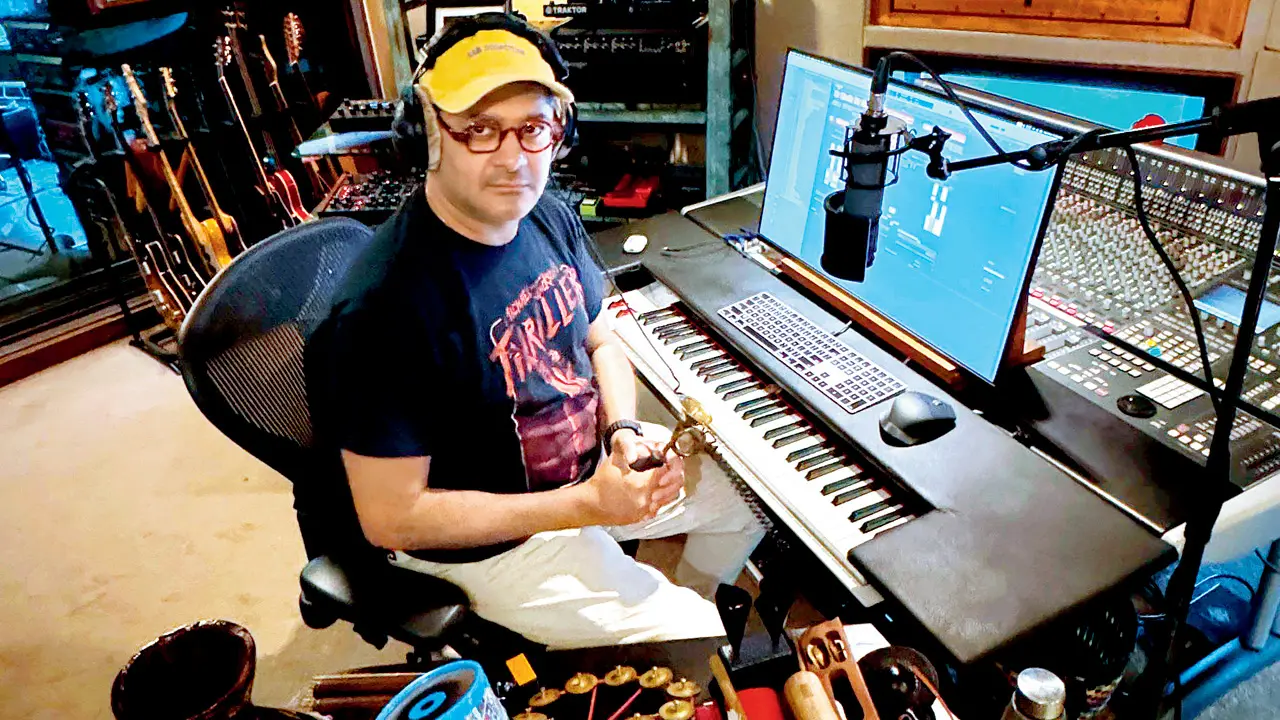
30 March,2026 09:19 AM IST | Mumbai | The Guide TeamJust across the lane from The Habitat, Dhruv Ghanekar is quietly working in his office, the quirkily-named Wah Wah Studio. An Andaz Apna Apna reference, we wonder. The composer laughs, “I have not seen the film yet. It is actually named after the Wah Pedal of Jimi Hendrix’s guitar.” Between jamming with musicians, and educating a new generation next door at Bay Owl Studios, the composer sits down for a chat. Early spring Growing up in Shivaji Park, the cultural influence was kaleidoscopic, to say the least. “My father [Girish Ghanekar] was a filmmaker. As was my uncle, illustrator/artist/writer Nandu Ghanekar,” he reveals. Dhruv Ghanekar with Ashutosh Phatak It was an incidental humming session along with his grandfather, a classical music aficionado that led to his discovery. Training followed, including sessions for two-years with the illustrious vocalist Jialal Vasant. Soon, Ghanekar was part of Shyam Benegal’s Trikaal (where he met a young Ishita Arun, now his wife, for the first time), among others, while also singing for composers like Louiz Banks and the late Vanraj Bhatia, among others. Smells like teen spirit His teenage voice change though, brought metal music and the guitar into his life. “I was in the audience for one of the first metal bands to tour India — Europe,” he says. At this time, Ghanekar was also helming the band, Chakraview. (From left) Anand Subayya, Paresh Kamath, Dhruv Ghanekar, Suraj Jagan, and T2 during their Chakraview years “We figured out that if you won all the prizes at a college fest, you made more money,” says the guitarist, letting us in on the ‘jugaad’. This popularity soon gave him a front row seat for the rise of an indie film and MTV generation in India in the early ’90s. A new age While he has too many projects to boast of, one teenage anthem — Bombay Boys (1998) — stands out. The Mumbai street lingo of Jaaved Jaffery’s rap was a rage at schools, much to every teacher’s chagrin. “Honestly, there is a version of the track that is even more X-rated. There is something to be said for youthful irreverence,” he laughs. Ghanekar (centre) with Kalpana Patowary during the launch of his album, Voyage, in 2015. File Pics At the same time, advertising was a fertile training ground. A new generation has now turned some of those jingles, including the Fevicol 60 Years project, into reels. “The lyrics inform the music. You meet some fantastic, creative people in advertising. My evolution in music is thanks to these works,” he recalls. Ghanekar lets us in on a secret. “These works were led by late Piyush Pandey, including a new one that will soon be out,” he promises. Blue Frog fever A moment from the last gig at Blue Frog in 2016 But when such creative giants meet, ideas often bounce from one medium to another. It was one such moment that sparked a decision that would shape the city’s music scene. In 2007, Ghanekar, alongside Ashutosh Pathak, Mahesh Mathai among others founded a Mumbai institution — Blue Frog. “Blue Frog actually began as a place for us, as creative people to meet,” the producer shares. The Lower Parel venue’s iconic pod-like seating From Karsh Kale, Indian Ocean, Soulmate, John McLaughlin, the late Ustad Zakir Hussain, the venue was the place to be. “It snowballed into this giant machine. The masterplan was to create a 360-degree company with a venue, a record label, and artist management. I think we were early,” he says, almost wistfully. While he is not part of the plans for its return, Ghanekar admits, “Nine years later, Mumbai still lacks a venue along the same lines.” A scene from the Fevicol advertisement. Pic Courtesy/YouTube Voyages ahead In 2024, when he came out with Voyage II, Ghanekar promised us something special was coming up. As he gives us an exclusive peek at his latest work-in-progress, Shaukeen, the composer says, “This is a return to my singer-songwriter-artist phase. I am going back to the reasons why I started making music.” With the late Piyush Pandey Having heard two tracks, the album promises a young pop-rock sound, infused with a touch of nostalgia. With a release planned in the second half of this year, the voyage continues for this OG Bombay boy.
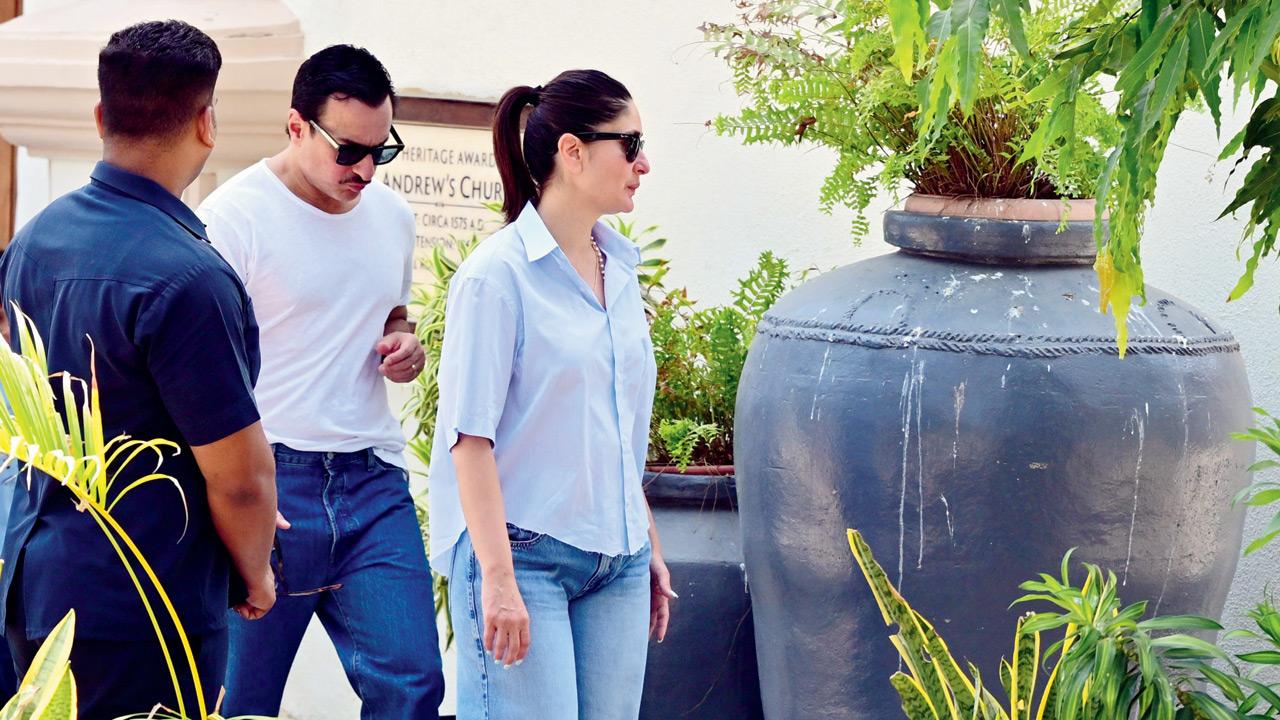
30 March,2026 09:08 AM IST | Mumbai | Shriram IyengarMass appeal Who says Sundays at church can’t be star-studded? Kareena Kapoor and Saif Ali Khan turned St Andrew’s into a constellation on March 29, making a coordinated family appearance at the Bandra landmark with their tots, Taimur and Jeh, in tow High Society Hysteria “It’s only been 49 years, thanks for waiting,” said frontman Joe Elliott, as he kicked off Def Leppard’s historic debut performance in Mumbai on March 27. Fans of all ages flooded the Jio World Garden for a night of timeless anthems — with the star power not limited just to the stage. OG Indian rockers Indus Creed opened the show, and while Uday Benegal belted out Pretty Child to an appreciative audience, brother Vijay cheered from the ‘Gold’ enclosure, flanked by guitar maestro Ehsaan Noorani. Dino Morea and Preity Zinta As the main show ignited, another ace composer, Dhruv Ghanekar, and his vivacious wife Ishitta Arun sang along to every word, while model Reshma Bombaywala rocked just a few rows away. “Some bands you listen to. Some bands become part of your story,” she said after the show, and that certainly was a sentiment echoed by many. Preity Zinta made it a point to thank her “concert buddy” Dino Morea for letting her “pile on last minute” in ‘Platinum’ style, but it was Milind Deora who had the best view of all — making it backstage to meet with the legendary band. It was a stroke of rock-and-roll providence for the guitar-playing politician, who only managed to attend because a weekend session of Parliament was unexpectedly called off. In a city that never sleeps, this was one night where Mumbai collectively held its breath, lost its voice, and finally checked a four-decade-long wish off its bucket list — in rock and roll style. Tressed for sucess While Yo Yo Honey Singh literally descended from the sky to land on stage in Mumbai on March 28, another Yoyo was making waves in Ahmedabad — at a much more grounded pace. Tress maestro Kandarp Jasani (aka Yoyo) had Sanjana Ganesan in the hot seat, getting her hair styled and coloured in advance of the IPL. Sanjana was readying to resume hosting duties, while hubby Jasprit Bumrah reprised his role for Mumbai Indians. Sanjana Ganesan Unhappy with her oxidised look and intending to refresh her colour and cut, Sanjana confessed to being a chocolate-mocha kind of girl, least fond of blonde. Yoyo delivered exactly that, neutralising her metallic sheen with deep, caffeinated tones for a sophisticated style. The result? A look as sharp and precise as a Bumrah yorker. It seems both Yoyos knew exactly how to command a crowd last week — while one was busy owning the Mumbai skyline, the other was ensuring the face of the IPL broadcast is perfectly ‘match-ready’ for the season ahead. Masterclass in modern family A messy breakup doesn’t have to mean a messy childhood, and Arhaan Khan appears to be proof. Kudos to Malaika Arora and Arbaaz Khan, who are clearly nailing the co-parenting game, because their no-longer-baby boy is acing the balancing act. Arhaan Khan On Friday, Arhaan kicked off his night at the Def Leppard concert in BKC, playing the supportive son alongside mum Malaika and her rumoured ‘bae,’ Harsh Mehta. Just hours later, he pulled off a seamless pivot to the trendy Italian haunt Cin Cin — a stone’s throw from the concert venue. There, the vibe shifted from rock anthems to al fresco dining as he joined dad Arbaaz and wife Sshura Khan for dinner. In both spots, with both parents and their new partners, Arhaan appeared entirely at ease. It’s a refreshing sight in a world of bitter splits — showing that when a marriage ends, a family can still evolve without breaking. Sari, not sorry One person we expected to see out and about in the city during the weekly wind-down was Malishka Mendonsa. Long before her radio reign began, Malishka was finding her voice in a college band, but this weekend, our ‘Mumbai ki Rani’ was nowhere near a microphone. Instead, she was ensconced in the mountains until Sunday evening, soaking up the very best of Kashmir. Malishka Mendonsa Her itinerary was a whirlwind of postcard-perfect pitstops — Srinagar, Sonmarg, and Pahalgam — before she finally settled into Gulmarg to hit the slopes. Of course, Malishka does nothing by half-measure, so she tackled the powder with a sari wrapped right over her ski gear! “Why?” we had to ask. “Why not?” she giggles in response, and that seems as good a reason as any. Checking in at The Khyber — the same luxe Himalayan retreat where Alekha and Aadar Jain recently toasted to their first anniversary — Malishka and her mum made the most of their March vacay. Between the snow-laden trails, horse-riding, and early tulip sightings, the energy was high. “Next time I will up the ante and wear a nauvari sari,” says the feisty RJ, before concluding on a serious note: “Kashmir is so stunning. I can’t emphasise it enough. But people are still afraid to visit. That has to change.” One herringbone step at a time.
30 March,2026 09:04 AM IST | Mumbai | Sonali Velinker KamatADVERTISEMENT