A small mention of the boa constrictor devouring an elephant can remind you of a stranded aircraft pilot on the Sahara Desert and his little friend, a young prince, visiting the Earth. Antoine De Saint-Exupery’s The Little Prince has been adapted into an abridged children’s book (Pratham Books) by Anushka Ravishankar, with illustrations by Priya Kuriyan. Apart from English, the book will be available in Hindi, Marathi, Kannada, and Tamil. “I don’t remember many books from 40 years ago, but this is not a book one easily forgets,” says Ravishankar. She asserts that it has been part of the reading culture of the world. “The story has so many layers and messages that almost everyone can find a mirror in it. The thought that children are able to imagine and see things that adults cannot see has embedded itself into my world view,” she tells us. The book cover The author and the illustrator worked in collaboration with the French Institute in India — Embassy of France. “The first thing I did was decide which parts were important and could not be left out. Once I did that, then it was a process of paring the words down to the essentials. One does lose a bit of colour in the process but those are choices one has to make,” Ravishankar recalls. Kuriyan’s vibrant illustrations add an Indian touch for an Indian audience. After working through a few initial iterations, which involved imagining the prince similar to the original one or taking inspiration from Indian cinema, she decided to tap into visual references of Indian royalty from history and arrived at the current re-imagination. “Our princes were quite pop-ish in their own way. The costume became a culmination of many princes’ costumes. The green costume and the yellow muffler connect well enough [to the original].” Anushka Ravishankar and Priya Kuriyan For the other illustrations in the book, she used Indian colours, such as rani pink, which children can see around them. “It was a conscious choice to lift the colours up.” Since most of the narrative is set in the desert, she decided to play with the colours of the sunset and sunrise. “I thought I’d lean in to the highly saturated ones to make it look different from the original. I didn’t want to use the pale European palettes,” Kuriyan reveals. Ravishankar’s engaging style of storytelling, which conveys the emotional depth of the original in fewer words, and Kuriyan’s ability to completely immerse the reader in the little prince’s world complement each other. Ravishankar remembers the task of re-working on the much-loved classic as a daunting one. “It’s still a little wordier than a picture book needs to be, but that was a choice the editors and I made together.” They had seen other versions with lesser text which felt flat to them. Even though she had to drastically prune the story, she concludes, “I’ve tried not to lose the essence of the book in the process. Hopefully, I have thrown out the bath water and not the baby!” LOG ON TO: prathambooks.org (for print copies) NOTE: The picture book can also be accessed on Pratham Books’ open digital repository, StoryWeaver
29 January,2026 09:33 AM IST | Mumbai | Nandini ShahThursday Target practiceSign up: Gear up and join this engaging, hands-on workshop on introductory air pistol and air rifle shooting.TIME 1 pm onwardsAT Airsoft India Sports Arena, Mastermind Road, Aarey Milk Colony, Goregaon. LOG ON TO in.bookmyshow.com CALL 9892438737 ENTRY Rs 799 Friday Pic Courtesy/Youtube Play in progressTheatre: Enjoy the play From the Warehouse, directed by Shashwat Srivastava, where dark comedy meets the scroll generation. TIME 7 pm AT Rangshila Theatre, Aram Nagar, Versova.LOG ON TO in.bookmyshow.com ENTRY Rs 475 Saturday Pic courtesy/@walkingprojectindia Mumbai on footWalk: Make the city more walkable by coming together to assess roads, walkability and tree shade in Borivli.TIME 9 am AT Borivli Taxi Stand, near Borivli Railway Station, Borivli West. LOG ON TO @walkingprojectindiaENTRY Free A melodic eveningMusic: Head for Sid Sriram’s concert, where he blends Indian roots with R&B and electronic textures.TIME 7 pm onwards AT Dome SVP Stadium, Lala Lajpatrai Marg, Lotus Colony, Worli. LOG ON TO district.inENTRY Rs 200 Sunday A traditional Malaysian feast. Pic Courtesy/Wikimedia Commons Malaysian feastFood: Savour the cuisines of this Asian country at this food and cultural festival by The Fairmont. TIME 12.30 pm and 7 pmAT The Merchants, Terminal 2, Chhatrapati Shivaji Maharaj International Airport, Navpada, Vile Parle. LOG ON TO district.in CALL 8097555901COST Rs 3500 Sondai Fort. Pic Courtesy/@treksand trails Climb to the topTrek: Slip into sporty gear to walk up to the lesser-known Sondai Fort in Karjat, once used as a watchtower to protect trade routes.TIME 5 am PICK-UP POINT Platform 10, Mumbai Chhatrapati Shivaji Maharaj Terminus (CSMT) LOG ON TO treksandtails.org CALL 8828004949COST Rs 699 onward
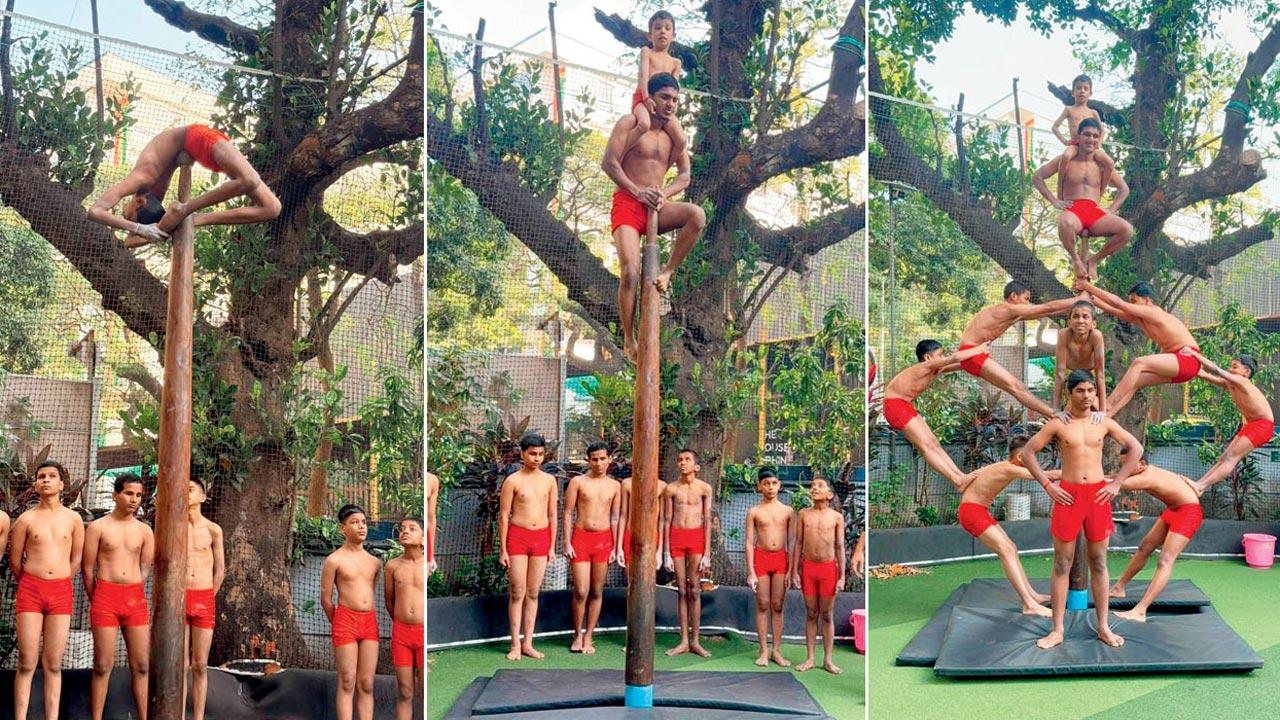
29 January,2026 09:28 AM IST | Mumbai | Rumani GabhareThe final scene of Takeshi Kitano’s 2003 Samurai masterpiece, Zatoichi, ends with the hero singing, ‘Even with my eyes open/I can see nothing’. Uday Deshpande understands the philosophical depth of that song. After all, the Padma Shri Awardee will be guiding the 11 visually-impaired students from the Victoria Memorial School for the Blind (VMSB), Tardeo in one of the unique displays on the opening day of this year’s edition of the Kala Ghoda Arts Festival. The journey for the coach first began in the early 1990s. Mahesh Mhatre was still a student under Deshpande when he first joined the Victoria Memorial School as an instructor. “As someone who enjoyed working out, mallakhamb was an opportunity to combine multiple facets such as yoga, strength training, and flexibility,” the instructor at the school reveals. Uday Deshpande (in deep blue) guides Venkatesh Mandadi through a routine Teaching unsighted children might sound almost impossible. Not quite, both instructors assure us. It requires an adaptive training technique. Deshpande shares, “It was difficult when I began in June 1990, but eventually, I realised that they are keen listeners and intuitive. Every action had to be clearly stated and described.” Precision is key. To bolster the commands, Mhatre would himself hold a pose on the mallakhamb, allowing the children to sense this posture through touch, and replicate it. The school batch of 25 to 30 students practice these routines thrice every week. “It takes them a year to master the basics. The progress is down to practice,” Mhatre reveals. Mahesh Mhatre On the inaugural day, 11 students from the batch, instructed by Mhatre and Deshpande, will be performing complex poses, including a 11-man pyramid structure on the pole. For principal Rajani Hiremath, the experience shapes the children. These exercises offer more than physical fitness, he believes, “When they learn complex poses, they learn to focus, gain awareness of their surroundings, depth, and height. They also learn to listen, and react.” The facet of team work, and adapting to their team members’ needs is another crucial aspect, she adds. Like the fictional Japanese character Zatoichi, none of these students consider their lack of vision a weakness. Mhatre observes, “Sight can be distracting sometimes. They are laser focused.” For the veteran coach of the Shree Samarth Vyayam Shala in Shivaji Park, the experience is a lesson in itself. “By teaching them, I have learnt to teach better,” Deshpande concludes. ON January 31; 6.25 pmAT Cross Maidan, Marine Lines.ENTRY FreeThe guide's top picks Out of the box Get hands on with master sculptor Arzan Khambatta (below) at a workshop where young designers will learn how to turn box boards into innovative masks.AGE GROUP 7 years and aboveON February 1; 11 amAT Chhatrapati Shivaji Maharaj Vastu Sangrahalaya (near the Baobab tree) Tibetan moves Snow Lion dancers. PIC COURTESY/TIPA Witness traditional Cham and Yak dance performed by The Tibetan Institute of Performing Arts (TIPA).ON February 1, 2, and 3; 5.30 pmAT Horniman Circle Garden Is that a bird? A moment from Cultured Vulture. PIC COURTESY/VANYAVANI Watch Maharashtra’s avian life come alive onstage in the wildlife-meets-theatre play Cultured Vulture. Produced by the Vanyavani Foundation, the play makes a case to protect one of the state’s most important, yet misunderstood species.ON February 2; 7.45 pm AT Yashwantrao Chavan Centre Behind the bowl Pull up your socks and get hands on at a noodle pulling ‘food workout’ with chef Rahul Punjabi.ON February 4; 3 pm AT YWCA International, Madame Cama Road. Tale of cities Sit down for a slow exploration of cities with poet Ranjit Hoskote at the David Sassoon Library. The curator will explore how ideas of utopia shaped newer cities like New Bombay, Chandigarh and Auroville.ON February 5; 5 pmAT David Sassoon Library Reading Room Turtle talks A still from Turtle Walker. PIC COURTESY/YOUTUBE Catch filmmakers Zoya Akhtar and Taira Malaney in conversation after a special screening of their critically acclaimed documentary Turtle Walker, which explores the life of India’s endangered sea turtles.ON February 7; 7 pmAT Cama Hall, Shaheed Bhagat Singh Marg Step up Farhan Akhtar. PIC COURTESY/@FARHANLIVEOFFICIAL The iconic open-air concerts will return this year with performances by Farhan Akhtar and Monali Thakur of Moh Moh Ke Dhaage fame.ON February 8; 5.30 pm onwardsAT Asiatic Library Steps, Shahid Bhagat Singh Marg. Smile, please Before you wrap up the weekend, don’t forget to drop by the iconic 1928-established Hamilton Studios that is offering an exclusive discount for the week on all portraits.ON January 31 to February 8AT Hamilton Studios, NTC House, Ballard Estate.EMAIL hamiltonstudiosbombay@gmail.com (a day’s advance notice needed to book an appointment) Home sweet home Our pick for this year’s inventive installation is Padma Shri awardee Sudharak Olwe and Sanjay Nikam’s Our Dream House (sneak peek below). The stack of mini houses will invite visitors to paint their idea of ‘home’ on them.ON January 31 to February 8AT Rampart Row Note: Stage events and workshops have limited seats. Arrive early to catch your favourite shows on first-come-first-served basis
29 January,2026 09:26 AM IST | Mumbai | Shriram IyengarA new cultural exchange, Poland meets India seeks to blend an intercontinental cultural exchange by exploring history with the arts. This collaborative presentation brings together a solo Bharatanatyam performance and visual storytelling to trace a lesser-known chapter of Indo-Polish history. Bharatanatyam dancer Apeksha Niranjan and Polish writer-researcher Monika Kowaleczko-Szumowska will come together to explore cultural similarities between the two countries, while centring the story of Polish refugee children who found shelter in India during the Second World War. Wanda Nowicka (left) with a friend at Valivade refugee camp in Kolhapur (1943-1948) The ‘Good’ Maharaja At the heart of the presentation and the opening of the evening — is the story of Maharaja Digvijaysinhji Ranjitsinhji Jadeja of Nawanagar, (today’s Jamnagar) in Gujarat. “During the Second World War, nearly 1000 Polish children were displaced from their homes and left without refuge, as several countries refused to accept them. The Maharaja welcomed the children to India, providing them with shelter, education, food, clothing, and cultural support,” emphasised Kowaleczko-Szumowska. Dated photographs of Wanda Nowicka in Poland (left) and during her stay in India (right) Kowaleczko-Szumowska has researched this history extensively and authored the book, Maharaja’s Children, Story of Polish Kids in Jamnagar, which was released in English in 2025. She will then speak about the children’s journey — from their life in Poland to their eventual arrival in India — supported by visuals from her documentary of the same name. Maharaja Digvijaysinhji Ranjitsinhji Jadeja of Nawanagar. Pic courtesy/Wikipedia The children, Kowaleczko-Szumowska notes, “Did not just find safety in Nawanagar; they found affection. They often called the Maharaja by the name of ‘Bapu’, reflecting the paternal care he extended towards them during their years in India.” Niranjan at the dance showcase held at Dom Kultury Stare Babice cultural centre in Poland. Pics courtesy/Arleta Olendrowicz Personal history on stage For Niranjan, the story is deeply personal. Her grandmother, Wanda Nowicka, later Malti Kashikar, was among the Polish refugee children who arrived in India in 1942 and lived in a refugee camp at Kolhapur. “Through a Bharatanatyam performance, I will present my grandmother’s lived experiences — deportation, the unfortunate death of her father in a Siberian labour camp after being mistreated by a Soviet soldier, separation from her family in Iran, and the struggle of adapting to life in India, despite the stress and trauma she endured during that period at such a young age,” recalls Niranjan. Monika Kowaleczko-Szumowska (right); her book, Maharaja’s Children, Story of Polish Kids in Jamnagar While Bharatanatyam traditionally draws from mythological narratives, Niranjan will use its grammar to narrate historical and cultural stories. Incorporating Polish folk tales and the refugee narrative, the recital aims to blend Bharatanatyam with Gregorian chants, creating a cross-cultural language rooted in shared human values. ON January 30; 6.30 pm AT Sahitya Mandir Sabhagruha, Sector 6, Vashi, Navi Mumbai.CALL 9820609746 ENTRY Rs 250 (donor passes)
28 January,2026 09:31 AM IST | Mumbai | Rumani GabhareHistory buffs in Mumbai have a great opportunity to go back in time at St Xavier’s College. The institute’s Department of Ancient Indian History, Culture and Archaeology (AIHC&A) is hosting an exhibition of weaponry artefacts dating back to 15th and 16th-century India, in collaboration with Museum Society of Mumbai and Chhatrapati Shivaji Maharaj Vastu Sangrahalaya. Titled Shastrastra, the collection showcases the history of war through sets of weapons and sculptures. Armour dating back to 18th-century South India. Pics Courtesy/Dr Anita Rane-Kothare; Sunil Kadam (weapons); Faroque Todywala (sculptures, armour) “It is part of Vividha 2026, a two-day academic and cultural programme that spotlights India’s ancient martial heritage. On display are ancient and medieval Indian weapons, which portray how warfare traditions and the craftsmanship of weapons have evolved. There will also be a few traditional handicraft stalls to showcase India’s artisanal heritage,” reveals Dr Anita Rane-Kothare, Vice Chairman, Museum Society of Mumbai, Associate Professor and former Head, Department of AIHC&A, St Xavier’s College, and convenor of the exhibition. Dr Anita Rane-Kothare She adds that these artefacts reveal ancient war techniques used in India at some point, from Maratha to Persian warfare. “The inclusion of 12 Maratha forts as UNESCO World Heritage Sites prompted me to curate these weapons. Each of them is real, from swords and shields to different types of daggers; also included are a few miniature Mewar paintings.” She reveals more about the exhibition name, “Interesting to note: These weapons qualify as ‘shastra’, which constitutes actual physical weapons; ‘astra’ on the other hand, is a warfare tactic.” In modern terms, a gun is a ‘shastra’, she explains, but warfare using Artificial Intelligence (AI) is an ‘astra’. “Often, these concepts are mentioned in the Ramayana and Mahabharata epics,” she informs. Ankush, a sharp Indian goad, used to control and direct elephants Dr Rane-Kothare reflects on curating this exhibition, “I’ve added a section on hero stones that pay respects to warriors who’ve lost their lives. The exhibit displays weapons, which can be used to defend, but the deeper message to audiences is to abandon violence and the use of weapons to incite evil.” She signs off on a thought-provoking note: “If anything, these weapons show how civilisations have never changed. War has always existed; it merely assumes varying forms. Weapons must be used for a cause, to benefit the world and contribute towards peace.” Swords and a shield (Dhal-Talwar) on display at the exhibit ON January 28 and 29; 10 am to 4 pmAT Palacios Hall, St Xavier’s College, Mahapalika Marg, Dhobi Talao.ENTRY Free
28 January,2026 09:22 AM IST | Mumbai | Trisha GhoshIt takes us a couple of hours to conquer the Mumbai traffic, and reach Khandala. The journey through the winding ghat sections finally halts by a quiet lane, beyond which lies the 200-year-old abbey, now Abbey 301. If its existence surprises the reader, they are not alone. “It would not have been in the form it is today, but it was always here,” assures Kamini Kotak, owner, Abbey 301. On the afternoon of our visit, the quaint space is readying for its grand opening on January 30. Dholakia reveals that the next phase of conservation will focus on the water damage, if any, incurred by the double mortared walls The Kotak family acquired the structure after it was decommissioned in 1973. “I remember walking the grounds with my father-in-law, and just playing Brahms, Beethoven, and Bach. To his end, he conceded to listening to my Norah Jones album,” Kamini recalls. In the early 2000s, the abbey underwent the first phase of its conservation with Vikas Dilawari, giving it the visually aesthetic stained-glass windows, reveals entrepreneur Krishna Kotak. Adil Dholakia’s Five Cross Architects took over the challenge of further restoration in the short timeline between September and December of 2025. Adil Dholakia The current vision of the space was a more recent epiphany. “Khandala does not boast of any performance venue, and we wanted to create one that the community could be a part of,” Kamini shares. Kamini and Krishna Kotak Step in Pushan Kripalani, its creative director ‘who fell in love with the place at first sight’, and Xerxes Unvala, culture strategist. “We had to do very little. As they say in my world, ‘If God is your gaffer, get out of the way,’” Kripalani states, pointing to the dormer windows streaming natural light. As we walk through, the tech team is busy at work to ensure the sound system syncs with the natural harmonics of the space. Arunoday Singh and Pushan Kripalani in performance. The abbey is fitted with an adaptable deck that can be reworked to suit any performance Nowhere is this more evident than when actor Arunoday Singh and Kripalani break into a duet of Ain’t No Sunshine. “It was the same when we held the first trial in February 2025. The artistes could not wait to experience it,” shares Kripalani, who adds that India has very few examples of such spaces. “It was as much a transformation, as it was a conservation,” he says. The stained-glass windows were additions from the first phase of conservation in the early 2000s. Inspired by churches in Scotland, they were recreated in India; (right) A distinct feature, the vestry was restored with a combination of reused and suitable material. It will serve as the green room for performers, shares Kripalani. The tenet of minimalism and reversible improvements is a common thread. Dholakia reveals that the use of old BTC (Burma Teak Category) and Mangalore tiles were instrumental in the restoration. The nature of monsoons in the region made the roof restoration; (work in progress (right) restored roof) a primary concern for the architectural team. Pic Courtesy/Five Cross Architects The launch is the beginning of a new age for the 2500-sq-ft structure. “Imagine Raag Bhairavi being played by Rakesh Chaurasia to welcome the dawn,” teases Pushan Kripalani. The opening day will feature artistes, from Chaurasia to poet Kausar Munir, the Sanjay Divecha Trio, and singer-songwriter Nikhil D’Souza. For the future, the team is already exploring theatrical showcases, even outreaches to schools to foster a new community experience. The technical and lighting has been designed to be non-intrusive, and easily reversible “It is about offering a new cultural experience for the community, and for artistes,” concludes Kamini. As we walk around, we can imagine the hills come alive with music. ON January 30 to February 1AT Abbey 301, near Athiva Resort and Spa, Khandala.LOG ON TO abbey301.org
28 January,2026 09:09 AM IST | Mumbai | Shriram IyengarHarsh Mander’s book, Our Constitution Our People (HarperCollins Children’s Books) offers a brief history of how the constitution came to be drafted and why it stands as the most important document in the country. It further breaks down its key components such as the preamble and ideas of justice, equality, liberty, and fraternity. One of the most fascinating chapters deals with the right to vote. Young readers learn about how including this small feature, which allows every citizen to vote, was a radical step for the drafting committee. Such careful considerations, readers gather, resulted in the long-drawn out process of the drafting of the constitution. The book ends aptly on a note where Mander measures how much we’ve accomplished so far and how much more there is to do. His sharp writing makes it an engaging read for children. It is bolstered by Priya Kuriyan’s precise illustrations, especially of Mahatma Gandhi and Dr BR Ambedkar, whose values reflect in the document. The Guide’s Other Reccos A Flag, A Song and a Pinch of Salt: Freedom Fighters of India: Subhadra Sen Gupta’s delightful book (Puffin) introduces young readers to figures who were instrumental in India’s fight for freedom. These include Dr BR Ambedkar, Sarojini Naidu, Abul Kalam Azad, Bhagat Singh, among others. They shaped various freedom movements and contributed to the centuries-long struggle in multiple ways — from introducing social reforms to writing literature that stood against British rule. Five Fantastic Facts about the Indian Constitution: Ashok Rajagopalan’s slim illustrated work (Tulika Books) takes young readers through five important lesser-known facts about the constitution. For instance, he gives a detailed explanation of the drafting process, informing his readers about the number of people who were consulted and the distinct backgrounds they belonged to. The book ends with exciting activities which nudge children to engage in critical thought. Harsh Mander After Midnight: Meghaa Gupta’s incisive work (Puffin) takes young readers on a journey through several developments that the country has witnessed since its independence. With the help of anecdotes as well as infographics and illustrations by Sayan Mukherjee, the book offers fun bite-sized facts and timelines of technological, social, scientific, environmental, economic steps that have led to the growth of the country. Meghaa Gupta, Subhadra Sen Gupta, Kavitha Mandana and Ashok Rajagopalan A Story of India’s National Flag: As part of the ‘A Story of’ series (Talking Cub), Kavitha Mandana fills us in on how the flag came to be designed in 1906 and again in 1947. An important feature at Republic Day parades, the flag as we see it today was a creation of many hands, not one person alone. From Kartar Singh to Sister Nivedita as well as revolutionaries like Hemchandra Kanungo and Sachindra Prasad, we read stories about all those who contributed to the evolution of the tricolour. Available: Leading bookstores and e-stores (all titles)Cost: Rs 299
26 January,2026 09:43 AM IST | Mumbai | Nandini ShahYou learn something new every day. Last weekend, we found out that Ashish Vidyarthi, who has acted in over 350 films spanning 11 languages, doesn’t actually speak eight of them. Luckily for the seasoned actor, he doesn’t need to. “There is a universality to all our stories,” he says. Today, Vidyarthi brings that belief to the stage with Kahanibaaz, his new show following his stand-up comedy special, Sit Down Ashish. Excerpts from an interview Tell us about this turn to storytelling with Kahanibaaz after your previous experiments onstage.For years now, I have been making a mental note of all the stories that make me. Right from my school days to the theatre stage and my experiences from more than 350 movies, every interaction has shaped my own story. Kahanibaaz is an intimate retelling of these stories. Children, young adults, and old-timers will all find them relatable. At the end of the day, we all fear something, crave something else, and have hopes and dreams. The show takes a positive route, exploring how we can heal from the experiences that shaped us, instead of bottling stories inside us. How do you approach the language of the show? Purity of language seems to be the hot topic these days…Who decides what is pure and impure? We have made language elitist through this obsession with ‘saaf zabaan’ [pure diction]. This reminds me of an interaction I had with a fan at a roadside dhaba in Punjab. He walked up to me with a wide smile and innocently said, “Aap se milna mera durbhagya hai.” Of course, I knew he meant saubhagya [good fortune]. Similarly, I hear kids nowadays say, “That’s sick man!” Obviously, they do not literally mean someone is ill. Spoken language is a matter of conveying meaning, there should be no room for elitism or judgement. Are you aware that Gen Z is labelling you ‘pookie’ [cute, adorable] on social media? It’s a far cry from how kids from the ’90s would remember you.I saw that too! I had no idea what pookie meant. I had to take help from younger team members to finally understand it. As for the shift, I believe in living in the present. I grew up in Delhi with a Bengali mother from Rajasthan, and a Malayali father from Kerala. Breakfast at the table ranged from poha, avial, chole bhature, and cheela. In that sense, I have always been comfortably rootless, and continue to be so in all aspects of life. What mantra are you living by in 2026?Have hope for yourself. Pivot on what you have, and also what you don’t. I was an expressive kid, so I became an actor. At the same time, I was talkative. I pivoted that to being a motivational speaker. I was restless all the time — I turned that into vlogs. Play your strengths, and your weaknesses. ON January 26; 8 pmAT Rasa The Stage, Nritya Shakti, 602, Bangur Nagar, Goregaon West. LOG ON TO in.bookmyshow.comENTRY Rs 499
26 January,2026 09:38 AM IST | Mumbai | Devashish KambleFresh research from Canadian online dating platform, Ashley Madison has revealed something that might raise eyebrows. A 2026 dating trend report shows that micro romances or tendencies to make multiple connections, are on the rise. In a cited survey that included Indian respondents, 49 per cent of respondents sought relationships apart from their primary one. Two counsellors break down this trend among new-age relationships with a 360-degree discussion. Main motivations City-based psychiatrist, Dr Manasi Bhat notes a spike in multiple connections and more openness towards conversations about it. “Often, humans don’t necessarily want multiple partners; they want autonomy, intimacy, freedom, and belonging.” Aditi Vaze, a couples counsellor in Mumbai, echoes this: “The biggest misconception is that it happens for sex. While it can’t be entirely ruled out as an incentive, I see a greater desire in people to find themselves again, especially as they grow older. Often, it begins with a simple connection over helping the other in a crucial way, and eventually becomes a form of escapism from an unfulfilling relationship.” She mentions that nearly 80 per cent of her clients seeking couples’ counselling have experienced some type of underlying infidelity. Gradual life transitions can cause stark changes in priorities, and the desire to find someone who matches what you stand for We ask if this is an empowering choice, or a reaction to external stressors. “If it’s a result of understanding their individual needs, it may feel empowering. Monogamous relationships are more demanding. Comparatively, these connections give quick rewards in the form of dopamine without much responsibility. Monotony in relationships fuels the desire of thrill without actually having anything to lose,” explains Dr Bhat. Meanwhile, Vaze pinpoints that burnout, inflation, and poor mental health faced by urban youth are easy motives to seek out instant connection. Technology and finance Manasi Bhat “People seek others because it’s easy. Dating apps mean new individuals are merely a click away,” says Vaze. She adds that the Covid-19 pandemic also changed the dynamics of relationships: “Virtual connections arose everywhere in all forms, and so did the value youngsters derive from them.” Dr Bhat points out, “Financial independence minimises the fear of consequences. Delayed marriages (especially for women) give more time for longer exploration phases, with no urgency to ‘lock in’.” Hence, even if not committed to one person, an individual may find themselves juggling between different people. Changing ethics Aditi Vaze Both professionals observe that earlier ideas of committed relationships emphasised safety, money, and social acceptance. “Now, people can survive alone, so, relationships are prioritised for growth and emotional compatibility. Loyalty has changed not in idea, but scope,” Dr Bhat tells us. Additionally, Vaze emphasises that ‘loyalty’ today often constitutes transparency about feelings, and honesty about desires and needs: “It’s ‘Don’t lie to me’ over ‘Don’t choose anyone else’.” Navigating it We’re curious how these factors play into the future of the new-age urban couple. “It depends on the age group,” Vaze reflects. Having worked more with couples in their 30s, she shares, “Unlike youngsters, who may want excitement, growing into a stage of life with greater responsibility, in my experience, automatically induces a want of stability.” Dr Bhat concurs, saying, “I don’t necessarily see multiple connections becoming a norm.” For those seeking multiple connections, irrespective of if they are committed already or not, both experts caution that managing these becomes draining. Without advanced relational skills and thorough self-awareness, it causes confusions, ‘situationships’, and ghosting. “Even if partners are okay with each other forming other connections in theory, in practice, they fear being replaced,” Dr Bhat reminds us. Vaze strongly advises, “Pursue only what you can handle; consider your attachment style, your priorities, and most importantly, your values. Go ahead if someone truly aligns with your values and requirements.” Log on to: www.ashleymadison.com
26 January,2026 09:25 AM IST | Mumbai | Trisha GhoshIt’s as if a wonder of Mumbai has closed down, you know?” comes an exasperated response from Zyros Zend, co-partner of the city’s Yazdani Bakery and Restaurant. The wonder he refers to is the 112-year old B Merwan & Co. that closed its doors in early January. The development, however, draws attention to a baked item that has been a part of every Mumbaikar’s chai time treat — the mawa cake. Necessary innovation The Parsis brought the ubiquitous cake to the city’s cafe culture. “It was a part and parcel of growing up for most members of the community,” reveals culinary historian Kurush Dalal. The origins though, have multiple claimants. Royal Bakery on Pune’s MG Road is one of the contenders, along with the erstwhile Grant Road institution. The now shuttered B Merwan and Co. at Grant Road. Pic/Satej Shinde Dalal points out, “It comes from Kumas — a Parsi delicacy that was home-made; baked on coals in double boiler attachments or a stove top.” Parag Phadnis of Eat Well Cold Storage in Mulund, observes, “You have to remember refrigerators were not commonplace. The only way to preserve milk was to boil it repeatedly, creating mawa/khoya, the key ingredient.” Phadnis continues to stock the famed cupcakes from Pune’s Kayani Bakery at his Mulund address to great demand till date. “It is a tea time cake, and a part of nostalgia for Mumbaikars,” he elaborates. Kumas. Pic courtesy/Niloufer’s kitchen; (right) Kurush Dalal Egalitarian economics Like any Mumbai food, it was also representative of the city’s economics. Jehangir Patel, the long-time editor of Parsiana, adds, “Irani cafes serve everyone across class and religious divides, and through the day. They were located conveniently, often in business districts and near railway stations. The fare was freshly made every day, and affordable. The mawa cakes themselves were simple in taste, and perfect with tea.” Mawa cake from Kayani Bakery in Pune; (right) Parag Phadnis Zend chimes in saying that cakes were not instantly ordered then, and the humble mawa cake was an ever-ready alternative: “Like the vada pav, simple and delicious.” Then, there is the consistency. Over a century, and bakers still swear by a common recipe with certain variations. Elaichi, jaifal, vanilla, malai, eggs and mawa are key ingredients — No margarine, Zend warns. Dalal points out that some restaurants would use a touch of rava to add texture. “You now have the eggless version, but the traditional one has to have eggs,” adds Phadnis Yazdani’s version of the dessert; (right) Zyros Zend Taste of nostalgia For many, they are a throwback. Dalal remembers visiting his paternal grandmother’s sister in Grant Road, and bingeing on a treat of two mawa cakes, and sweet Roger’s ice cream soda from B Merwan. The mawa cake was the standard to measure the quality of a Parsi cafe or bakery. Jehangir Patel Not everyone fell in love with it. The historian’s wife, Rhea Dalal admits her first experience of the dessert at the Grant Road hub was a little underwhelming. “That said, it was a simple, sweet dish, easy-to-make. Not everything has to be showy and impressive,” says the home baker. Changing times Rhea Dalal The explosion of cafes and rising overhead costs have left these traditional institutions on the edge. For bakers like Zend, the rising clamour over the use of wood ovens throws another spanner in the works. “It is like asking us to retire our David Beckham. It is just not the same,” he quips. For a tea-time snack that has survived war and changing tastes, this might be just another phase. Mawa cake fix Mawa cakes from Cafe Colony Kyani & Co.AT Jer Mahal Estate, Jagannath Shankar Sheth Road, Marine Lines. CALL 8928616793 Sassanian Restaurant and BakeryAT 98, Marine View, Marine Lines. CALL 8976091334 Britannia & Co.AT Wakefield House, Ballard Estate, Fort. CALL 222615264 Yazdani Restaurant & BakeryAT 11 A, Cawasji Patel Street, Kala Ghoda, Fort. Cafe ExcelsiorAT Kitab Mahal, AK Nayak Marg, Fort.CALL 22074543 Olympia Coffee HouseAT Rahim Mansion No. 1, Shahid Bhagat Singh Marg, Colaba. CALL 9920992555 Ideal CornerAT Hornby View Building, Rustom Sidhwa Marg, Fort.CALL 9930260703 Cafe Colony RestaurantAT G1, Shrikant Lodge, Hindu Colony, Dadar East.CALL 224142321 Eatwell Cold Storage Call 9594081810 (for orders)
24 January,2026 09:13 AM IST | Mumbai | Shriram IyengarINS Mumbai, the indigenous 6000-ton missile destroyer fitted with lethal weapons that played key roles in military standoffs, could send a shiver down its enemies’ spine. There are only a few places in Mumbai where you could hear the same ship being recalled as a “baby in the womb.” On the pleasantly crisp morning of INS Mumbai’s silver jubilee (January 22), we made our way to one of these places — INS Trata in Worli. Veterans and officials who served INS Mumbai pay tribute at JK Kapur Circle. PICS/SAYYED SAMEER ABEDI At precisely 9.25 am, or 0925 hours in this case, Commodore Bhupesh Tater (Retd) led a short march from INS Trata to the JK Kapur Circle, where a model of INS Mumbai is on display. With a swift salute, the group wished the warship that they had all served, many more years of operation. “I saw it being built from the keel. It was unique because the Indian Navy went beyond its role, to pour their might and soul into collaborating with the Mazagon Docks to build INS Mumbai. Although she is based in Visakhapatnam now, we continue to call ourselves the ‘Mumbaikars of INS Mumbai’,” reveals Tater. (left) Captain Jagmohan (Retd) chairman and director of Mazagon Dock Limited receives a memento from Commodore Tater (Retd) and Commander Bhagwat (Retd). PIC COURTESY/BHUPESH TATER Over hot tea and firm handshakes, those who served the ship open up about their fond memories. Ready for sacrifice In 1997, I was appointed to the warship inspection team, where I oversaw the building of INS Mumbai. From seeing her as a baby in the womb at Mazagon Dock, I went on to operate the ship in 2002 after its commission. During the India-Pakistan standoff of 2001-02 aka Operation Parakram, we would patrol off the coast of Karachi. It was one such day when my fleet commander declared, “Be ready for ultimate sacrifice if need be.” It was a feeling I cannot put in words.Commander Alok Bhagwat (Retd) Decked like a bride I was at the commissioning ceremony of the ship on January 22, 2001. Seeing a ship decked up, like a bride on the day of her wedding is an unforgettable sight. Nearly 7,000 people at the docks had worked for six years towards that day. Once the commissioning pennant is hoisted, the ship is no longer pieces of metal in a yard. It marks the shift from being ‘it’ to ‘she’; the beginning of a lifelong commitment with the bride.Commodore Bhupesh Tater (Retd) Yes, we built that Captain Ramesh Babu (Retd) Many, including Captain Ramesh Babu (Retd) who had served the ship joined the celebrations online from their home states. His favourite memory from the mighty warship came far from home, Down Under. “We once docked in Sydney as part of a visit. Later that day, I took a guided tour on a smaller local boat. When we sailed past INS Mumbai, the Australian tour guide quipped, ‘That’s a beautiful ship. It looks like India has received another warship from Russia.’ I promptly interjected, reassuring them that it was the INS Mumbai, fully made in India.” Life at sea Warships might look shiny and alluring on the outside, but life inside can be extremely stressful. Between 2004 and 2008, INS Mumbai visited more than 20 countries. Unlike other ships, a naval vessel can never turn back because of technical difficulties. The ship must keep moving. Life for us in the technical cadre was testing, sometimes leaving us no time for meals. You don’t realise how time flies when you’re at sea.Master Chief (Mech), Hajari Lal Saini (Retd) Mumbai at its core Commodore Bhupesh Tater (Retd) leads the march from INS Trata As a tribute to the vibrant city that built it, the naval staff onboard INS Mumbai renamed parts of the ship after landmarks in the city. >> Malabar Hill: Bridge of the ship >> Mantralaya: Operations Room ILLUSTRATION COURTESY/CAPTAIN RAMESH BABU (RETD) >> Gateway: Gangway of the ship>> General Post Office: Mail Room >> Chor Bazaar: Engineering Gear Store
24 January,2026 09:12 AM IST | Mumbai | Devashish KambleADVERTISEMENT