
Blending history with storytelling, Natural Elements on Currency by Sarmaya Arts Foundation examines how animals, plants and landscapes on money encode ideas of place, power and belief
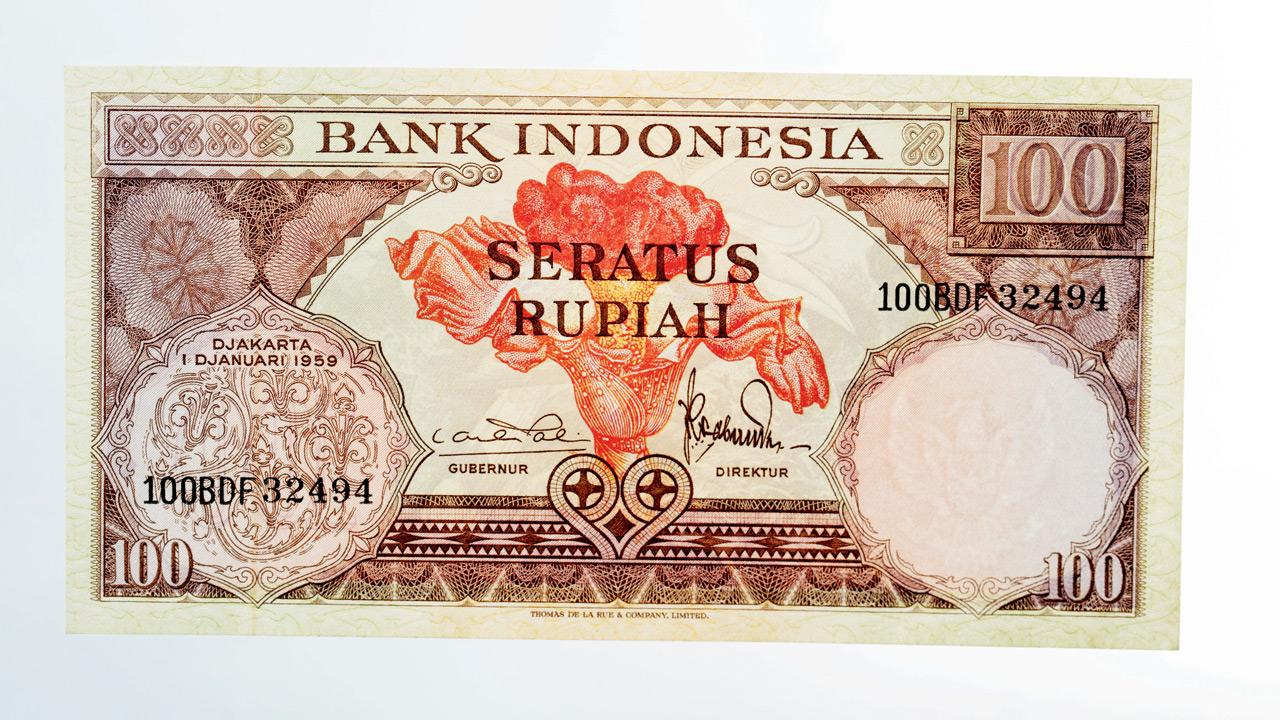
Flowers on Indonesian 100 rupiah note, 1959
Currency is often treated as a functional object that is passed from hand to hand. Nature through Currency, a show and tell workshop by Sarmaya Arts Foundation demonstrates how money can also be read as a quiet archive of place, memory and imagination — one that reflects how societies understand identity, belief and power while reflecting on the basics of nature.

Silver rupee or ‘Kyat’ of Burma, during the reign of Mindon Min, during Burmese Chula-Sakarat Era, 1853
The workshop, which runs alongside Sarmaya’s ongoing exhibition, Odyssey of the Rupee: From India to the World, invites participants to look closely at the natural motifs that appear on coins and banknotes across centuries. Founder of Sarmaya Arts Foundation, Paul Abraham explains how animals, plants and landscapes served multiple purposes, and that they could function as decorative flourishes, markers of geography, affirmations of faith or even assertions of authority.

1 dollar banknote of Bahamas, 1968. Pics courtesy/Sarmaya Arts Foundation
Historical examples from the Indian Subcontinent reveal how closely nature, religion and rulership were intertwined. “In the Kingdoms of Deccan, Boar imagery often appeared on coins to signal Vaishnavite allegiance, referring to Varaha, an avatar of Vishnu,” emphasised Abraham. He also shared peculiar details about currency and motifs across the geography of India, for example in South India, Shaivite rulers chose Nandi, the bull as a symbol of devotion. Sikh royalty depicted the Ber leaf, the Nawabs of Awadh favoured fish, and Jaipur’s maharajas used branches or Jhar (a tree native to Rajasthan, vital for desert survival, providing fodder and wood, and holding deep cultural and religious significance) to express religious identity.

One rufiyaa banknote, issued by the Republic of Maldives, 1948-1960
Even earlier, the punch-marked coins of the Janapadas featured animals such as snakes, turtles, elephants, horses and camels, defining the ecological and cultural aspects during those days.

Tripura lion on the silver rupee issued by the Maharaj of Tripura, Vira Vikrama Kishore Manikya, 1926
“Through these examples, we encourage people to see currency as so much more than just a medium of exchange, revealing how ideas of ecology, identity and nationhood have long been embedded in everyday and regular objects,” explained Abraham, adding, “Context per say is extremely important in helping us understand symbols. If I ask a group to define ‘Indian-ness’ with just one image, one person may draw the flag, another the face of Mahatma Gandhi, yet another, the Ashok Sthamb and so on, and hence this proves that while they’re all conveying the same idea, each will associate a different kind of imagery with it.” During the course of this workshop, conversations naturally emerge about why certain symbols resonate with certain things and what they reveal about personal identity as well as collective identity.

Paul Abraham
Abraham signs off, summarising its relevance, “This show reframes numismatics for audiences as a cultural and artistic lens. Indian coins and banknotes chart over 2,500 years of political, economic and cultural change. By learning to read them closely, participants are invited not only to connect with the past, but also to consider what currency might reveal about the future”.
ON December 27; 11 am to 12.30 pm
AT Sarmaya Arts Foundation, Kala Ghoda, Fort.
COST Rs 500
 Subscribe today by clicking the link and stay updated with the latest news!" Click here!