Wildlife photography is not just about capturing an image; for me, it is a way of creating awareness,” we are told by Dr Ramakanta Panda. The cardiac surgeon and Padma Bhushan recipient, who serves as the Chairman of Asian Heart Institute in Bandra-Kurla Complex, also happens to be a nature and photography enthusiast. Having combined his affinity for both, his collection of over 200 photographs documenting various birds and animals, is on display as an exhibition, Heartbeats: Wildlife, Our Shared Future from today at a gallery in Kala Ghoda. An Asian Paradise Flycatcher dives into the water at Karnala Bird Sanctuary, in Navi Mumbai “These [were photographed in] multiple wildlife sanctuaries, including around Mumbai and across India — including in Bandhavgarh, Panna, Tadoba, Satpura, and Kanha Tiger Reserves. Nearly all the photographs are from 2024 and 2025. Some required multiple visits, especially those from Kanha, where I have returned often in the last three years to track behaviour and movement,” Dr Panda says. The surgeon-photographer has also traversed the Maasai Mara National Reserve in Kenya, showcasing a few gems from the grasslands as well. Craig the Elephant, from Kenya. Aged 53, he is one of Africa’s last remaining ‘super-tuskers’ What strikes us is the sheer diversity of birds showcased, from none other than the Mumbai Metropolitan Region itself, from Greater Flamingos to the Asian Paradise Flycatcher and the Black-Naped Monarch. Dr Panda elaborates, “The city [supports] more than 240 species, including migratory birds.” Almost every photograph has a story behind it. Nevertheless, we nudge him to pick favourites. “The one of a tigress with her cubs,” he responds. “Clicking it was not easy: It required careful tracking, and a lot of patience. Seeing the tigress lead her cubs and watching them play and grow over multiple visits became personal for me.” The F2 Tigress strolls with her five cubs, at Umred Pauni Karhandla Wildlife Sanctuary, Maharashtra He has a few memorable stories behind his photography excursions, a notable one involving tigers once again. “The cubs are most prone to violence, with 70 to 90 per cent dying in the first year. But in Umred Gothangaon, a tigress had given birth to five cubs, which was special,” he recalls. Long hours were spent driving through forests after full days of work, including during back-to-back surgeries, he adds. An African Lion in Kenya captured in a fleeting play of light during sunset “Those moments where exhaustion meets anticipation make the encounters even more meaningful. When the camera finally captures the right frame, all the waiting becomes worthwhile.” While Dr Panda may work with human hearts, his exhibition aims to spread knowledge about the heart of nature: Wildlife. Funds from the exhibition will go to the Asian Wildlife Trust and its conservation efforts. Dr Ramakanta Panda during one of his photography excursions “Over time, spending long hours in forests has made me realise how delicate and irreplaceable these ecosystems are. Wildlife plays a crucial role in the planet’s survival. These species deserve protected natural homes where they are able not just to exist, but to thrive. Through these images, I hope people pause, look closely, and feel connected to these animals enough to care about their future,” Dr Panda signs off. Opens Today, till December 2 Time 11 am to 7 pm At Jehangir Art Gallery, Mahatma Gandhi Road, Fort.
31 January,2026 12:20 PM IST | Mumbai | Trisha GhoshAs we navigate the choc-a-bloc parking lot of the Kala Ghoda art district, dodging serious shoppers and their large, luxury cars, the humourist in us imagines the lording black horse chuckle at our predicament. In a little over a month, the scene will dramatically transform into a vibrant showcase of eclectic installations and indie retail stalls, for the 26th Kala Ghoda Arts Festival (KGAF) which begins on January 31. Pandit Hariprasad Chaurasia performs in 2002 Brinda Miller, its honorary chairperson and festival director, accompanies us as we retrace the trail of the early editions. Around us, heritage landmarks create an ominous boundary that lines the nucleus of this annual cultural spectacle. Some like the Elphinstone College are venue partners, while others like the restored Keneseth Eliyahoo Synagogue and David Sassoon Library and Reading Room relay the intent behind the Kala Ghoda Association’s core vision — to bring heritage, culture and the arts together under one umbrella. Later, over cheese toast and coffee at Knead Cafe, we dissect its massive imprint on Mumbai’s and India’s cultural calendar for over 25 years. Excerpts from the interview. Let’s rewind to the early days of the festival…It was 1999. I remember standing on the pavement witnessing the press conference — there were Mrs [Sangita] Jindal, the Tatas, and Kala Ghoda residents. I was excited that we finally had a lovely festival along Rampart Row. Adnan Sami at the 2002 edition of the festival My father [Nana Chudasama] was always part of public life and he loved doing such things. Maybe, I inherited it from him. In the early days, it was a charming, 14-day festival with no verticals like visual arts. The area was not shut to traffic. Art galleries in the vicinity wanted to list their special shows and events. For two weekends, concerts were held in the parking lot where the horse stands now. This was discontinued later when it became a silent zone due to its proximity to places of worship and educational institutions. Trilok Gurtu jams with Remo Fernandes (right) in 2003. File Pics Every year, we felt it wouldn’t survive because of lack of funds but somehow, we kept it alive. Few will remember that the late Pritish Nandy donated Rs 1 crore from his MLA fund in the early 2000s to build the amphitheatre in Kala Ghoda. We were lucky that well-wishers came forward in the early days. Today, the district has transformed into a buzzing destination where heritage and history blend with eating out and retail destinations. When did you and the core team realise that the festival had the potential to get bigger?Funds were a struggle for the first five-six years. Then, there was a sudden burst of sponsorship from the print media. HSBC and the Jindals supported us immensely. However, when people helming the festival would move after a few years, we would face a sense of abandonment. The challenge was to prove to ourselves that we could take it forward. I was on the committee, and was always around to help. The role came to me by default. When they said, ‘We don’t think you can do it as well; we hope you can,’ I took it as a challenge. Every year, we ensured that the bar was raised. There were highs and lows. Visitors walk past an installation at the 2023 edition How did you rise after the lows?One of the reasons the programming suffered was when we lost funding. The festival started looking tacky. We have a wonderful event management team that has helped us survive over the years, through the ups and downs. Just when we were not doing too great, COVID-19 hit; but we were determined to keep it going. So, we organised an online edition that year. People liked it though it wasn’t my cup of tea. Then, when the second wave struck I decided to give the festival a gap year despite suggestions to organise another online edition. There are certain costs involved, and we didn’t wish to waste people’s time and effort. The 2026 edition would have been the 27th year, but it is the 26th for this reason. A view of festivities in the parking lot. File Pic/Shadab Khan Our resilience brought us back after those two years. We had to find sponsors and literally beg for funding. We are artistic people, not business folk. Now, it’s better; people approach us, and it’s an organic process. The festival stalls were our saviours. They were lucky because we had secured permissions back then, which wouldn’t have been possible now. These stalls have funded the festival in a big way. Many performers come on board for much less because we are a free festival. The dynamic changes if we become a ticketed festival. The state government also backs us for this reason. I’m sure we are Asia’s largest street festival. Has the typical KGAF visitor changed over time?The crowd has distinctively changed over the years. Earlier, the festival used to be just for the elite in SoBo; the rest couldn’t figure what it was about. When big artistes including Ustad Zakir Hussain, Pandit Hariprasad Chaurasia and Trilok Gurtu began to perform at Rampart Row, the middle-class thronged the festival. Back then, we didn’t have security or DFMDs (Door Frame Metal Detectors). Visitors would even climb trees to watch concerts! A metallic horse installation on Rampart Row (right) A man poses with a dabbawala installation during the 2013 edition of the arts festival. File Pics People tend to forget the role of the Kala Ghoda Association…I was enthused to raise awareness about the heritage buildings in the area, which was appreciated. Many didn’t, and remain unaware that the Kala Ghoda Association raises funds to restore these sites. Right now, we are re-restoring the Bomanjee Hormarjee Wadia Clock Tower, thanks to generous sponsorship. We are happy that people are coming forward to conserve our heritage sites. JSW Foundation has always supported major restorations including the David Sassoon Library, and the Keneseth Eliyahoo Synagogue. Despite slow progress, it’s good that restoration of the Esplanade Mansion — the cast iron marvel — is underway. You are a seasoned celebrated artist too. How do you approach the two roles?I miss art at this time, because I am not able to do any work. Art is my therapy, and is a contrast to my role at KGAF. There, I am dealing with people all the time, but when I paint I am alone in my studio. KGAF 2026 >> Horniman Circle Garden is back as a venue. As a wider community outreach itinerary, there will be performances by Bengali congregations, Marathi and Sindhi groups>> Last year, the steps of the Asiatic Society was revived as a performance venue after four years, thanks to funding>> The second year of the Lifestyle vertical will have a robust programme. Under fashion, expect walks and possibly, a fashion show. Mental wellness will also be addressed in the form of art therapy workshops Quirky Memories from KGAF >> Occasionally, we’d rescue politicians and important guests from DFMDs and security. I had to call someone several times to help me get past security! >> Famous musicians have long lists to feed armies: Red Bull cartons, sandwiches and burgers, dry fruits and nuts>> A drunken showstopper musician could barely perform; he arrived late, and only spoke to the audience!>> A star musician insisted on arriving in a Mini Cooper, so we had to hire one>> As part of his play, a theatre director brought a real horse on stage! - Brinda Miller Milestones >>Two years ago, jazz legend Herbie Hancock performed for us at NCPA, thanks to the US Consulate. >>Ustad Zakir Hussain has performed in the outdoors on several occasions. >> The Bodhi Art Gallery had set up installations across the entire parking lot for an entire year >> Moving the Dance and Music programming to Cross Maidan and the steps of the Asiatic Society, was a blessing in disguise.>> Winning UNESCO Awards of Merit for the restored Mulji Jetha Fountain, Bomanjee Wadia Clock Tower, David Sassoon Library and CSMVS>> Installation of the Spirit of Kala Ghoda statue conceived by Altaf Miller, in 2017>> Better street décor for the 25th edition (2025) gave the festival a new look>> Ongoing pedestrianisation of the inner streets - Brinda Miller
31 January,2026 12:17 PM IST | Mumbai | Fiona FernandezHow does a quick trip to Odisha this afternoon sound? We promise it’s not too late. A VR filmmaker and a tech expert are taking us on an immersive virtual journey to the eastern state’s wild side, straight from a Bandra studio. Built on footage captured from the streets and an erstwhile hunting reserve in Mangarajpur, the experience will come to life with a live Odissi dance, piping hot Koraput coffee and a sweet treat to end the day. Participants experience the VR film using headsets; (right) Tribals of Koraput in Odisha Once an exclusive hunting resort for the rulers of Panchakote Raj dynasty, Dalijoda is a 1931-established hunting reserve built by Raja Jyoti Prasad Singh Deo. “We travelled into the wild, and placed VR cameras up close to capture footage of its wild residents, including the mighty elephants,” recalls VR filmmaker Sairam Sagiraju. With technology head Krishnaprasad Jagadish, the 3D immersive footage is now viewable on an Apple Vision Pro headset. An Odissi performance at a previous session in Bengaluru Following their Mumbai debut, the duo will soon announce sessions centred on other states of India. For now, Mumbaikars can look forward to a live Odissi performance by trained dancers, and a food exploration focused on chhena poda, the famous cottage cheese-based dessert. Lest they upset the coffee Gods of Bandra West on their debut, the duo comes prepared. A guided taste test will bring the Koraput coffee from Odisha’s eastern highlands straight to your cup. ON January 31; 10 am, 12 pm, 2 pm, 4 pm, 6 pm AT Tulsea, Pinnacle House, Plot 604, 15th Road, Bandra West,LOG ON TO @culturelab.blrENTRY Rs 600 1931Year in which Kila Dalijoda was established Koraput’s coffee The Koraput coffee plantations in southwestern Odisha can be traced back to the 1930s, when King Rajbahadur Ram Chandra Deo initiated efforts. Grown by the tribal population nearly 1,000 metres above sea level, the coffee is known for its roasted almond and coffee notes.
31 January,2026 10:23 AM IST | Mumbai | Devashish KambleDiscipline is DestinyJuhi Bansal, management consultant, Navi Mumbai Sometimes, when the same truths are expressed by different people in different ways, they really hit you. I think that’s exactly why this self-help book by Ryan Holiday resonated with me so much. The author talks about familiar ideas — being patient, not chasing perfectionism, and continuing to pursue our goals, regardless of what’s happening in our lives — but he brings them alive through real-life examples, stories and fresh perspectives. FriendaholicShaista Vaishnav, copywriter, Bandra West Elizabeth Day’s dynamic collection of essays looks at the different kinds of friendships in the author’s life, with one chapter on each kind of friendship. It’s honest, helps unravel the complexities of such important relationships in our lives, and is very readable and relatable. There were times I felt like it was about me. EmbroideriesSwathi Chandrasekar, homemaker, Chandivali This short graphic novel by Marjane Satrapi was like a breath of fresh air after reading a few mind-numbing and grief-stricken titles. It was an absolute fun ride and gave me Sex and the City vibes. Set in Tehran, a group of women from the author’s family and friends gather for an afternoon tea break and converse about men, love, marriage, and sex. While the book is witty, one can’t help but wonder about how patriarchy and oppression affect women’s lives. Sunrise on the ReapingVinnie C, researcher, Vile Parle This novel by Suzanne Collins is a disturbingly good read, especially if you’re interested in how the media shapes political thought, and who controls the narrative. It’s the kind of book that makes you want to shut it mid-chapter, and step outside for air. It is unsettlingly relevant, and reminds you that propaganda, unlike fiction, never really pauses. Understanding Comics: The Invisible ArtGunjan Mukherjee, copywriter and creative strategist, Powai I’ve been a fan of graphic novels for years, but only recently got around to reading this book by Scott McCloud. It’s a terrific examination of the medium, packed with insights on the history and approaches to visual art (from cave paintings to superheroes), but it’s always delivered in a playful and entertaining format. This is an ideal pick not just about comics but also about art and storytelling — what they do to the reader, and how they achieve the desired effect. Available All titles at leading bookstores and e-stores
31 January,2026 10:23 AM IST | Mumbai | Nandini VarmaMany of Central India’s oral, folk, and performative storytelling traditions, with a focus on Madhya Pradesh and Chhattisgarh, will come to life today at Afsana: The Somaiya Storytelling Festival 2026. Held by Somaiya Vidyavihar University, it is curated around the theme ‘Bindu: Centred Metaphors’. Performers will include Dr Tina Tambe, an accomplished Kathak exponent from the Jaipur Gharana. Pic Courtesy/Dr Tina Tambe “Artistes will interpret Bindu as a point of origin, not a fixed idea. The theme is a conceptual anchor, guiding performances to unfold in multiple directions. The visual and experiential elements extend beyond performances. Student-led installations, regional cuisine inspired by Central India, and workshops invite participation and reflection,” reveals Amrita Somaiya, Festival Chair of Afsana and trustee, Somaiya Vidyavihar. The line-up includes Kathak danseuse, Dr Tina Tambe, who will perform Rasanayika: A Kathak exploration of Navarasa; writer-performer, Mahmood Farooqui, presenting the Dastangoi showcase, Dastan-e-Karn az Mahabharat; and actor, Monica Gupta, amongst numerous others. Amrita Somaiya Presentations are centred on bardic forms, mythic retellings, and folklore. Somaiya explains, “Performances draw from Madhya Pradesh and Chhattisgarh’s performative heritage, including Pandwani, [Raja Bhatrahari Katha], tribal folk tales, communal storytelling practices, and regional theatre.” She adds that theatre rooted in Central Indian literature — such as a satirical adaptation of Harishankar Parsai’s Inspector Matadeen on the Moon — reflect the region’s socio-political context. “It positions Central India as a vibrant cultural centre, highlighting its living traditions rather than presenting it as peripheral,” she signs off. ON January 31; 9 am to 8.15 pm AT Somaiya Vidyavihar University, Vidyavihar East; Kitab Khana, Somaiya Bhavan, Fort (two sessions). LOG ON TO afsana.somaiya.edu/en/ (to register)ENTRY Free
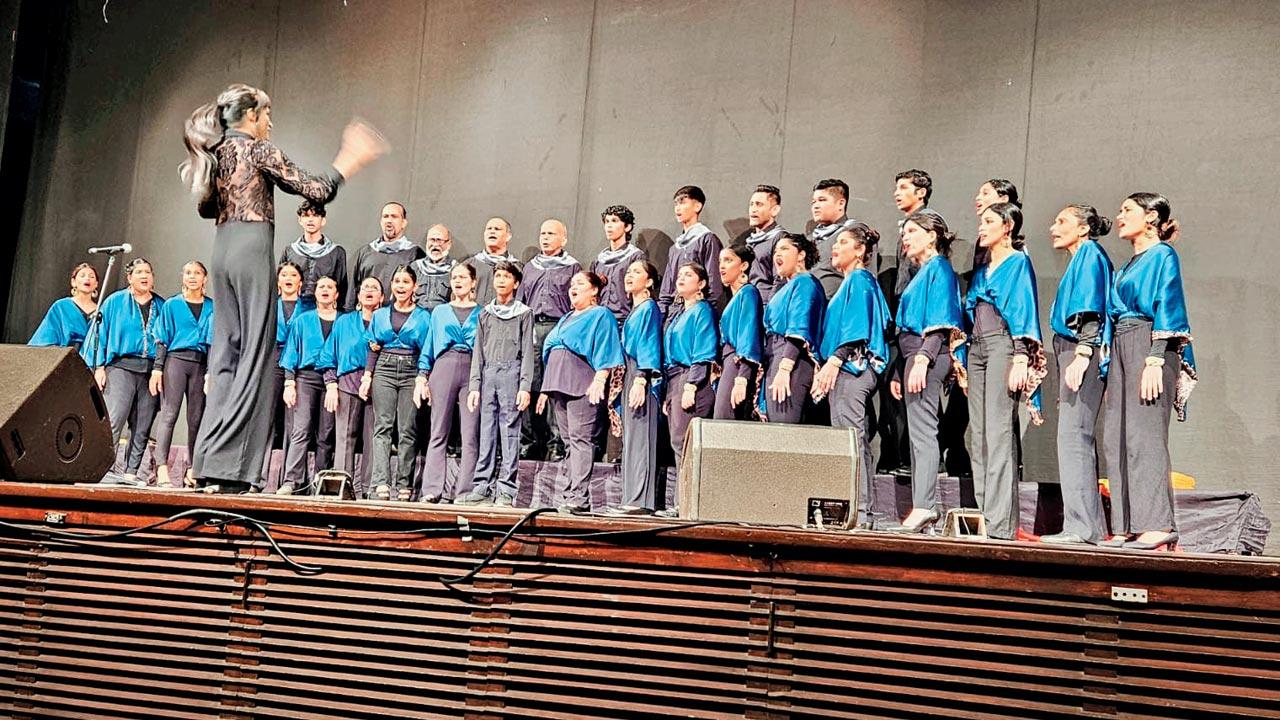
31 January,2026 10:02 AM IST | Mumbai | Trisha GhoshAs the city grows into skyscraper silos, and social circles shrink, a few landmarks of community culture continue to thrive. It was in 1953 that an annual talent-contest was instituted for the parish members of the St Andrew’s Church. Over the next seven decades, it evolved into one of the city’s most popular cultural phenomenons. Fun and professional Seasoned radio broadcaster and author Brian Tellis learnt of the Bandra Zonals as a young boy. For him, the competitions are more than just a performance showcase. “They made better people of us by honing our talent, teaching us teamwork, community, and effective communication,” he points out. The Zonal competition platforms performers across age groups (left), in diverse genres of music, dance, and dramatics (right). Pics Courtesy/Rhythmnroots Conductor Blossom Mendonca, of the Living Voices Choir, was four-years-old when she first participated in the zonals for St Andrew’s, and later for St Peter’s Church in Bandra. “I won the cup for vocals below eight-years-old,” she beams over a phone call. A regular participant, Mendonca also began her conducting journey at the zonals for the choir competition. “The Living Voices choir itself was an offshoot of the West Zone choir. It was serious competition in the choir segment,” she recalls. Tellis doubles down, “Of course, it was. It was a matter of immense pride. The generation before us literally began it. So, in some way, we felt obliged to carry it forward,” he elaborates. A young Mendonca with her trophy for the West Zone in 1978; (right) Blossom Mendonca Unique to Bandra The experience was even a matter of envy for residents across Mumbai. Growing up in Andheri, singer Dominique Cerejo recalls travelling down to Bandra with her dad to watch zonal competitions. “We would attend to just hear the singers. As a kid who was away from the buzz, it opened my eyes to the level of talent out there,” she says. Now a resident of Bandra, the singer has already had her daughter participate in zonals. Cerejo will also be part of the first edition of the Rhythm n Roots Festival this year with the musical production, Live That Dream, curated by Darren Das and Niloufer Rohira. Brian Tellis, Terence Lewis and Dominique Cerejo Tellis shares that the competition inspired participants to push the boundaries; some of it shaped future greats. “I remember working in a play; no lines mind you, which was written and directed by theatre icons Imtiaz and Amjad Khan. This was the year before Amjad became Gabbar Singh,” he reveals. Mendonca remembers her mother, Blanche Viegas, tutoring children from across parishes. Back to the future Such platforms are key to nurture artistes, shares choreographer Terence Lewis. As a six-year-old in St Theresa’s in Bandra, Lewis vividly remembers his first break on stage as a singer at school. “I also danced to Brown Girl in The Ring by Boney M. It did wonders for my confidence,” he shares. This year, he will be at St Andrew’s Grounds showcasing a performance with his famed contemporary dance company. To this end, the festival becomes an extension of the zonals. “It will not only celebrate the arts, but also the people who have come out of this stage. The idea is to nurture this into an inter-deanery competition across Mumbai,” notes Tellis. Alongside food courts, stalls at the school grounds, the festival will see concerts, and also honour Fr Joe Pereira, and former Mumbai Police Commissioner, and Andrew’s boy, Rakesh Maria. Lewis adds, “An artist’s art has to give joy to others. It is important to have these platforms that encourage such creative and artistic dialogue.” Time for another generation to set the stage alight. ON February 6, 7, and 8; 5.30 pm onwards AT St Andrew’s High School Grounds, St Dominic Road, Bandra West. LOG ON TO thenommers.com (or at venue gate) ENTRY Rs 200 onwards
31 January,2026 10:01 AM IST | Mumbai | Shriram IyengarAuthor Gary Douglas had famously said, “Life is a glorious expression of possibilities embodied by you.” That idea sits at the heart of Rhythm and Earth drum circles, which Kolkata-based wellness practitioner and host Komal Vaishnav, is bringing to Mumbai. These drumming sessions are built around community, rhythm, and the simple act of coming together to create sound. Vaishnav believes drumming in a circle has a deeply calming effect. “I think when a person is sitting in a circle and drumming, it gives them peace, and people feel energetic the next day,” she emphasises. Designed for those with little to no prior experience, the one-hour long session allows attendees to ease into the instrument, letting the rhythm take shape collectively. Participants gathered in a circle with their drums. Pics Courtesy/Komal Vaishnav The inspiration comes from West African communities, where people can drum for hours together. According to Vaishnav, the practice helps the body relax and acts as a natural way to de-stress. Participants are welcome to bring their own instruments and join the circle as well. The session concludes with a shared drum performance of Moribayassa, meaning unaltered happiness, a traditional festive rhythm that originates from the Malinke people of Northeast Guinea, West Africa. AT Nautilus at Candies, Pali Hill, Nargis Dutt Road, Bandra West. LOG ON TO @nautilus_at_casacandies CALL 7036083629ENTRY Rs 1800 (adults); Rs 800 (children)
30 January,2026 11:11 AM IST | Mumbai | Rumani GabhareProtests need not be loud and slogan-based. Acts performed in solidarity can be a protest, as demonstrated by city-based non-governmental organisation, Dhai Akshar Educational Trust, which provides educational opportunities for underprivileged children. On January 28, the foundation collaborated with crochet club, Udhed Bunn Baatein for Stitches Against Violence, a worldwide movement originating in Vienna to symbolically protest against gender-based violence. Himani Mehta Dehlvi knits a scarf at the event. Pics Courtesy/Dhai Akshar Educational Trust; Udhed Bunn Baatein “We host crocheting sessions for children of the NGO every Saturday with Udhed Bunn Baatein. We decided to come together for an event to contribute to this cause. The Vienna-based organisations that began this idea — stitch sip knit, Footprint, and StoP — requested anyone anywhere to spend some time knitting or crocheting on public transport or outdoors on January 28,” Nyla Masood, founder, Dhai Akshar explains. The Mumbai-based platforms brought approximately 25 people to Walawalkar Garden, Andheri West, including children and adults. Participants wore red clothing to symbolise violence, and knitted scarves, caps, and granny squares to be used for an installation later. A close-up of granny squares crocheted by children at the NGO “Knitting and crocheting have long been forms of silent protest, where people unite for a shared purpose. It’s calming, meditative, and an organic manner of making a statement against violence, physical or verbal. We hope to create a support group for mental well-being,” reveals Himani Mehta Dehlvi, founder, Udhed Bunn Baatein. She adds that the platforms intend to host one knitting session a month, free-of-cost, and open to anyone interested. “The next one in February will mostly be centred on a cause closer to home: Plastic pollution. I hope to see more people, especially youngsters, joining to learn the craft and through it, the broader message,” Dehlvi signs off. Nyla Masood LOG ON TO @dhaiaksharngo
30 January,2026 11:05 AM IST | Mumbai | Trisha GhoshIn the middle of hectic rehearsals at an Andheri venue for her play, Zen Katha, and soon after performing Jaya, a rock musical version of the Mahabharata, for a prestigious theatre festival in Bhopal, Lillette Dubey is anything but slowing down. “I have to keep doing something, and challenge myself,” she replies in response to our query about juggling all of it. While she successfully dabbled in designing Indo-Western clothes, made AVs for government projects, and delivered memorable performances on celluloid, she confesses that her heart belongs to the theatre. Excerpts from an interview. What did theatre mean to you when you started out?Theatre is living and breathing. It also lives in memory. You can record it for documentation, but it’s not the same as seeing the play and experiencing it. That is the beauty and the tragedy of theatre. It’s not frozen or perfected in time like the screen. I started doing theatre in the first year of college. I auditioned for a play that Barry John was directing. He is my mentor. I did two plays in school, too and I felt as if I had tasted blood in the sense that I really, really loved theatre, and I loved acting. I always say I went to Barry John’s school of drama before he had one. He put me through my paces, trained and taught me everything I know. He gave me the lead roles; we did an extraordinary variety of plays, including Shakespeare, Brecht, Dario Fo, Tennessee Williams, Neil Simon, Samuel Beckett, and Harold Pinter. We did at least three productions a year. That was my training. Music, writing, theatre, and a beautiful dance performance are all elevating. They bring you spiritually closer to something that is divine. I believe theatre can be spiritual. In every character, you stand in their shoes. It makes you empathetic. Even while I was doing my Master’s degree to appease my father, at the back of my mind, I dreamt of setting up my own theatre company one day. Girija Oak (right) and Neena Kulkarni (extreme right) during a stage production of Gauhar Why did you want to start Prime Time?I wanted to set up my own company for two reasons. One was that I wanted to platform Indian writing. It’s wonderful to play Martha and Jane, but I felt a little alienated. I wanted work more rooted in our own ethos. And I felt that if we don’t do our own stories, our own plays, who will? And second, I deliberately chose to do the plays in English because I wanted to take the work across the world as much as I could, to show what is being written in India and the productions coming from here. Dubey (seated) looks on during a rehearsal of the play, Zen Katha at Kalari Warriors studio, Andheri West. Pics/Sayyed Sameer Abedi Tell us about the early days.I started a company with Sita Raina, and we had great fun setting it up together. For five years, we ran it together. We co-directed the first one or two plays, and then she moved more into the producer and administrative space, while I stayed in the creative space of directing. We separated our functions, and that worked well. For the first one or two shows, we chose well-known plays to build an audience and a brand. We felt that if we did an unknown Indian play, nobody would come. So, we started with a beautiful play called Blithe Spirit that was a success. We also acted in it. We also did a play called The Prisoner of Second Avenue, which we renamed The Prisoner of Malabar Hill. All we did was adapt the references. It was very Indianised. Even in the first two plays with English scripts, we spoke as we speak. I didn’t want fake accents. The director (centre, in light blue) instructs her team of actors How did Dance Like A Man happen?I reached out to many people, including Alyque Padamsee, about wanting an Indian script. Everyone pointed me towards Mahesh Dattani and said, there’s a new playwright who’s very good and that I should approach him. So I contacted him and flew down to Bangalore. There were no online checks in those days. My partner Sita wanted to do Mahesh’s popular, commercial play, Where There’s a Will, but I had read Dance Like a Man. She said nobody would be interested in a play about two over-the-hill Bharatanatyam dancers, and she tried hard to dissuade me, but I felt it just didn’t have the depth that I felt Dance Like a Man had. I loved the play. It was set in an artistic world, nuanced, spoke about so many things, and was so rich in comparison. That play has now travelled across five continents and over 700 shows. We also got a glowing review in the New York Times. Joy Sengupta (left) with Dubey in a scene from the play, 30 Days in September Has there been a production that changed something inside you?Several. For example, 30 Days In September changed me deeply. I never imagined its impact. Women came backstage crying, remembering abuse they had never spoken about. One young girl even went on to start one of the biggest NGOs working on child sexual abuse. I don’t do theatre to create change deliberately, but when it happens, it’s extremely moving. How do you know when a script is ‘Prime Time material’?The moment I read a play, I see it. If it doesn’t speak to me, if it doesn’t resonate with me, I won’t do it. I don’t think about what the audience will think. The play has to talk to me first. I have eclectic taste. If you look at my list of plays, they are very different from each other. I will do Gauhar, which is about classical music and a musician, and then move to something like an Autobiography, a richly layered, sophisticated drama with such insight into human relationships. Whatever the theme of a play, it could be anything from Sammy, about Gandhi, his philosophy, and his debates with his alter ego, to child sexual abuse in 30 Days in September, or to tender stories like Adhe Adhure or Dance Like a Man, even within that, you can see the themes are wildly different. Suchitra Pillai (left) and Ananth Mahadevan in a moment from the production of Dance Like A Man If Prime Time had a personality at 35, how would you describe it?It would be me. I have no other producer, co-writer or co-director. So, I guess it reflects me: Restless creatively; always in search of new mountains to climb, new stories to tell. You’ve worked with many collaborators. What makes a great one?When you’re young, you think talent is everything. As I’ve grown older, the person has become just as important. Theatre is collaborative. I don’t believe in autocratic direction. I was trained by Barry John, and he allowed actors to discover, explore, and find their own interpretations. Denzil Smith (left) and Joy Sengupta in a moment from the play, Sammy, centred on Gandhi Are there moments that make you wonder how you pulled it off?It’s been 35 years, and I have lots of stories. Theatre is such an ephemeral form. Things can go horribly wrong. I once had to cancel a completely sold-out musical because the lead actor lost her voice and simply refused to come. Back in the day, there was no way to call unless you had a landline. So when she didn’t show up, we kept waiting and then called the house. Her father very calmly, very coolly and casually told us, “Oh, she won’t be coming today. She’s not feeling well.” None of our pleading helped. The house was full, people were sitting on the steps, and there was nothing we could do. It even made the newspaper headlines the next day. Theatre teaches you humility very fast. How has Indian theatre changed since you began, and how has it stayed the same?There is more writing now, which is wonderful. But theatre remains fragile. It’s still underfunded and deeply dependent on passion. After 35 years, what keeps you returning to the rehearsal room?The adrenaline rush; the not-knowing. I feel the clock ticking louder. I want to do so many more things. As long as I’m curious, Prime Time will continue. Theatre is alive, and it can be a brilliant show one night, and a terrible one the next. That unpredictability excites me. Some mad people like us thrive on it.My next play is going to be about Sindh. I’ve always wanted to do a play about the land I come from. I want to talk about the Sufi music from there, and the songs and stories from Sindh. I always want to do something new each time. Maybe, I’ll try and sing in my next play; draw out a new skill in myself. This is what keeps me going. In fact I hope my final moment is while I’m still performing on stage. Watch the plays The Prime Time Theatre Company will celebrate their 35th year by performing various plays, including 9 Parts Of Desire, Autobiography, Gauhar, Salaam Noni Appa and Dance Like A Man ON February 4-8 AT Prithvi Theatre, Juhu. CALL 26149546 ON February 14-15 AT NCPA Experimental, Nariman Point. CALL 66223724 ON February 28-March 1 AT Royal Opera House, Charni Road. LOG ON TO bookmyshow.com
30 January,2026 10:01 AM IST | Mumbai | Suprita MitterHarsh Mander’s book, Our Constitution Our People (HarperCollins Children’s Books) offers a brief history of how the constitution came to be drafted and why it stands as the most important document in the country. It further breaks down its key components such as the preamble and ideas of justice, equality, liberty, and fraternity. One of the most fascinating chapters deals with the right to vote. Young readers learn about how including this small feature, which allows every citizen to vote, was a radical step for the drafting committee. Such careful considerations, readers gather, resulted in the long-drawn out process of the drafting of the constitution. The book ends aptly on a note where Mander measures how much we’ve accomplished so far and how much more there is to do. His sharp writing makes it an engaging read for children. It is bolstered by Priya Kuriyan’s precise illustrations, especially of Mahatma Gandhi and Dr BR Ambedkar, whose values reflect in the document. The Guide’s Other Reccos A Flag, A Song and a Pinch of Salt: Freedom Fighters of India: Subhadra Sen Gupta’s delightful book (Puffin) introduces young readers to figures who were instrumental in India’s fight for freedom. These include Dr BR Ambedkar, Sarojini Naidu, Abul Kalam Azad, Bhagat Singh, among others. They shaped various freedom movements and contributed to the centuries-long struggle in multiple ways — from introducing social reforms to writing literature that stood against British rule. Five Fantastic Facts about the Indian Constitution: Ashok Rajagopalan’s slim illustrated work (Tulika Books) takes young readers through five important lesser-known facts about the constitution. For instance, he gives a detailed explanation of the drafting process, informing his readers about the number of people who were consulted and the distinct backgrounds they belonged to. The book ends with exciting activities which nudge children to engage in critical thought. Harsh Mander After Midnight: Meghaa Gupta’s incisive work (Puffin) takes young readers on a journey through several developments that the country has witnessed since its independence. With the help of anecdotes as well as infographics and illustrations by Sayan Mukherjee, the book offers fun bite-sized facts and timelines of technological, social, scientific, environmental, economic steps that have led to the growth of the country. Meghaa Gupta, Subhadra Sen Gupta, Kavitha Mandana and Ashok Rajagopalan A Story of India’s National Flag: As part of the ‘A Story of’ series (Talking Cub), Kavitha Mandana fills us in on how the flag came to be designed in 1906 and again in 1947. An important feature at Republic Day parades, the flag as we see it today was a creation of many hands, not one person alone. From Kartar Singh to Sister Nivedita as well as revolutionaries like Hemchandra Kanungo and Sachindra Prasad, we read stories about all those who contributed to the evolution of the tricolour. Available: Leading bookstores and e-stores (all titles)Cost: Rs 299
29 January,2026 08:04 PM IST | Mumbai | Nandini VarmaIn journalist Rahul Pandita’s new novel Our Friends in Good Houses (Fourth Estate), Neel and his family have lost their home in Kashmir. Neel’s father copes with the exile and his wife’s ill health by avoiding the thought of loss. However, for years, Neel yearns to “discover a ground” and find a home. Even in his old house, he believes, home felt distant. This perpetual search leads him to collect a few things and memories of people who inspired in him a sense of belonging. Pandita’s writing is meditative in nature. His attention to detail makes it easy for readers to slow down and travel with the protagonist through his memories. We learn about his friendships with the locals, which become central to Neel and the nerve centre of the novel. For instance, a local grocer Lakshman’s good nature and warmth help Neel access the village from where a district collector had been abducted. His presence also supports Neel in gaining trust from the villagers and gathering information as a journalist. Rahul Pandita Poignant moments arrive, however, in the time he spends with such locals. For example, the boat ride he takes after wrapping up his assignment to visit Lakshman acts as a quiet gesture of his gratitude for Lakshman. Similar transient instances of intimacy, whether shared with Gurnaam or Gurupriya at the guerrilla zones, stay with you and make the novel an immersive, heart-rending read. Excerpts from an interview. How did the loss of home and a consequent search for it become central ideas in the book?I think I wanted to sever the idea of homelessness from any event of physical displacement alone. In the modern world, many of us feel afflicted with a certain lack of ground. Also, the idea of home means different things to people. No matter where you are, home is at the heart of who we are. It is our gravitational force. By making it the theme of my novel, I wanted to reach out to people who feel this homelessness and tell them: Hey, you are not alone. Why did you choose a non-linear, fragmentary structure for the novel?Isn’t that how memory works? We cannot put it under the command of linearity. We keep going back and forth between the worlds we have inhabited and continue to inhabit. In that way, I have simply followed the path memory has shown my protagonist, Neel, who, as you know, has just a few similarities with me. What did the process of putting these fragments of memory together look like?The process of writing this novel has, in many ways, helped me make sense of the world I have experienced in the last two-and-a-half decades. It was not pleasant. But life in itself is beautiful. But whether it is or not, at one point I had to stop and start looking inwards. How I processed that is how the novel has taken shape. The story includes multiple forms of violence as well as the narrative of the protagonist’s ailing mother. What were the challenges?There were many. As a conflict reporter, I always left the ‘field’ with a dread in my heart. The dread is about a future pain — that, maybe, when I return next, some people may have already been consumed by violence. That dread has shaped at least one story’s trajectory in the novel, which was the most difficult to write. Available Leading bookstores & e-storesCost: Rs 599
29 January,2026 08:02 PM IST | Mumbai | Nandini VarmaADVERTISEMENT