Author Gary Douglas had famously said, “Life is a glorious expression of possibilities embodied by you.” That idea sits at the heart of Rhythm and Earth drum circles, which Kolkata-based wellness practitioner and host Komal Vaishnav, is bringing to Mumbai. These drumming sessions are built around community, rhythm, and the simple act of coming together to create sound. Vaishnav believes drumming in a circle has a deeply calming effect. “I think when a person is sitting in a circle and drumming, it gives them peace, and people feel energetic the next day,” she emphasises. Designed for those with little to no prior experience, the one-hour long session allows attendees to ease into the instrument, letting the rhythm take shape collectively. Participants gathered in a circle with their drums. Pics Courtesy/Komal Vaishnav The inspiration comes from West African communities, where people can drum for hours together. According to Vaishnav, the practice helps the body relax and acts as a natural way to de-stress. Participants are welcome to bring their own instruments and join the circle as well. The session concludes with a shared drum performance of Moribayassa, meaning unaltered happiness, a traditional festive rhythm that originates from the Malinke people of Northeast Guinea, West Africa. AT Nautilus at Candies, Pali Hill, Nargis Dutt Road, Bandra West. LOG ON TO @nautilus_at_casacandies CALL 7036083629ENTRY Rs 1800 (adults); Rs 800 (children)
30 January,2026 11:11 AM IST | Mumbai | Rumani GabhareProtests need not be loud and slogan-based. Acts performed in solidarity can be a protest, as demonstrated by city-based non-governmental organisation, Dhai Akshar Educational Trust, which provides educational opportunities for underprivileged children. On January 28, the foundation collaborated with crochet club, Udhed Bunn Baatein for Stitches Against Violence, a worldwide movement originating in Vienna to symbolically protest against gender-based violence. Himani Mehta Dehlvi knits a scarf at the event. Pics Courtesy/Dhai Akshar Educational Trust; Udhed Bunn Baatein “We host crocheting sessions for children of the NGO every Saturday with Udhed Bunn Baatein. We decided to come together for an event to contribute to this cause. The Vienna-based organisations that began this idea — stitch sip knit, Footprint, and StoP — requested anyone anywhere to spend some time knitting or crocheting on public transport or outdoors on January 28,” Nyla Masood, founder, Dhai Akshar explains. The Mumbai-based platforms brought approximately 25 people to Walawalkar Garden, Andheri West, including children and adults. Participants wore red clothing to symbolise violence, and knitted scarves, caps, and granny squares to be used for an installation later. A close-up of granny squares crocheted by children at the NGO “Knitting and crocheting have long been forms of silent protest, where people unite for a shared purpose. It’s calming, meditative, and an organic manner of making a statement against violence, physical or verbal. We hope to create a support group for mental well-being,” reveals Himani Mehta Dehlvi, founder, Udhed Bunn Baatein. She adds that the platforms intend to host one knitting session a month, free-of-cost, and open to anyone interested. “The next one in February will mostly be centred on a cause closer to home: Plastic pollution. I hope to see more people, especially youngsters, joining to learn the craft and through it, the broader message,” Dehlvi signs off. Nyla Masood LOG ON TO @dhaiaksharngo
30 January,2026 11:05 AM IST | Mumbai | Trisha GhoshIn the middle of hectic rehearsals at an Andheri venue for her play, Zen Katha, and soon after performing Jaya, a rock musical version of the Mahabharata, for a prestigious theatre festival in Bhopal, Lillette Dubey is anything but slowing down. “I have to keep doing something, and challenge myself,” she replies in response to our query about juggling all of it. While she successfully dabbled in designing Indo-Western clothes, made AVs for government projects, and delivered memorable performances on celluloid, she confesses that her heart belongs to the theatre. Excerpts from an interview. What did theatre mean to you when you started out?Theatre is living and breathing. It also lives in memory. You can record it for documentation, but it’s not the same as seeing the play and experiencing it. That is the beauty and the tragedy of theatre. It’s not frozen or perfected in time like the screen. I started doing theatre in the first year of college. I auditioned for a play that Barry John was directing. He is my mentor. I did two plays in school, too and I felt as if I had tasted blood in the sense that I really, really loved theatre, and I loved acting. I always say I went to Barry John’s school of drama before he had one. He put me through my paces, trained and taught me everything I know. He gave me the lead roles; we did an extraordinary variety of plays, including Shakespeare, Brecht, Dario Fo, Tennessee Williams, Neil Simon, Samuel Beckett, and Harold Pinter. We did at least three productions a year. That was my training. Music, writing, theatre, and a beautiful dance performance are all elevating. They bring you spiritually closer to something that is divine. I believe theatre can be spiritual. In every character, you stand in their shoes. It makes you empathetic. Even while I was doing my Master’s degree to appease my father, at the back of my mind, I dreamt of setting up my own theatre company one day. Girija Oak (right) and Neena Kulkarni (extreme right) during a stage production of Gauhar Why did you want to start Prime Time?I wanted to set up my own company for two reasons. One was that I wanted to platform Indian writing. It’s wonderful to play Martha and Jane, but I felt a little alienated. I wanted work more rooted in our own ethos. And I felt that if we don’t do our own stories, our own plays, who will? And second, I deliberately chose to do the plays in English because I wanted to take the work across the world as much as I could, to show what is being written in India and the productions coming from here. Dubey (seated) looks on during a rehearsal of the play, Zen Katha at Kalari Warriors studio, Andheri West. Pics/Sayyed Sameer Abedi Tell us about the early days.I started a company with Sita Raina, and we had great fun setting it up together. For five years, we ran it together. We co-directed the first one or two plays, and then she moved more into the producer and administrative space, while I stayed in the creative space of directing. We separated our functions, and that worked well. For the first one or two shows, we chose well-known plays to build an audience and a brand. We felt that if we did an unknown Indian play, nobody would come. So, we started with a beautiful play called Blithe Spirit that was a success. We also acted in it. We also did a play called The Prisoner of Second Avenue, which we renamed The Prisoner of Malabar Hill. All we did was adapt the references. It was very Indianised. Even in the first two plays with English scripts, we spoke as we speak. I didn’t want fake accents. The director (centre, in light blue) instructs her team of actors How did Dance Like A Man happen?I reached out to many people, including Alyque Padamsee, about wanting an Indian script. Everyone pointed me towards Mahesh Dattani and said, there’s a new playwright who’s very good and that I should approach him. So I contacted him and flew down to Bangalore. There were no online checks in those days. My partner Sita wanted to do Mahesh’s popular, commercial play, Where There’s a Will, but I had read Dance Like a Man. She said nobody would be interested in a play about two over-the-hill Bharatanatyam dancers, and she tried hard to dissuade me, but I felt it just didn’t have the depth that I felt Dance Like a Man had. I loved the play. It was set in an artistic world, nuanced, spoke about so many things, and was so rich in comparison. That play has now travelled across five continents and over 700 shows. We also got a glowing review in the New York Times. Joy Sengupta (left) with Dubey in a scene from the play, 30 Days in September Has there been a production that changed something inside you?Several. For example, 30 Days In September changed me deeply. I never imagined its impact. Women came backstage crying, remembering abuse they had never spoken about. One young girl even went on to start one of the biggest NGOs working on child sexual abuse. I don’t do theatre to create change deliberately, but when it happens, it’s extremely moving. How do you know when a script is ‘Prime Time material’?The moment I read a play, I see it. If it doesn’t speak to me, if it doesn’t resonate with me, I won’t do it. I don’t think about what the audience will think. The play has to talk to me first. I have eclectic taste. If you look at my list of plays, they are very different from each other. I will do Gauhar, which is about classical music and a musician, and then move to something like an Autobiography, a richly layered, sophisticated drama with such insight into human relationships. Whatever the theme of a play, it could be anything from Sammy, about Gandhi, his philosophy, and his debates with his alter ego, to child sexual abuse in 30 Days in September, or to tender stories like Adhe Adhure or Dance Like a Man, even within that, you can see the themes are wildly different. Suchitra Pillai (left) and Ananth Mahadevan in a moment from the production of Dance Like A Man If Prime Time had a personality at 35, how would you describe it?It would be me. I have no other producer, co-writer or co-director. So, I guess it reflects me: Restless creatively; always in search of new mountains to climb, new stories to tell. You’ve worked with many collaborators. What makes a great one?When you’re young, you think talent is everything. As I’ve grown older, the person has become just as important. Theatre is collaborative. I don’t believe in autocratic direction. I was trained by Barry John, and he allowed actors to discover, explore, and find their own interpretations. Denzil Smith (left) and Joy Sengupta in a moment from the play, Sammy, centred on Gandhi Are there moments that make you wonder how you pulled it off?It’s been 35 years, and I have lots of stories. Theatre is such an ephemeral form. Things can go horribly wrong. I once had to cancel a completely sold-out musical because the lead actor lost her voice and simply refused to come. Back in the day, there was no way to call unless you had a landline. So when she didn’t show up, we kept waiting and then called the house. Her father very calmly, very coolly and casually told us, “Oh, she won’t be coming today. She’s not feeling well.” None of our pleading helped. The house was full, people were sitting on the steps, and there was nothing we could do. It even made the newspaper headlines the next day. Theatre teaches you humility very fast. How has Indian theatre changed since you began, and how has it stayed the same?There is more writing now, which is wonderful. But theatre remains fragile. It’s still underfunded and deeply dependent on passion. After 35 years, what keeps you returning to the rehearsal room?The adrenaline rush; the not-knowing. I feel the clock ticking louder. I want to do so many more things. As long as I’m curious, Prime Time will continue. Theatre is alive, and it can be a brilliant show one night, and a terrible one the next. That unpredictability excites me. Some mad people like us thrive on it.My next play is going to be about Sindh. I’ve always wanted to do a play about the land I come from. I want to talk about the Sufi music from there, and the songs and stories from Sindh. I always want to do something new each time. Maybe, I’ll try and sing in my next play; draw out a new skill in myself. This is what keeps me going. In fact I hope my final moment is while I’m still performing on stage. Watch the plays The Prime Time Theatre Company will celebrate their 35th year by performing various plays, including 9 Parts Of Desire, Autobiography, Gauhar, Salaam Noni Appa and Dance Like A Man ON February 4-8 AT Prithvi Theatre, Juhu. CALL 26149546 ON February 14-15 AT NCPA Experimental, Nariman Point. CALL 66223724 ON February 28-March 1 AT Royal Opera House, Charni Road. LOG ON TO bookmyshow.com
30 January,2026 10:01 AM IST | Mumbai | Suprita MitterHarsh Mander’s book, Our Constitution Our People (HarperCollins Children’s Books) offers a brief history of how the constitution came to be drafted and why it stands as the most important document in the country. It further breaks down its key components such as the preamble and ideas of justice, equality, liberty, and fraternity. One of the most fascinating chapters deals with the right to vote. Young readers learn about how including this small feature, which allows every citizen to vote, was a radical step for the drafting committee. Such careful considerations, readers gather, resulted in the long-drawn out process of the drafting of the constitution. The book ends aptly on a note where Mander measures how much we’ve accomplished so far and how much more there is to do. His sharp writing makes it an engaging read for children. It is bolstered by Priya Kuriyan’s precise illustrations, especially of Mahatma Gandhi and Dr BR Ambedkar, whose values reflect in the document. The Guide’s Other Reccos A Flag, A Song and a Pinch of Salt: Freedom Fighters of India: Subhadra Sen Gupta’s delightful book (Puffin) introduces young readers to figures who were instrumental in India’s fight for freedom. These include Dr BR Ambedkar, Sarojini Naidu, Abul Kalam Azad, Bhagat Singh, among others. They shaped various freedom movements and contributed to the centuries-long struggle in multiple ways — from introducing social reforms to writing literature that stood against British rule. Five Fantastic Facts about the Indian Constitution: Ashok Rajagopalan’s slim illustrated work (Tulika Books) takes young readers through five important lesser-known facts about the constitution. For instance, he gives a detailed explanation of the drafting process, informing his readers about the number of people who were consulted and the distinct backgrounds they belonged to. The book ends with exciting activities which nudge children to engage in critical thought. Harsh Mander After Midnight: Meghaa Gupta’s incisive work (Puffin) takes young readers on a journey through several developments that the country has witnessed since its independence. With the help of anecdotes as well as infographics and illustrations by Sayan Mukherjee, the book offers fun bite-sized facts and timelines of technological, social, scientific, environmental, economic steps that have led to the growth of the country. Meghaa Gupta, Subhadra Sen Gupta, Kavitha Mandana and Ashok Rajagopalan A Story of India’s National Flag: As part of the ‘A Story of’ series (Talking Cub), Kavitha Mandana fills us in on how the flag came to be designed in 1906 and again in 1947. An important feature at Republic Day parades, the flag as we see it today was a creation of many hands, not one person alone. From Kartar Singh to Sister Nivedita as well as revolutionaries like Hemchandra Kanungo and Sachindra Prasad, we read stories about all those who contributed to the evolution of the tricolour. Available: Leading bookstores and e-stores (all titles)Cost: Rs 299
29 January,2026 08:04 PM IST | Mumbai | Nandini VarmaIn journalist Rahul Pandita’s new novel Our Friends in Good Houses (Fourth Estate), Neel and his family have lost their home in Kashmir. Neel’s father copes with the exile and his wife’s ill health by avoiding the thought of loss. However, for years, Neel yearns to “discover a ground” and find a home. Even in his old house, he believes, home felt distant. This perpetual search leads him to collect a few things and memories of people who inspired in him a sense of belonging. Pandita’s writing is meditative in nature. His attention to detail makes it easy for readers to slow down and travel with the protagonist through his memories. We learn about his friendships with the locals, which become central to Neel and the nerve centre of the novel. For instance, a local grocer Lakshman’s good nature and warmth help Neel access the village from where a district collector had been abducted. His presence also supports Neel in gaining trust from the villagers and gathering information as a journalist. Rahul Pandita Poignant moments arrive, however, in the time he spends with such locals. For example, the boat ride he takes after wrapping up his assignment to visit Lakshman acts as a quiet gesture of his gratitude for Lakshman. Similar transient instances of intimacy, whether shared with Gurnaam or Gurupriya at the guerrilla zones, stay with you and make the novel an immersive, heart-rending read. Excerpts from an interview. How did the loss of home and a consequent search for it become central ideas in the book?I think I wanted to sever the idea of homelessness from any event of physical displacement alone. In the modern world, many of us feel afflicted with a certain lack of ground. Also, the idea of home means different things to people. No matter where you are, home is at the heart of who we are. It is our gravitational force. By making it the theme of my novel, I wanted to reach out to people who feel this homelessness and tell them: Hey, you are not alone. Why did you choose a non-linear, fragmentary structure for the novel?Isn’t that how memory works? We cannot put it under the command of linearity. We keep going back and forth between the worlds we have inhabited and continue to inhabit. In that way, I have simply followed the path memory has shown my protagonist, Neel, who, as you know, has just a few similarities with me. What did the process of putting these fragments of memory together look like?The process of writing this novel has, in many ways, helped me make sense of the world I have experienced in the last two-and-a-half decades. It was not pleasant. But life in itself is beautiful. But whether it is or not, at one point I had to stop and start looking inwards. How I processed that is how the novel has taken shape. The story includes multiple forms of violence as well as the narrative of the protagonist’s ailing mother. What were the challenges?There were many. As a conflict reporter, I always left the ‘field’ with a dread in my heart. The dread is about a future pain — that, maybe, when I return next, some people may have already been consumed by violence. That dread has shaped at least one story’s trajectory in the novel, which was the most difficult to write. Available Leading bookstores & e-storesCost: Rs 599
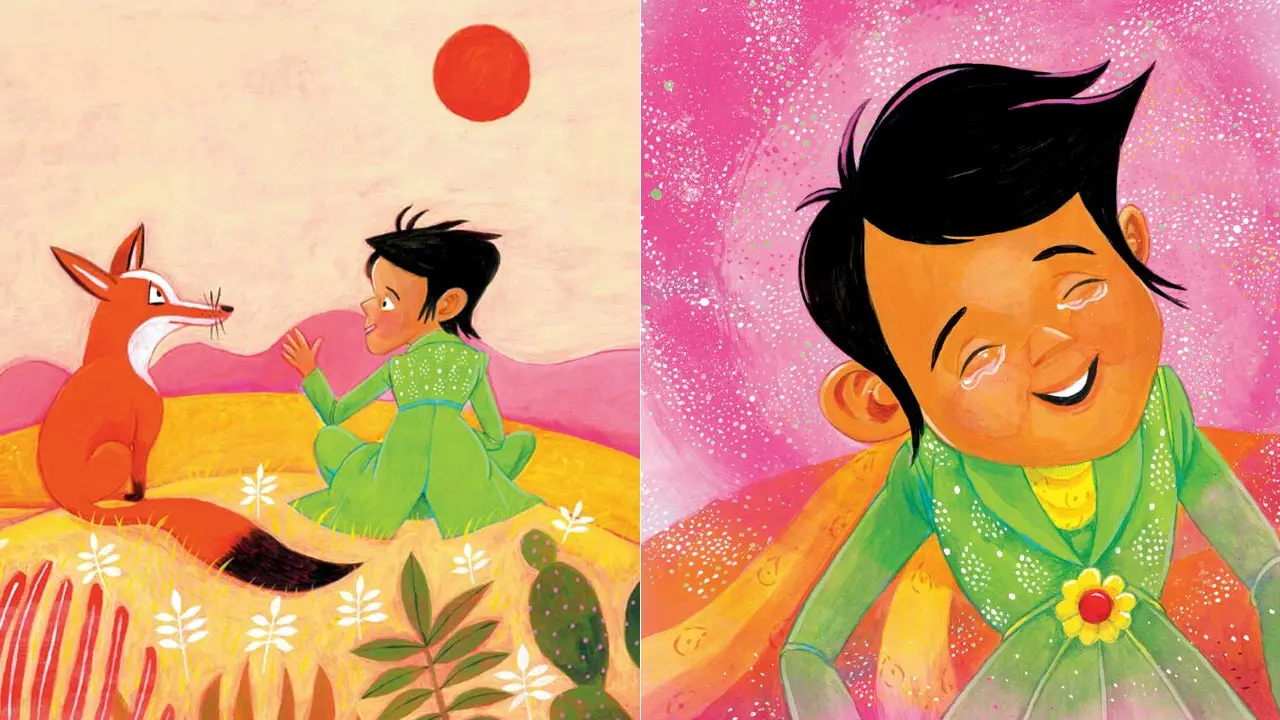
29 January,2026 08:02 PM IST | Mumbai | Nandini VarmaA small mention of the boa constrictor devouring an elephant can remind you of a stranded aircraft pilot on the Sahara Desert and his little friend, a young prince, visiting the Earth. Antoine De Saint-Exupery’s The Little Prince has been adapted into an abridged children’s book (Pratham Books) by Anushka Ravishankar, with illustrations by Priya Kuriyan. Apart from English, the book will be available in Hindi, Marathi, Kannada, and Tamil. “I don’t remember many books from 40 years ago, but this is not a book one easily forgets,” says Ravishankar. She asserts that it has been part of the reading culture of the world. “The story has so many layers and messages that almost everyone can find a mirror in it. The thought that children are able to imagine and see things that adults cannot see has embedded itself into my world view,” she tells us. The book cover The author and the illustrator worked in collaboration with the French Institute in India — Embassy of France. “The first thing I did was decide which parts were important and could not be left out. Once I did that, then it was a process of paring the words down to the essentials. One does lose a bit of colour in the process but those are choices one has to make,” Ravishankar recalls. Kuriyan’s vibrant illustrations add an Indian touch for an Indian audience. After working through a few initial iterations, which involved imagining the prince similar to the original one or taking inspiration from Indian cinema, she decided to tap into visual references of Indian royalty from history and arrived at the current re-imagination. “Our princes were quite pop-ish in their own way. The costume became a culmination of many princes’ costumes. The green costume and the yellow muffler connect well enough [to the original].” Anushka Ravishankar and Priya Kuriyan For the other illustrations in the book, she used Indian colours, such as rani pink, which children can see around them. “It was a conscious choice to lift the colours up.” Since most of the narrative is set in the desert, she decided to play with the colours of the sunset and sunrise. “I thought I’d lean in to the highly saturated ones to make it look different from the original. I didn’t want to use the pale European palettes,” Kuriyan reveals. Ravishankar’s engaging style of storytelling, which conveys the emotional depth of the original in fewer words, and Kuriyan’s ability to completely immerse the reader in the little prince’s world complement each other. Ravishankar remembers the task of re-working on the much-loved classic as a daunting one. “It’s still a little wordier than a picture book needs to be, but that was a choice the editors and I made together.” They had seen other versions with lesser text which felt flat to them. Even though she had to drastically prune the story, she concludes, “I’ve tried not to lose the essence of the book in the process. Hopefully, I have thrown out the bath water and not the baby!” LOG ON TO: prathambooks.org (for print copies) NOTE: The picture book can also be accessed on Pratham Books’ open digital repository, StoryWeaver
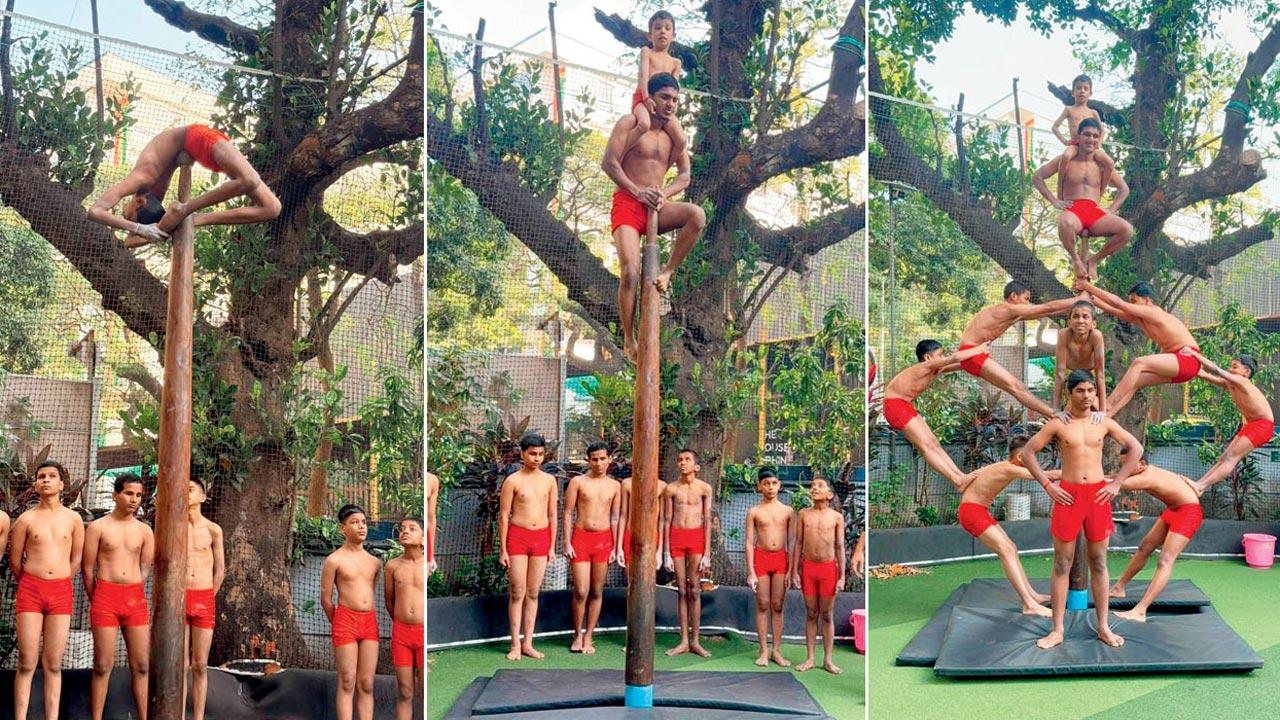
29 January,2026 07:27 PM IST | Mumbai | Nandini VarmaThe final scene of Takeshi Kitano’s 2003 Samurai masterpiece, Zatoichi, ends with the hero singing, ‘Even with my eyes open/I can see nothing’. Uday Deshpande understands the philosophical depth of that song. After all, the Padma Shri Awardee will be guiding the 11 visually-impaired students from the Victoria Memorial School for the Blind (VMSB), Tardeo in one of the unique displays on the opening day of this year’s edition of the Kala Ghoda Arts Festival. The journey for the coach first began in the early 1990s. Mahesh Mhatre was still a student under Deshpande when he first joined the Victoria Memorial School as an instructor. “As someone who enjoyed working out, mallakhamb was an opportunity to combine multiple facets such as yoga, strength training, and flexibility,” the instructor at the school reveals. Uday Deshpande (in deep blue) guides Venkatesh Mandadi through a routine Teaching unsighted children might sound almost impossible. Not quite, both instructors assure us. It requires an adaptive training technique. Deshpande shares, “It was difficult when I began in June 1990, but eventually, I realised that they are keen listeners and intuitive. Every action had to be clearly stated and described.” Precision is key. To bolster the commands, Mhatre would himself hold a pose on the mallakhamb, allowing the children to sense this posture through touch, and replicate it. The school batch of 25 to 30 students practice these routines thrice every week. “It takes them a year to master the basics. The progress is down to practice,” Mhatre reveals. Mahesh Mhatre On the inaugural day, 11 students from the batch, instructed by Mhatre and Deshpande, will be performing complex poses, including a 11-man pyramid structure on the pole. For principal Rajani Hiremath, the experience shapes the children. These exercises offer more than physical fitness, he believes, “When they learn complex poses, they learn to focus, gain awareness of their surroundings, depth, and height. They also learn to listen, and react.” The facet of team work, and adapting to their team members’ needs is another crucial aspect, she adds. Like the fictional Japanese character Zatoichi, none of these students consider their lack of vision a weakness. Mhatre observes, “Sight can be distracting sometimes. They are laser focused.” For the veteran coach of the Shree Samarth Vyayam Shala in Shivaji Park, the experience is a lesson in itself. “By teaching them, I have learnt to teach better,” Deshpande concludes. ON January 31; 6.25 pmAT Cross Maidan, Marine Lines.ENTRY FreeThe guide's top picks Out of the box PIC COURTESY/KGAF Get hands on with master sculptor Arzan Khambatta (below) at a workshop where young designers will learn how to turn box boards into innovative masks.AGE GROUP 7 years and aboveON February 1; 11 amAT Chhatrapati Shivaji Maharaj Vastu Sangrahalaya (near the Baobab tree) Tibetan moves Snow Lion dancers. PIC COURTESY/TIPA Witness traditional Cham and Yak dance performed by The Tibetan Institute of Performing Arts (TIPA).ON February 1, 2, and 3; 5.30 pmAT Horniman Circle Garden Is that a bird? A moment from Cultured Vulture. PIC COURTESY/VANYAVANI Watch Maharashtra’s avian life come alive onstage in the wildlife-meets-theatre play Cultured Vulture. Produced by the Vanyavani Foundation, the play makes a case to protect one of the state’s most important, yet misunderstood species.ON February 2; 7.45 pm AT Yashwantrao Chavan Centre Behind the bowl Pull up your socks and get hands on at a noodle pulling ‘food workout’ with chef Rahul Punjabi.ON February 4; 3 pm AT YWCA International, Madame Cama Road. Tale of cities Sit down for a slow exploration of cities with poet Ranjit Hoskote at the David Sassoon Library. The curator will explore how ideas of utopia shaped newer cities like New Bombay, Chandigarh and Auroville.ON February 5; 5 pmAT David Sassoon Library Reading Room Turtle talks A still from Turtle Walker. PIC COURTESY/YOUTUBE Catch filmmakers Zoya Akhtar and Taira Malaney in conversation after a special screening of their critically acclaimed documentary Turtle Walker, which explores the life of India’s endangered sea turtles.ON February 7; 7 pmAT Cama Hall, Shaheed Bhagat Singh Marg Step up Farhan Akhtar. PIC COURTESY/@FARHANLIVEOFFICIAL The iconic open-air concerts will return this year with performances by Farhan Akhtar and Monali Thakur of Moh Moh Ke Dhaage fame.ON February 8; 5.30 pm onwardsAT Asiatic Library Steps, Shahid Bhagat Singh Marg. Smile, please Before you wrap up the weekend, don’t forget to drop by the iconic 1928-established Hamilton Studios that is offering an exclusive discount for the week on all portraits.ON January 31 to February 8AT Hamilton Studios, NTC House, Ballard Estate.EMAIL hamiltonstudiosbombay@gmail.com (a day’s advance notice needed to book an appointment) Home sweet home Our pick for this year’s inventive installation is Padma Shri awardee Sudharak Olwe and Sanjay Nikam’s Our Dream House (sneak peek below). The stack of mini houses will invite visitors to paint their idea of ‘home’ on them.ON January 31 to February 8AT Rampart Row Note: Stage events and workshops have limited seats. Arrive early to catch your favourite shows on first-come-first-served basis
29 January,2026 10:18 AM IST | Mumbai | Shriram IyengarThursday Target practiceSign up: Gear up and join this engaging, hands-on workshop on introductory air pistol and air rifle shooting.TIME 1 pm onwardsAT Airsoft India Sports Arena, Mastermind Road, Aarey Milk Colony, Goregaon. LOG ON TO in.bookmyshow.com CALL 9892438737 ENTRY Rs 799 Friday Pic Courtesy/Youtube Play in progressTheatre: Enjoy the play From the Warehouse, directed by Shashwat Srivastava, where dark comedy meets the scroll generation. TIME 7 pm AT Rangshila Theatre, Aram Nagar, Versova.LOG ON TO in.bookmyshow.com ENTRY Rs 475 Saturday Pic courtesy/@walkingprojectindia Mumbai on footWalk: Make the city more walkable by coming together to assess roads, walkability and tree shade in Borivli.TIME 9 am AT Borivli Taxi Stand, near Borivli Railway Station, Borivli West. LOG ON TO @walkingprojectindiaENTRY Free A melodic eveningMusic: Head for Sid Sriram’s concert, where he blends Indian roots with R&B and electronic textures.TIME 7 pm onwards AT Dome SVP Stadium, Lala Lajpatrai Marg, Lotus Colony, Worli. LOG ON TO district.inENTRY Rs 200 Sunday A traditional Malaysian feast. Pic Courtesy/Wikimedia Commons Malaysian feastFood: Savour the cuisines of this Asian country at this food and cultural festival by The Fairmont. TIME 12.30 pm and 7 pmAT The Merchants, Terminal 2, Chhatrapati Shivaji Maharaj International Airport, Navpada, Vile Parle. LOG ON TO district.in CALL 8097555901COST Rs 3500 Sondai Fort. Pic Courtesy/@treksand trails Climb to the topTrek: Slip into sporty gear to walk up to the lesser-known Sondai Fort in Karjat, once used as a watchtower to protect trade routes.TIME 5 am PICK-UP POINT Platform 10, Mumbai Chhatrapati Shivaji Maharaj Terminus (CSMT) LOG ON TO treksandtails.org CALL 8828004949COST Rs 699 onward
29 January,2026 09:28 AM IST | Mumbai | Rumani GabhareA new cultural exchange, Poland meets India seeks to blend an intercontinental cultural exchange by exploring history with the arts. This collaborative presentation brings together a solo Bharatanatyam performance and visual storytelling to trace a lesser-known chapter of Indo-Polish history. Bharatanatyam dancer Apeksha Niranjan and Polish writer-researcher Monika Kowaleczko-Szumowska will come together to explore cultural similarities between the two countries, while centring the story of Polish refugee children who found shelter in India during the Second World War. Wanda Nowicka (left) with a friend at Valivade refugee camp in Kolhapur (1943-1948) The ‘Good’ Maharaja At the heart of the presentation and the opening of the evening — is the story of Maharaja Digvijaysinhji Ranjitsinhji Jadeja of Nawanagar, (today’s Jamnagar) in Gujarat. “During the Second World War, nearly 1000 Polish children were displaced from their homes and left without refuge, as several countries refused to accept them. The Maharaja welcomed the children to India, providing them with shelter, education, food, clothing, and cultural support,” emphasised Kowaleczko-Szumowska. Dated photographs of Wanda Nowicka in Poland (left) and during her stay in India (right) Kowaleczko-Szumowska has researched this history extensively and authored the book, Maharaja’s Children, Story of Polish Kids in Jamnagar, which was released in English in 2025. She will then speak about the children’s journey — from their life in Poland to their eventual arrival in India — supported by visuals from her documentary of the same name. Maharaja Digvijaysinhji Ranjitsinhji Jadeja of Nawanagar. Pic courtesy/Wikipedia The children, Kowaleczko-Szumowska notes, “Did not just find safety in Nawanagar; they found affection. They often called the Maharaja by the name of ‘Bapu’, reflecting the paternal care he extended towards them during their years in India.” Niranjan at the dance showcase held at Dom Kultury Stare Babice cultural centre in Poland. Pics courtesy/Arleta Olendrowicz Personal history on stage For Niranjan, the story is deeply personal. Her grandmother, Wanda Nowicka, later Malti Kashikar, was among the Polish refugee children who arrived in India in 1942 and lived in a refugee camp at Kolhapur. “Through a Bharatanatyam performance, I will present my grandmother’s lived experiences — deportation, the unfortunate death of her father in a Siberian labour camp after being mistreated by a Soviet soldier, separation from her family in Iran, and the struggle of adapting to life in India, despite the stress and trauma she endured during that period at such a young age,” recalls Niranjan. Monika Kowaleczko-Szumowska (right); her book, Maharaja’s Children, Story of Polish Kids in Jamnagar While Bharatanatyam traditionally draws from mythological narratives, Niranjan will use its grammar to narrate historical and cultural stories. Incorporating Polish folk tales and the refugee narrative, the recital aims to blend Bharatanatyam with Gregorian chants, creating a cross-cultural language rooted in shared human values. ON January 30; 6.30 pm AT Sahitya Mandir Sabhagruha, Sector 6, Vashi, Navi Mumbai.CALL 9820609746 ENTRY Rs 250 (donor passes)
28 January,2026 09:31 AM IST | Mumbai | Rumani GabhareHistory buffs in Mumbai have a great opportunity to go back in time at St Xavier’s College. The institute’s Department of Ancient Indian History, Culture and Archaeology (AIHC&A) is hosting an exhibition of weaponry artefacts dating back to 15th and 16th-century India, in collaboration with Museum Society of Mumbai and Chhatrapati Shivaji Maharaj Vastu Sangrahalaya. Titled Shastrastra, the collection showcases the history of war through sets of weapons and sculptures. Armour dating back to 18th-century South India. Pics Courtesy/Dr Anita Rane-Kothare; Sunil Kadam (weapons); Faroque Todywala (sculptures, armour) “It is part of Vividha 2026, a two-day academic and cultural programme that spotlights India’s ancient martial heritage. On display are ancient and medieval Indian weapons, which portray how warfare traditions and the craftsmanship of weapons have evolved. There will also be a few traditional handicraft stalls to showcase India’s artisanal heritage,” reveals Dr Anita Rane-Kothare, Vice Chairman, Museum Society of Mumbai, Associate Professor and former Head, Department of AIHC&A, St Xavier’s College, and convenor of the exhibition. Dr Anita Rane-Kothare She adds that these artefacts reveal ancient war techniques used in India at some point, from Maratha to Persian warfare. “The inclusion of 12 Maratha forts as UNESCO World Heritage Sites prompted me to curate these weapons. Each of them is real, from swords and shields to different types of daggers; also included are a few miniature Mewar paintings.” She reveals more about the exhibition name, “Interesting to note: These weapons qualify as ‘shastra’, which constitutes actual physical weapons; ‘astra’ on the other hand, is a warfare tactic.” In modern terms, a gun is a ‘shastra’, she explains, but warfare using Artificial Intelligence (AI) is an ‘astra’. “Often, these concepts are mentioned in the Ramayana and Mahabharata epics,” she informs. Ankush, a sharp Indian goad, used to control and direct elephants Dr Rane-Kothare reflects on curating this exhibition, “I’ve added a section on hero stones that pay respects to warriors who’ve lost their lives. The exhibit displays weapons, which can be used to defend, but the deeper message to audiences is to abandon violence and the use of weapons to incite evil.” She signs off on a thought-provoking note: “If anything, these weapons show how civilisations have never changed. War has always existed; it merely assumes varying forms. Weapons must be used for a cause, to benefit the world and contribute towards peace.” Swords and a shield (Dhal-Talwar) on display at the exhibit ON January 28 and 29; 10 am to 4 pmAT Palacios Hall, St Xavier’s College, Mahapalika Marg, Dhobi Talao.ENTRY Free
28 January,2026 09:22 AM IST | Mumbai | Trisha GhoshIt takes us a couple of hours to conquer the Mumbai traffic, and reach Khandala. The journey through the winding ghat sections finally halts by a quiet lane, beyond which lies the 200-year-old abbey, now Abbey 301. If its existence surprises the reader, they are not alone. “It would not have been in the form it is today, but it was always here,” assures Kamini Kotak, owner, Abbey 301. On the afternoon of our visit, the quaint space is readying for its grand opening on January 30. Dholakia reveals that the next phase of conservation will focus on the water damage, if any, incurred by the double mortared walls The Kotak family acquired the structure after it was decommissioned in 1973. “I remember walking the grounds with my father-in-law, and just playing Brahms, Beethoven, and Bach. To his end, he conceded to listening to my Norah Jones album,” Kamini recalls. In the early 2000s, the abbey underwent the first phase of its conservation with Vikas Dilawari, giving it the visually aesthetic stained-glass windows, reveals entrepreneur Krishna Kotak. Adil Dholakia’s Five Cross Architects took over the challenge of further restoration in the short timeline between September and December of 2025. Adil Dholakia The current vision of the space was a more recent epiphany. “Khandala does not boast of any performance venue, and we wanted to create one that the community could be a part of,” Kamini shares. Kamini and Krishna Kotak Step in Pushan Kripalani, its creative director ‘who fell in love with the place at first sight’, and Xerxes Unvala, culture strategist. “We had to do very little. As they say in my world, ‘If God is your gaffer, get out of the way,’” Kripalani states, pointing to the dormer windows streaming natural light. As we walk through, the tech team is busy at work to ensure the sound system syncs with the natural harmonics of the space. Arunoday Singh and Pushan Kripalani in performance. The abbey is fitted with an adaptable deck that can be reworked to suit any performance Nowhere is this more evident than when actor Arunoday Singh and Kripalani break into a duet of Ain’t No Sunshine. “It was the same when we held the first trial in February 2025. The artistes could not wait to experience it,” shares Kripalani, who adds that India has very few examples of such spaces. “It was as much a transformation, as it was a conservation,” he says. The stained-glass windows were additions from the first phase of conservation in the early 2000s. Inspired by churches in Scotland, they were recreated in India; (right) A distinct feature, the vestry was restored with a combination of reused and suitable material. It will serve as the green room for performers, shares Kripalani. The tenet of minimalism and reversible improvements is a common thread. Dholakia reveals that the use of old BTC (Burma Teak Category) and Mangalore tiles were instrumental in the restoration. The nature of monsoons in the region made the roof restoration; (work in progress (right) restored roof) a primary concern for the architectural team. Pic Courtesy/Five Cross Architects The launch is the beginning of a new age for the 2500-sq-ft structure. “Imagine Raag Bhairavi being played by Rakesh Chaurasia to welcome the dawn,” teases Pushan Kripalani. The opening day will feature artistes, from Chaurasia to poet Kausar Munir, the Sanjay Divecha Trio, and singer-songwriter Nikhil D’Souza. For the future, the team is already exploring theatrical showcases, even outreaches to schools to foster a new community experience. The technical and lighting has been designed to be non-intrusive, and easily reversible “It is about offering a new cultural experience for the community, and for artistes,” concludes Kamini. As we walk around, we can imagine the hills come alive with music. ON January 30 to February 1AT Abbey 301, near Athiva Resort and Spa, Khandala.LOG ON TO abbey301.org
28 January,2026 09:09 AM IST | Mumbai | Shriram IyengarADVERTISEMENT