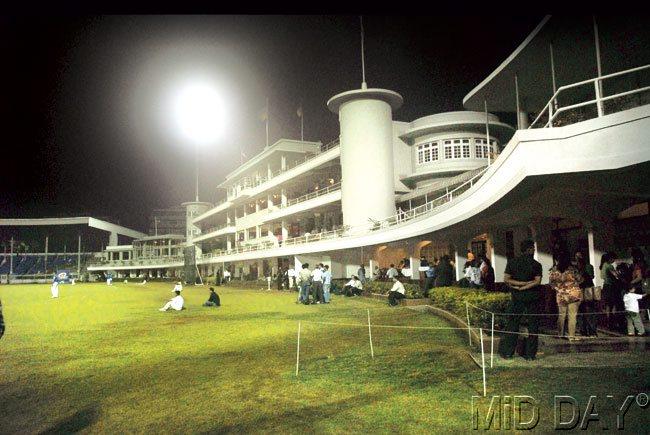
#01 Brabourne Stadium Old-timers say there was nothing like watching cricket at the Brabourne Stadium. This gets firmly established when one is at the pavilion end of the ground, marveling at the walls of each floor decorated by photo frames (courtesy former president Raj Singh Dungarpur) which housed the greats of the game. The dressing rooms are not the ones which Test cricketers used, but Cricket Club of India is soaked in history. It is a ground where more Test cricket should be played and that will happen in due course. If you know a member, get him to take you there to get a feel of vintage cricket by gazing at the Patiala pavilion. And after all that, you'd do well to sip on some pudina chai. If you are a sucker for cricket books, the Anandji Dossa reference library on the second floor if a must-see. At one extreme end is the section of newspaper clippings stored brown paper-covered year-by-year volumes. Check them out. u2013 Clayton Murzello
#02 Prithvi Theatre Built in 1978, only a year before mid-day itself was born, the Prithvi Theatre remains young, fresh and full of vitality even today. With its well-attended annual theatre festival and its carefully curated year-round calendar, this is a suburban hub for die-hard culture vultures. Many of today's top filmmakers, including the acclaimed Anurag Kashyap, have whiled away hours here, sitting in the theatre's quaint cafu00e9 and dreaming up magical scripts, while hobnobbing with the likeminded. If you haven't watched a play here yet, make it a point to do so. Get there early to soak in the atmosphere: before you enter the intimate theatre itself, visit its charming bookstore and be sure to sample a strong Irish Coffee at the open-air cafu00e9. Nestled amidst bamboo trees within the theatre's compound, this is a warm, inviting space where the world can well be forgotten over a steaming cuppa, before you get caught up in the dazzling drama of a perfect play. u2013 Sonali Velinker Kamat
#03 Matunga temples THE Matunga area of Central Mumbai was once home to scores of South Indians. While many of the community members have since moved to lesser expensive areas like Chembur and Dombivali, the place has now a burgeoning Gujarati and Jain population. However, the symbols that the early South Indian settlers built in the area have endured like the Asthika Samaj Temple, Bhajana Samaj Temple, Durga Parameshwari Temple and Shankara Mattham Temple. To the outsider, there is nothing to distinguish between these four temples which dot the flower market area at Matunga. However, ask the local resident and he will tell you that every South Indian family in the area has its own loyalty. Keralites throng the Asthika Samaj Temple which is dedicated to Lord Vishnu while the Tamilians of the area prefer the Bhajana Samaj or the Shankara Mattham which are dedicated to Lord Shiva. Meanwhile, the Durga Parameshwari temple nearby is where devotees from Andhra Pradesh pray. However, with changing demographics the landscape of this area also is changing. The four Jain temples in this area now bustle with activity. u2013Amit Kamath
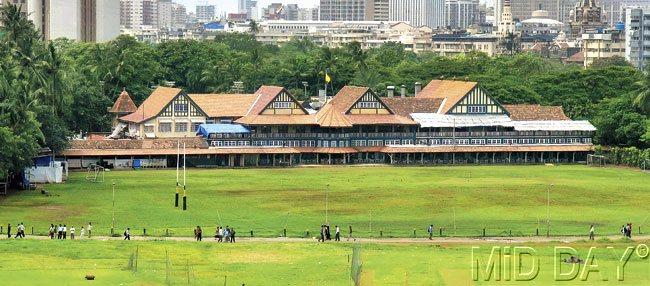
#04 Bombay Gymkhana Like in the Cricket Club India, (CCI) at the Bombay Gymkhana too, you need to get in courtesy a member. And if you arrive on a day which has some cricket action scheduled, you are in luck because you can watch the players gracing the same turf as Douglas Jardine's England and C K Nayudu's India clashed in this country's first ever Test match on home soil in December 1933. The ground floor provides one a close view of the action, but some may prefer climbing the wooden steps which takes you to the first floor. If your host insists on treating you, go for the chicken sandwich and wash it down with some fresh lime juice. The Bombay Gymkhana is never short of celebs and sportsmen. So don't be surprised if you spot Sunil Gavaskar turning up for a badminton game. And if you want to have the best view of the pavilion, walk over to the Azad Maidan. u2013 Clayton Murzello
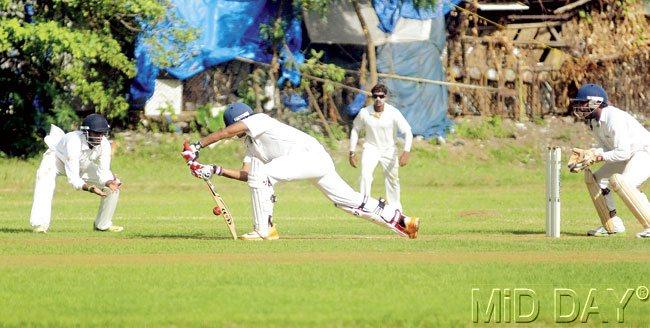
#05 Cross Maidan Imagine this: There's no fashion Street which has now blocked the view of Cross Maidan. You stand on the footpath and watch some of the most famous names in Mumbai cricket wield their willow or bowl with the red cherry. That was long ago. Now, you have to watch the action near the club tents. That can be fun as well if there's a top division match on at the Cross Maidan, the home for famous cricket clubs like National Cricket Club, United Cricketers, Sunder CC, MB Union CC and Karnataka Sporting Association which promotes cricket as well as football. Zaheer Khan turns up for National CC off and on, but someone who is a constant at the club is former India batsman Sudhir Naik, a genial man, who can take you down memory lane as well as chat about contemporary cricket. u2013 Clayton Murzello
#06 Azad Maidan Sassanian, Young Zorastrians, Navroz, Parsi Cyclists, Fort Vijayu2026 these are clubs which cricketers have associated Azad Maidan with. Sassanian is a name familiar to cricket lovers the world over because it is here where batting legend Sachin Tendulkar and Vinod Kambli put on 664 runs in an epic Harris Shield partnership for their school Shardashram in 1988. Cricketing pilgrims would want to visit this place of history as well as Fort Vijay which is on the opposite side, a club which was close to batting stalwart Vijay Merchant's heart. True, matches are played in close proximity but the magic of Mumbai cricket comes alive here. The Parsi Cyclists tent is worth visiting too as it is the area where those jolly men like Polly Umrigar, Rusi Surti and Nari Contractor paraded their skills. Unfortunately, these are not great times for Parsi cricket, but their cricketing history is as rich as their cuisine. Inter-school games are a big hit at Azad Maidan. u2013 Clayton Murzello
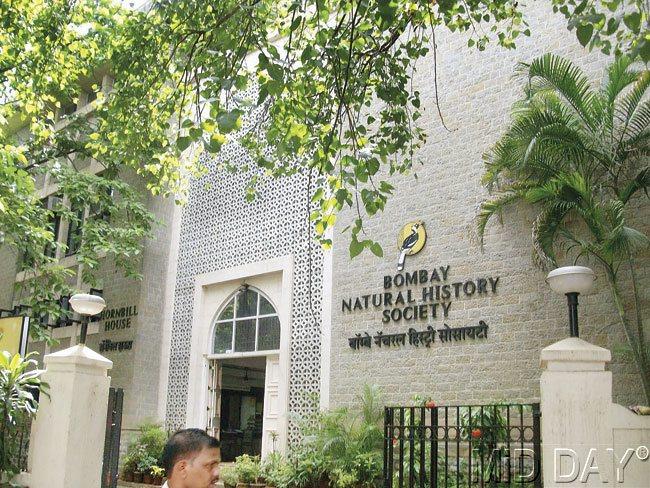
#07 Library at Bombay Natural History Society Clearly, the Indian sub-continent's largest NGO can also stake claim to be the home of one of the largest, most exhaustive collections on wildlife and environment from across the world. Founded in 1883, the Bombay Natural History Society (BNHS) stocks over 22,000 books and scientific journals. Look around and there's enough to pique your green side, from books on plant injuries to big cat territories in the Subcontinent and bird havens across India. The library also houses a photo library and stores collections of 30,000 birds, 20,000 mammals, 10,000 reptiles and amphibians and 50,000 insects, including extinct species. Interestingly, BNHS members collected tons of information on wildlife in India and its neighbours from the time when the British ruled over the Indian sub-continent. Some of its best research work dating back to the 1800s, gives the common man a fascinating insight into the flora and fauna of the Indian subcontinent. This has been converted into coffee table books, available on sale at BNHS as well as its website (www.bnhs.org). Some of these treasures include The Book of Indian Animals, The Book of Indian Reptiles and Amphibians, National Parks and Sanctuaries in Maharashtra (Volumes I and II), Living Jewels from the Indian Jungle, Natural History and the Indian Army and Latin Names of Indian Birds: Explained. u2013 Fiona Fernandez
#08 Booksellers at Matunga No other semi-circle provides so much book knowledge than the booksellers at Kings Circle, Matunga. From literature to non-fiction, sports to science, those roadside stalls have them all to attract a wholesome crowd all day. Some stalls are permanent structures like the one which is on the same footpath as Mysore Cafu00e9. That Mr Bookseller thrives on children's books, but the street seller at the other end of the footpath 'specialises' in old books and magazines. After learning about your interests, he could surprise you by pulling out a packet of important newspaper clippings. This writer was once offered a bunch of newspapers which reported on Indira Gandhi's 1984 assassination. Other booksellers in the area stock pirated books. It brings us to the question: buy a pirated book and increase knowledge or shun it because of your conscience? u2013 Clayton Murzello
#09 MCA's Kandivli ground IF you are a Sachin Tendulkar fan then a visit to the Kandivli ground should top your wish list. The Mumbai Cricket Association truly made it large when they announced this state-of-the-art facility club after the legendary Indian cricketer as a tribute to his contribution to the sport before his final match last November. If you know a member, urge him/her to take you on a short tour of the gymkhana. The Mahavir Nagar club is sure to mesmerize you with Tendulkar cut-outs, some rare photographs and statistics displayed all over the passage area. The structure too has been built keeping in mind the iconic status Tendulkar enjoys in world cricket. The grand gymkhana is also capable of hosting two matches simultaneously, a rarity at private clubs these days. u2013 Harit N Joshi
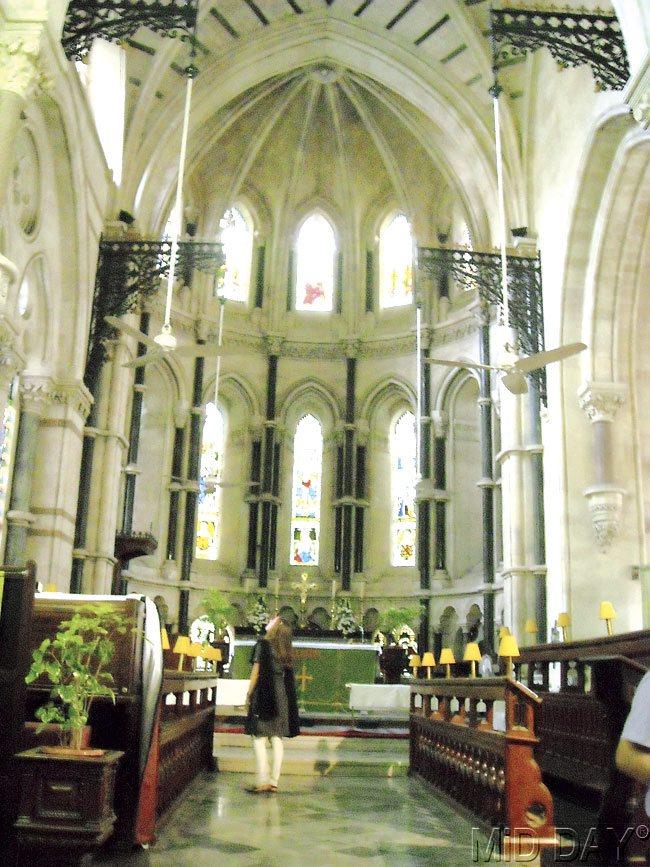
#10 St Thomas Cathedral It is rare to find spaces in Mumbai that are not museums in the literal sense but yet boast of a stunning display of exhibits. In this case, the landmark reflects and offers terrific insight into the city's rich historic significance in every sense. St Thomas Cathedral was built in the heart of the Bombay Fort near the Horniman Circle. Helped largely by public funding, another virtue that played a huge role in building the original city , this magnificent cathedral was the city's first Anglican church for the early British settlers to provide them with church services. Construction began in 1672, and the landmark was finally opened for services on Christmas Day in 1718. First-timers can marvel at the relics, statues, stained glass work and inscriptions inside this church that was consecrated in the name of St Thomas, the Apostle of India. The Gothic-styled clock and tower was added in 1838. Some of the outstanding memorials honour Colonel Burr, who commanded the Battle of Kirkee (1817), Captain G D Hardinge, who died in battle when the English captured the French cruiser Piemontaise (1808), and Colonel John Campell, defender of Mysore against Tipu Sultan in 1784, making the cathedral an unbelievable showcase of historic events. Former Bombay Governor Gerard Aungier gifted one of the chalices in 1675, while another came from merchants of the city of York. Wealthy city citizen and benefactor Sir Cowasjee Jehangir Readymoney erected the ornate fountain that fronts the cathedral. Another spectacular addition was the organ case with ironwork designed by noted architect of the time Thomas Roger Smith, in 1865. u2014 Fiona Fernandez
#11 Sassoon Dock What is Mumbai without the sea? And what is Mumbai's sea without fishermen? The city would lose half its charm without those colourful bandana-wearing, lungi-clad fishermen in the deep sea. Its folklore would be incomplete without the grooving of the fishermen community in their popular Koli dance form. In some dark corner of the ever-awake city, one meets the brightest and liveliest community of Mumbai, unloading their hard source of income. As most of us are asleep, Sassoon Dock, the southern tip of Mumbai wakes up to the noise of fishermen gathering to welcome the head of their families returning after a long day on the water. This is the time when all the small, medium and giant-sized fishing boats that had left the shore earlier in the day return to shore. This, for the sale of the fish that ended in their nets and failed to escape that nylon trap, back into the deep sea. The local fisherwomen are seen eagerly waiting at the shore to greet their men. They look all set to help them segregate the various varieties and make them market ready for sale. The ones which do not flee abroad make it on to the plates of the sea food lovers in the city. Like they say, where there's a gill, there's a way. u2013 Bhupen Patel
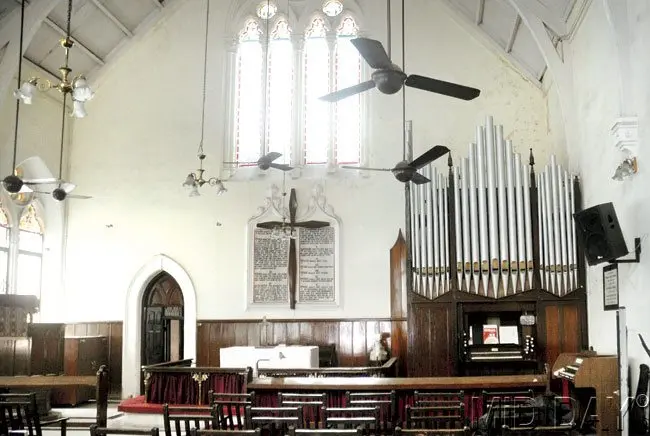
#12 Unique organ at Wesleyan Methodist Church Churchgoers at the 124 year-old Wesleyan Methodist Church (near BEST House, Colaba) are a lucky lot. At every Sunday service, they hear soothing tunes from Mumbai's only operational pipe organ. This Conacher Organ from Huddersfield, UK was acquired over 100 years ago and is still used to play one hymn at Sunday mass, the old man can't take a second tune. This organ, due to its age and uniqueness, needs to be handled with utmost care. It was last repaired in 1965 by Reverend Arthur Saunders and choral legend and parishioner Victor Paranjoti (founder of the Paranjoti Choir). This towering instrument is sadly, unseen in the city's churches or at live performances. The Conacher's sound quality cannot be replicated with even the best electronic models. This church, once a favourite with British military and naval officers, stands at a busy traffic signal, with plaques, stunning stained glasswork and ornate carvings that grace its otherwise simple, understated interiors. u2013 Fiona Fernandez
#13 Sunderbai Hall This Churchgate hall is now more famous for book exhibitions than weddings and functions. Over the years Strand Book Stall and Ashish Book Centre have conducted highly successful book sales there. More recently, Butterfly books has lured book lovers to come and buy volumes by the kilo. At times, even the vast expanse of the hall does not appear big enough for a well spread out array of books so your otherwise sharp eye sight is put to the test. True blue book lovers will never tire from heading to Sunderbai Hall and soon it will be that time of the year. -Clayton Murzello
#14 Khadi Bhandar and Village Commission A six-decade old landmark that stands out amidst the bustle and din of Dr D N Road is the Khadi and Village Commission showroom, housed in the Jeevan Udyog Building. Now a silent bystander, this one-time shopping must-stop was formerly known as the Whiteway & Laidlaw department store in the pre-independence era. It was an extremely popular destination for British residents in the city along with Evans and Fraser, and the Army and Navy Stores. It was designed by architectural firm, Gostling & Morris in a mix of Indian and Neo-Classical architecture. Its premises once housed the photography studio of the great photographer and India chronicler, Raja Deen Dayal. Few would be aware that the building in which this two-storied store stands was also once home to Sydenham College where lectures were held for eight years until they moved to their present location in 1922. Decades later, post India's Independence, when the cry to use indigenous products grew louder, and as khadi represented an immense sense of pride and Gandhian ideals, the need to wear this handspun fabric assumed immense importance. In such an environment, then Chief Minister of Bombay Presidency, Morarji Desai inaugurated this store that replaced its earlier occupant, Whiteway & Laidlaw, as one legacy gave way to the next. Today, it strives hard to keep abreast with brighter shades of fabrics, discounts and offers to tempt the shopper, who has so many more choices than he did then. u2014Fiona Fernandez
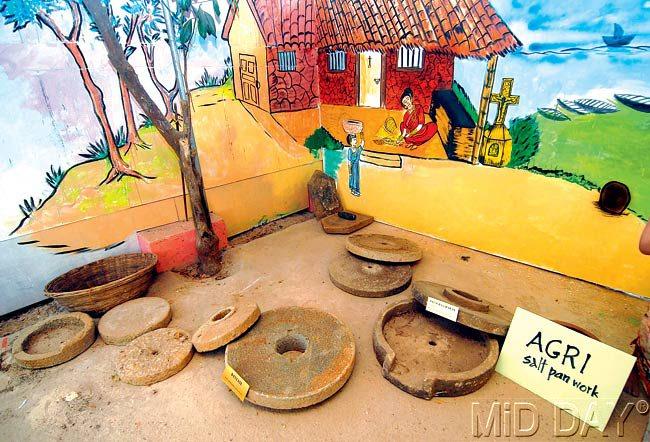
#15 East Indian community museum, Manori The East Indian community's museum that opened to the public on May 19, 2013, was initiated with the intention of promoting the culture and traditions of this indigenous community. On May 18, this year, the community launched its second phase. A year back, the members of the community thought of a museum. It was erected through funds largely contributed by the East Indian community. The third phase plans will be released soon and for that a museum team will be formed that will meet quarterly to decide new inclusions and attractions, with a theme for the third phase, which will be opened to the public from the third Sunday of May 2015. The second phase of the museum has several new attractions on offer. It gives a peek into the new occupation space, which depicts the occupations of the East Indian community, the Bhandaris, Agris, Kunbis and Kolis. There is a new shed to display farming and salt pan workers. A boat with a fisherman has also been placed in a new area for photography by visitors. A statue of St Gonsalo Garcia (a saint of East Indian origin from Vasai) has also been installed. New artefacts have been placed including bricks manufactured by East Indian merchants over 100 years ago, wooden altars and a lot more. It is open on Saturdays and Sundays from 11 am to 4 pm. u2013 Ruchika Kher
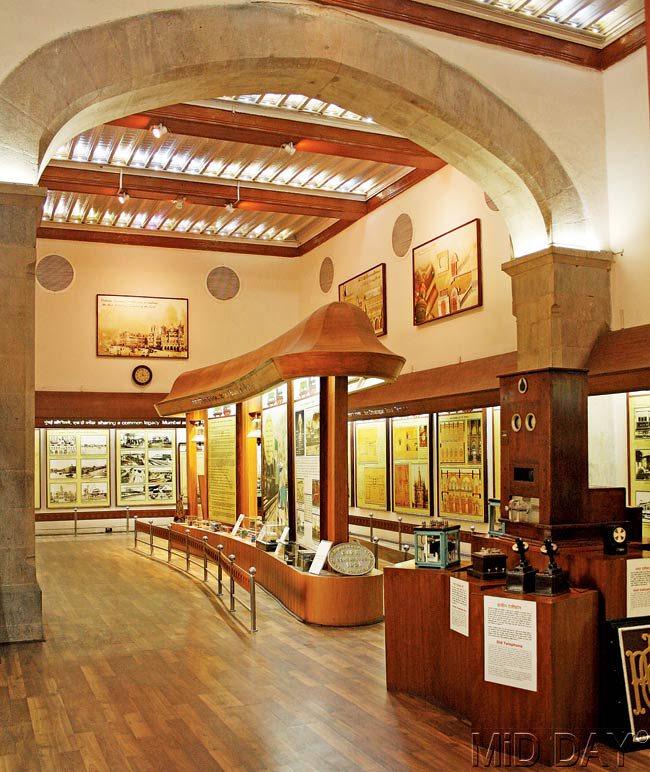
#16 Museum inside CST To revisit the history of the Indian Railways, don't miss a visit to the Heritage Wing that is located inside Central Railway headquarters at Mumbai's Chhatrapati Shivaji Terminus. This little-known gem showcases and traces not just the history of the Central Railway, earlier known as the Great Indian Peninsula Railway but also gives the visitor a sense of the grandeur of the Indian Railways. On display are old artefacts, reproductions of the original drawings of the terminus, made by the British architect F W Stevens, rare photographs and miniature models of the early engines. You can also spot memorabilia such as gadgets used in the trains of yesteryear. The visit also includes a tour inside this UNESCO World Heritage Site. u2013Dhara Vora
#17 Elephant monolith at Rani Baug Most of the time, when visitors drop by the Dr Bhau Daji Lad Museum or pass it en route to Rani Baug, they are bound to miss a mammoth elephant-shaped monolith that lies beside the entrance to the museum. As if on watch, to guard the exhibits inside, this structure, rather fascinatingly, pre-dates several occupants within the museum. The basalt structure has a history that ties itself intrinsically with Mumbai and its varied influences. Originally located on Elephanta Island, it was spotted here by early Portuguese navigators. The island, which was known as Gharapuri by its inhabitants till then, was rechristened Elephanta. The Portuguese spotted it in the docking area of the island when they first landed on this island. The Portuguese took possession of this island for several centuries during which the elephant was broken down into pieces by them, and eventually shipped off to the island city in 1864. It found its present home at the Victoria Gardens (Veermata Jijamata Udyan) that were being laid out at the time. Here, it was restored to its original shape and it is still standing at this location. Today, it lies in a state of semi-ruin. u2013Fiona Fernandez
#18 MCA ground at BKC Amidst the business district of Mumbai, dotted with marvellous tall glass structures is the Mumbai Cricket Association's (MCA) ground at the Bandra Kurla Complex (BKC) which now falls in cricket's first-class category. The outfield is lush. The waist-high fence provides an unobstructed view of the action, a rarity at top cricket venues nowadays. There are no stands, so spectators can enjoy the game while lying on the grass near the fence where ample shade from the trees and gentle breeze makes for an experience akin to some overseas venues. Spectators, are so close to the action that they can actually hear on-field banter. The ground also has a recreational centre for its members. So, don't be surprised if you spot star cricketers, who often use the indoor training facilities here. A tip: The monsoon is an apt time when these demi-gods frequent the indoor facility. u2013Harit N Joshi
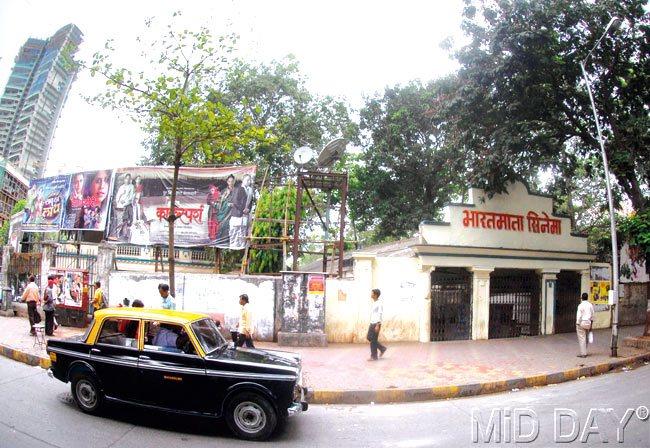
#19 Bharatmata Cinema At a time when multiplexes have sprung up all over the city, Parel's Bharatmata theatre is one of the few remaining bastions of single-screen cinema halls in Mumbai. This 73-year-old cinema hall, which only screens Marathi movies, is a big hit among Maharashtrians, both young and old, who flock here from all over the city. And why not? A balcony ticket costs a mere Rs 40 while stall prices are just Rs 35, which means an entire family can watch a movie in Rs 100. Bharatmata may not have the air conditioners and the cushy reclining chairs that are commonplace at theatres all over the city, but what it lacks in modern-day conveniences it makes up in old-world charm. Even Bollywood actors like Shreyas Talpade have been known to be patrons of this humble theatre - Amit Kamath
#20 Prince of Wales museum If you've been to the Chhatrapati Shivaji Maharaj Vastu Sangrahalaya (or as it was formerly known, the Prince of Wales Museum of Western India), chances are that you have marvelled at the life-like exhibits such as the gigantic rhinoceros or the minuscule yellow-bellied fantail at the Natural History section and found yourself wondering how these magnificent creatures are preserved even after their death. The answer can be found right there - in the Natural History section from 11 am to 12 noon from Tuesdays to Fridays. The museum staff, like Ravindra Chafe or the curators, explain taxidermy to wide-eyed visitors. Taxidermy is the art (and science) of preserving, stuffing and mounting the skins of animals and birds for displaying. These one-hour sessions have been conducted since almost three years now and are a hit with the visitors, even schoolkids despite the somewhat unsettling nature of the activity. - Amit Kamath
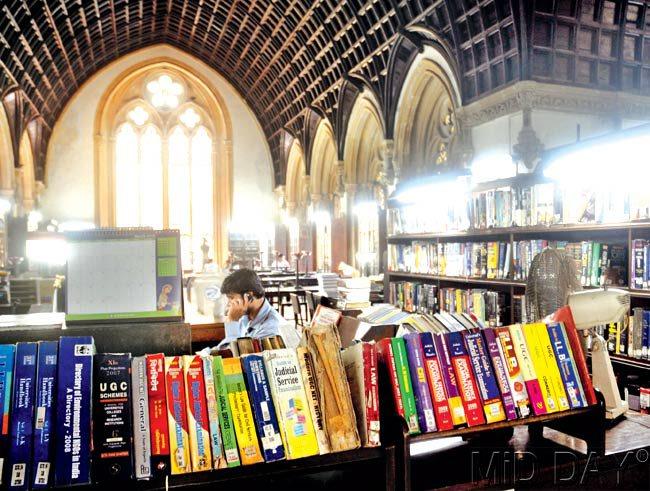
#21 Mumbai University Library Mumbai boasts of many libraries with gigantic collections such as the Asiatic Library or the David Sassoon Library. But Mumbai University's library next to Cross Maidan holds a special place in the hearts of Mumbai bibliophiles. This library boasts of over 4.5 lakh books and manuscripts, including some rare ones printed in Arabic, Urdu and Persian. But the library's cathedral-like reading room is the aspect that sets this library apart from other libraries in the city. Right from the grandiose ceilings to the stained glass windows, the reading room is a work of art. Built in 1864, underneath the Rajabai clocktower, the library was thrown open to the public in 1880. The library has books on almost every subject, be it maths, science or law. Moreover, you don't have to be a member to use the books here. Just buy a daily pass for Rs 20 or a three-day pass for Rs 50. - Amit Kamath
#22 Mini kabutarkhana at Marine Drive The promenade at Marine Drive attracts countless people everyday. While a few go there to steal a private moments from their hectic daily schedules in the company of their loved ones, others are there to enjoy the sea breeze that feels like a welcome reprieve from the harsh and omnipresent humidity of the city. And then there are those who come here just to enjoy the solitude that the benches right outside the Islam Gymkhana offer them. These little benches are akin to tiny islands, far away from the frenetic cars honking at each other, away from the crowds clicking group pictures with the sun setting in the background or even the pigeons cooing at the nearby mini-kabutarkhana. You can always spot an old gentleman sitting on these benches reading a newspaper, or a tired parent with a toddler in his arms. - Amit Kamath
#23 Maharashtra Rifle Association Range Situated right next to the Worli end of the Bandra-Worli Sealink are the Maharashtra Rifle Association's shooting ranges, the cradle of champion marksmen from the state such as Ashok Pandit, Anjali Bhagwat, Shiela Kanungo and Suma Shirur. At these ranges, it is not uncommon to find veteran aces like Ashok Pandit or current shooting stars like World No 1 Heena Sidhu, faces set in monk-like concentration, honing their shooting skills. The facility boasts of three ranges - the 10m indoor range (which is partially air conditioned), the 25m range and the 50m open range. Activities at the shooting ranges, though, are not just meant for professionals. If you fancy taking shooting lessons in the city, the rifle ranges offer basic shooting courses from international or national shooters at Rs 5,000. - Amit Kamath
#24 Mani Bhavan Gamdevi's Mani Bhavan, where Mahatma Gandhi stayed from 1917 to 1934, is as rich with history from the inside, though deceptively unremarkable from the outside. It was from this two-storied house that the Father of the Nation formulated Satyagraha in 1919 and launched the Civil Disobedience Movement in 1932. The museum, which has seen high-profile visitors such as Martin Luther King and Barack Obama, has a library stacked with books on the Mahatma on the ground floor while the other two floors have artifacts from his life such as his charkhas (spinning wheels) and the floor bed. Portraits of Bapu adorn the walls of the house. Pull a book from the library on the ground floor and read about Bapu or his philosophy. Mani Bhavan has also postal stamps issued by other countries. - Amit Kamath
#25 Mahalaxmi racecourse It is no wonder that Mahalaxmi racecourse, a sprawling 226-acre property in the heart of the city, is also known at its 'lungs', because it has conserved its pristine environment for well over a century after it first became home to the country's finest thoroughbred racehorses in 1883. The mile-and-a-half lush green turf track of the Mahalaxmi racecourse has borne the hoof marks of great horses like Squanderer, Elusive Pimpernel and Mystical, and witnessed the magical saddle artistry of some of the finest Indian jockeys such as Pandu Khade, Vasant Shinde, Aslam Kader and Pesi Shroff, and Englishmen Willie Carson, Lester Piggott and Mick Kinane. The track also plays host to the country's greatest horse race, the Indian Derby, on the first Sunday of February every year, staged as the stellar attraction of its annual racing season between November and April. Though horse racing is conducted on only 45 days, the Mahalaxmi racecourse is full of life round the year thanks to the walkers (who use the walking and jogging tracks), amateur riders, polo players and students conducting aero-modelling shows, Then of course are the gourmet diners who patronize the couple of famed restaurants at the racecourse. u2014Prakash Gosavi rein of the emerald of sobo: The racecourse is a much coveted open space. Pic/Satyajit Desai
#26 Dadkar Maidan in Matunga Among the few clubs which make up the Dadkar Maidan in Matunga, Dadar Union Sporting Club is the most famous, simply because it produced India's finest batsman of the 1970s and 1980s, Sunil Gavaskar. If one walks towards its new pavilion, don't be surprised to see Dilip Vengsarkar walking alongside you towards the grand pavilion he was instrumental in building. Apart from Dadar Union, there is New Hind Sporting Club, Dadar Parsee Colony CC and Dadar Parsee Zorarstrians. At New Hind, one can watch a lot of junior tournaments, chief among those, the Kalpesh Koli tournament which is held annually in memory of Kalpesh, a 15-year-old leg-spinner who passed away in 1989. u2013 Clayton Murzello
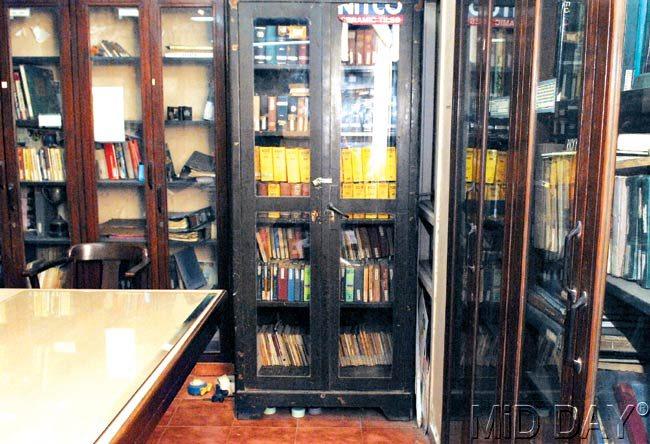
#27 Kanga Library Just like on should not judge a book by its cover, the size of the Dr HD Kanga Memorial library at Wankhede Stadium must not prevent you from believing that it is considered Asia's largest sports library. It has now become a reference library because there is no great flow of new books. However, the wealth it has is enviable. The library has around 1,000 members and 13,000 books. Kanga Library also has a large amount of magazines which are bound. However, you'll be lucky to get your hands on them because several volumes are stored in large kit bags. The Mumbai Cricket Association will do well to house this treasure in a better location as and when a new building is built in place of the existing structure. u2014 Clayton Murzello
#28 Rhythm House At a time when music shops around the city are few and far between, Rhythm House at Kala Ghoda or Rampart Row has never been out of tune. Sure, the store also caters to customers wanting to buy music systems, accessories, stationery, cell phone accessories etc, but it has not lost its emphasis on music. The staff members are attentive and polite, always willing to help you get hold of your most-wanted audio CDs or DVDs. The knowledgeable help desk is perennially buzzing with questions and when you place your request, you can be rest assured, it will be attended to once you leave. Rhythm House has come a long way and has stayed in the same premises since the 1940s. The late 8:30 pm closing helps and they are open on Sundays. u2014 Clayton Murzello
#29 Strand Book Stall The emergence of online bookstores notwithstanding, Strand Book Stall on Sir P M Road in Fort can claim to be Mumbai's best-loved book shop. Old timers could well miss the late T N Shanbhag, but his well-trained staff provide you the same kind of kindness and display the similar love for books. Strand believes in making the latest books available first. The feeling one gets when he gets through the black-framed door is the same as before. Nothing much has changed with 66-year-old Strand and therein lies its magic. In the words of Shashi Tharoor, Strand is 'an iconic Indian institution for booklovers across our country, the Strand inspires loyalty, curiosity and love of reading.' Touche. u2014 Clayton Murzello
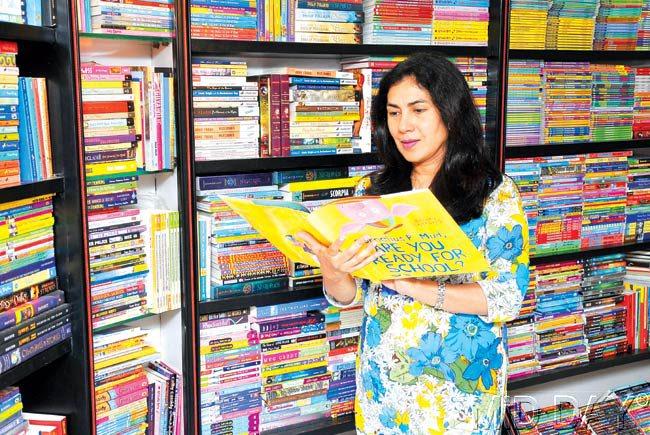
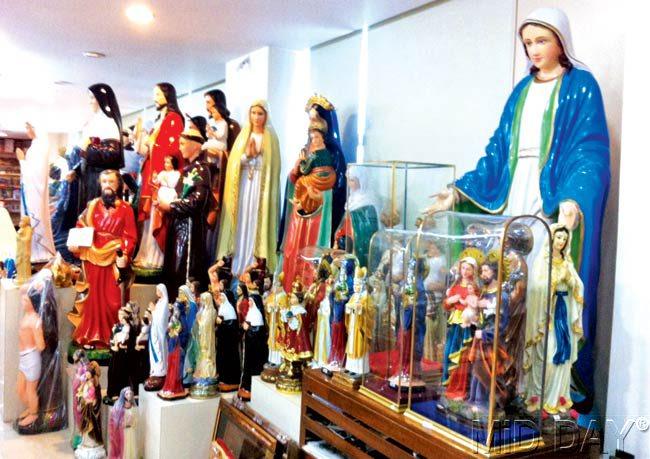
#30 St Paul Book and Art Centre Situated on 24th Road in Bandra West (opp Duruelo Convent), the St Paul Book and Art Centre is easily Mumbai's largest outlet for religious articles which embellish the living room of a Christian home. Established in 1960, according to a seasoned hand at the firm, the three-year-old second floor location has helped display an array of essentials. Non-Christian visitors to the store need not feel out of place because there is a large section of self-improvement, children's books and gifts in the form of bookmarks and glassware. The store gets full marks for its du00e9cor and comfortable space to move in between rows of shelves, The other similar store which is worth visiting is Daughters Of St Paul on Waterfield Road, Bandra West. u2013 Clayton Murzello
#31 Shivaji Park Not for nothing it is called the nursery of Mumbai cricket, long before a certain Sachin Tendulkar emerged in the late 1980s. The biggest attraction at Shivaji Park is the Shivaji Park Gymkhana where Mumbai greats Vijay Manjrekar, Ajit Wadekar and Sandeep Patil played some of their best cricket. It was at Shivaji Park's Kamath Memorial club where Tendulkar perfected the art of batting under the watchful eyes of coach Ramakant Achrekar. Former India player Pravin Amre, who has made waves as India Premier League-7 star batsman Robin Uthappa's personal coach, is at the Bengal Club pitch on most evenings to offer tips to budding players. The Shivaji Park Gymkhana's wall of fame on the ground floor of their premises is worth visiting. The Gymkhana also promotes tennis, billiards and snooker. u2013 Clayton Murzello
#32 RCF Sports Complex The RCF Sports Club ground in Chembur reminds me of County grounds in England,' wrote Sunil Gavaskar, in his newspaper column, after he played a Ranji Trophy match here, in 1986, for Bombay against Baroda. These very lawns helped Khel Ratna Dhanraj Pillay, world cupper Balvinder Sandhu, footballers Khalid Jamil and Abhishek Yadav and many others to etch their names in the country's sporting hall of fame. In fact, Sachin Tendulkar practiced here for a fortnight, before emerging on his history-making trip to Ol' Blighty in 1990. Dr. Rafiq Zakaria, then Maharashtra minister inaugurated the 9-acre RCF Sports Complex, situated in the company's township in 1969, It has a 25-metre swimming pool, badminton, lawn tennis, kabaddi and volleyball courts, football, hockey and cricket grounds, a table-tennis room, a library and an open-air theatre. Senior citizens from all over Chembur gather here to sit and relax. There's a laughter club too, while most fitness buffs from the township and other parts of the suburb prefer to walk or jog around the club's outer periphery. Dilip Vengsarkar, who captained the Bombay Ranji team in 1986 at RCF, loves relaxing on the lawns of the RCF Sports Complex. A slice of English county flavour in Mumbai. u2013 Austin Coutinho
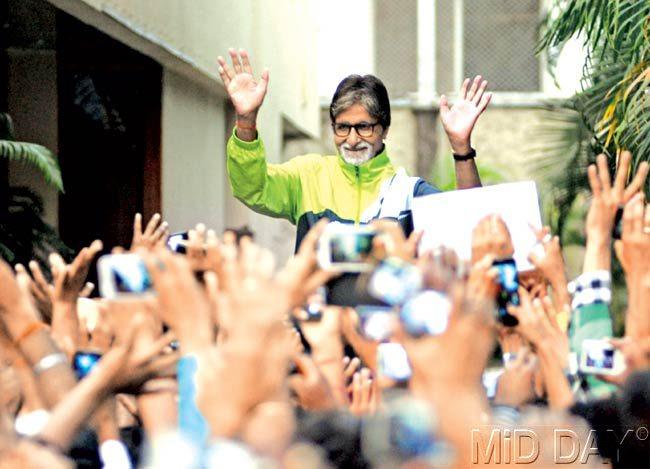
#33 Jalsa, the home of the Amitabh Bachchan To some of Amitabh Bachchan's fans, his Juhu bungalow, 'Jalsa' is a place of worship. One has to spend only a few minutes at the footpath opposite Big B's dwelling on Sundays to gauge the sense of anticipation of the 'great moment' when Bachchan stands near a window to greet his admirers. Many enthusiasts travel from other parts of India to make their dream a reality. On other days, one notices how the security men at the gate are asked all sorts of questions about the superstar's whereabouts. Reportedly, some portion of Jalsa appears in Anurag Kashyap's Bombay Talkies. Now, that is some first. u2013 Clayton Murzello
#34 Malcolm Baug, Jogeshwari 'Have we left Mumbai and entered a hill station?' is a question people who stay here are asked by their first-time visitors. This Parsi colony, situated close to Jogeshwari railway station, is spread across 35 to 40 acres. With lush greenery, tall mango and coconut trees, the colony has a hill station feel. Quaint, old bungalows and buildings constructed in the British style of architecture are seen here. The oldest building in the colony dates back to 1914. Some of the bungalows in the colony are heritage structures by the Mumbai Heritage Conservation Committee. This colony housing 350 families, is a holiday spot amidst the bustle of the city. u2013 S Navle
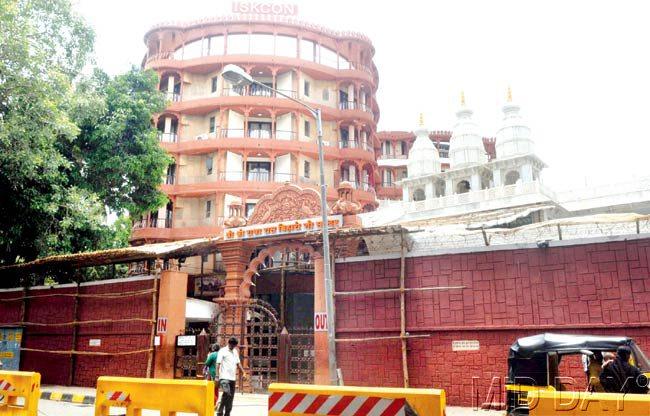
#35 Hare Rama Hare Krishna Tucked away in a corner of Juhu is the International Society for Krishna Consciousness (ISKCON), where devotees and tourists alike flock to soak in an incredible sense of peace. In a compound that houses a marble temple, a hotel, an auditorium and a school, regulars will tell you that both God and food are to be found in abundance. Be sure to sample their soul food after partaking of their spiritual offerings. From their acclaimed vegetarian restaurant to their divine samosas, the good folks at ISKCON serve up a sublime feast. Why stop with your stomach? Treat yourself to a box of their aromatic incense sticks to ensure these memories linger on. u2013 Sonali Velinker Kamat

ADVERTISEMENT