Home / News / India News / Photos /
IN PHOTOS: On his 34th death anniversary, a look at Rajiv Gandhi’s remarkable rise and legacy in frames
Updated On: 21 May, 2025 02:52 PM IST | Anushree Gaikwad
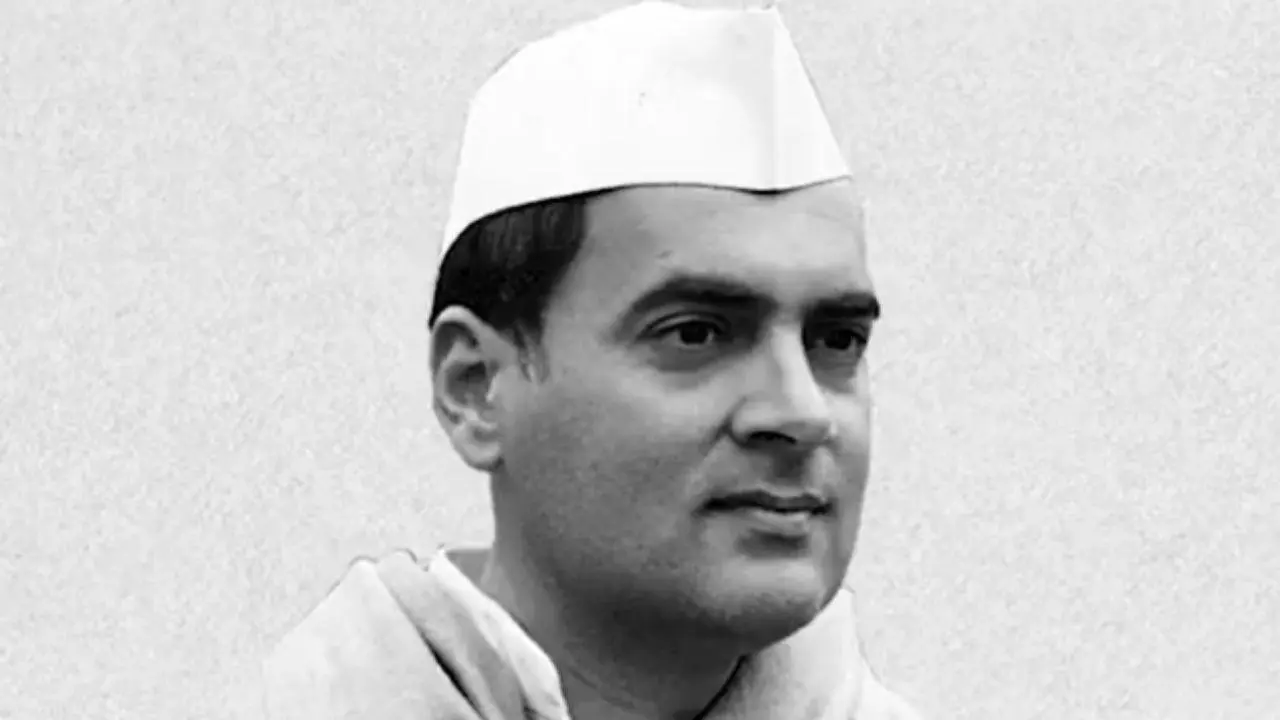
Rajiv Gandhi, who served as India's Prime Minister from 1984 to 1989, was hailed as a visionary leader. He ignited hope in the hearts of millions and his bold reforms and forward-looking leadership helped lay the foundation for a modern, future-ready India. Here’s a glimpse into his inspiring journey. (Pics/ @INCIndia)



1/9

2/9
Rajiv's mother, Indira Gandhi, held the highest office as the Prime Minister of India from January 1966 to March 1977. His grandfather, Jawaharlal Nehru, was 58 when he embarked on a 17-year tenure as free India’s first Prime Minister
ADVERTISEMENT

3/9
Beyond representing a generational shift in the country, Mr. Gandhi secured the largest electoral mandate in India’s history in 1984 when the Congress won more than 400 seats

4/9
Rajiv's vision helped lay the foundation for India's IT boom in the 1990s and beyond
ADVERTISEMENT

5/9
His government's Computer and IT Policy reduced import duties on computers and software to promote IT growth

6/9
Rajiv's government's policies helped the foundation of the National Association of Software and Service Companies in 1988, boosting India's software industry. His government also encouraged computer education in schools and universities
ADVERTISEMENT

7/9
Characterised as modern-minded, decisive, yet undemonstrative, Gandhi was well-versed in the realm of advanced technology

8/9
The Congress party suffered defeat in the 1989 elections, resulting in Gandhi assuming the role of leader of the opposition
ADVERTISEMENT

9/9
Following the collapse of the National Front in early 1991, elections were scheduled for May 1991. Tragically, he lost his life in a bomb blast on May 21, 1991, at Sriperumbudur in Tamil Nadu
ADVERTISEMENT
Photo of Day

Nature turns the tide pink
Thousands of flamingos wade through the shallow waters of the Talawe wetlands behind Nerul’s NRI Complex in Navi Mumbai. PIC/SHADAB KHAN
ADVERTISEMENT