Home / News / World News / Photos /
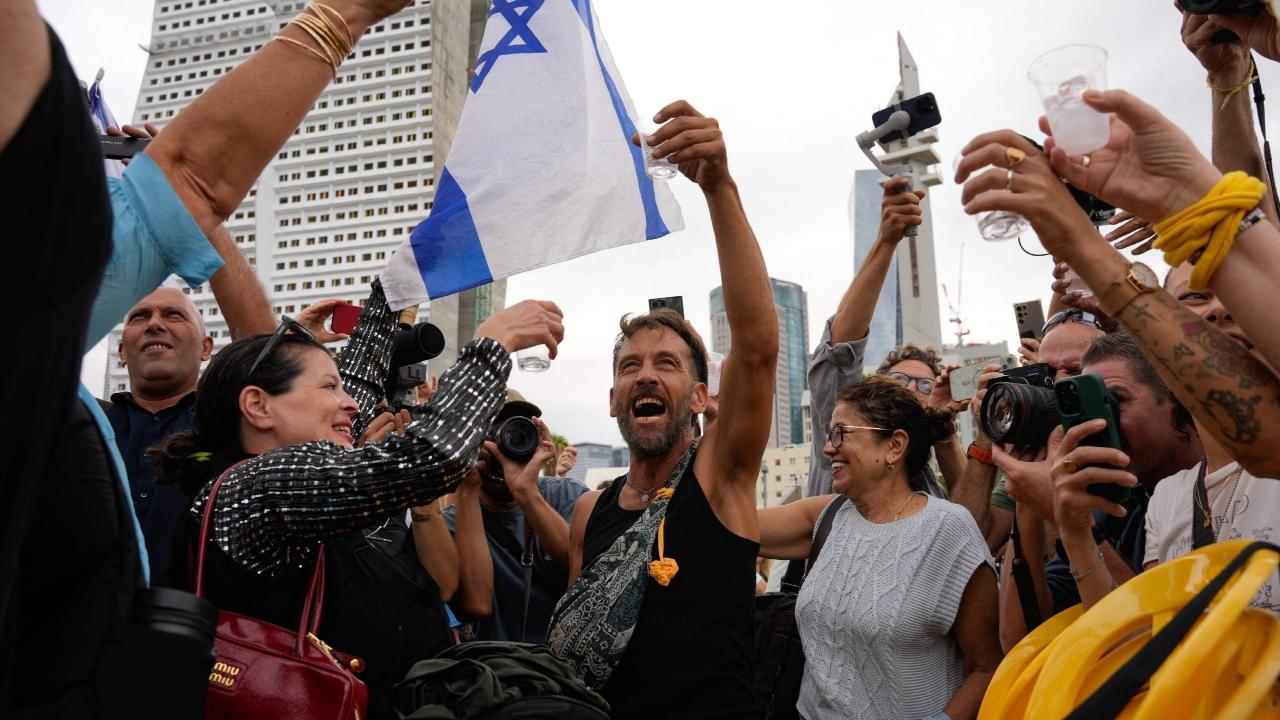
In Photos: Huge crowds gather at "Hostages Square" in Tel Aviv, worried but hopeful
Updated On: 12 October, 2025 02:49 PM IST | ronak mastakar
A huge crowd filled "Hostages Square" in Tel Aviv tonight for a spectacular gathering. Participants expressed hope that it would be the last rally of its kind, as everyone hopes that the hostages will return as provided for in the agreement to end the war in Gaza, despite the remaining gaps in the following stages of the talks. (Pics/APF)




1/6

2/6
Nurit, in her 70s, spent her teenage years through the Seven-Day War and became an adolescent right after the Yom Kippur War. She hopes to return soon to the Museum and the Opera House to enjoy herself as she did in the past.
ADVERTISEMENT

3/6
She adds that she feels as if the memories of the locals have been kidnapped along with the hostages.

4/6
This place, she explains, "once synonymous with music, exhibitions, and discussions", has now been transformed into a place of anguish. She stresses that her presence every Saturday together with her family was not for themselves but for those who remain captive and their relatives.
ADVERTISEMENT
5/6
The way she put it, "our absence could intensify their feeling of abandonment". Nurit went on to say that "the joy that they drew courage from us gave an extra meaning to our lives," pointing out that even the smallest act of solidarity was of enormous importance to her fellow citizens going through this ordeal.

6/6
"We live in a rough neighbourhood", said Dalit, a woman in her fifties. "You know, we do know our enemies very well. So even if I am hopeful, and I am, I am not gonna lie to you. I am scared that something, anything, could turn all of this upside down". She underlined that "over these two difficult years", she too was there to support the relatives of the hostages. Why? Because she explained that if a member of her family was in trouble, she would have felt the very same way.
ADVERTISEMENT
ADVERTISEMENT
Photo of Day
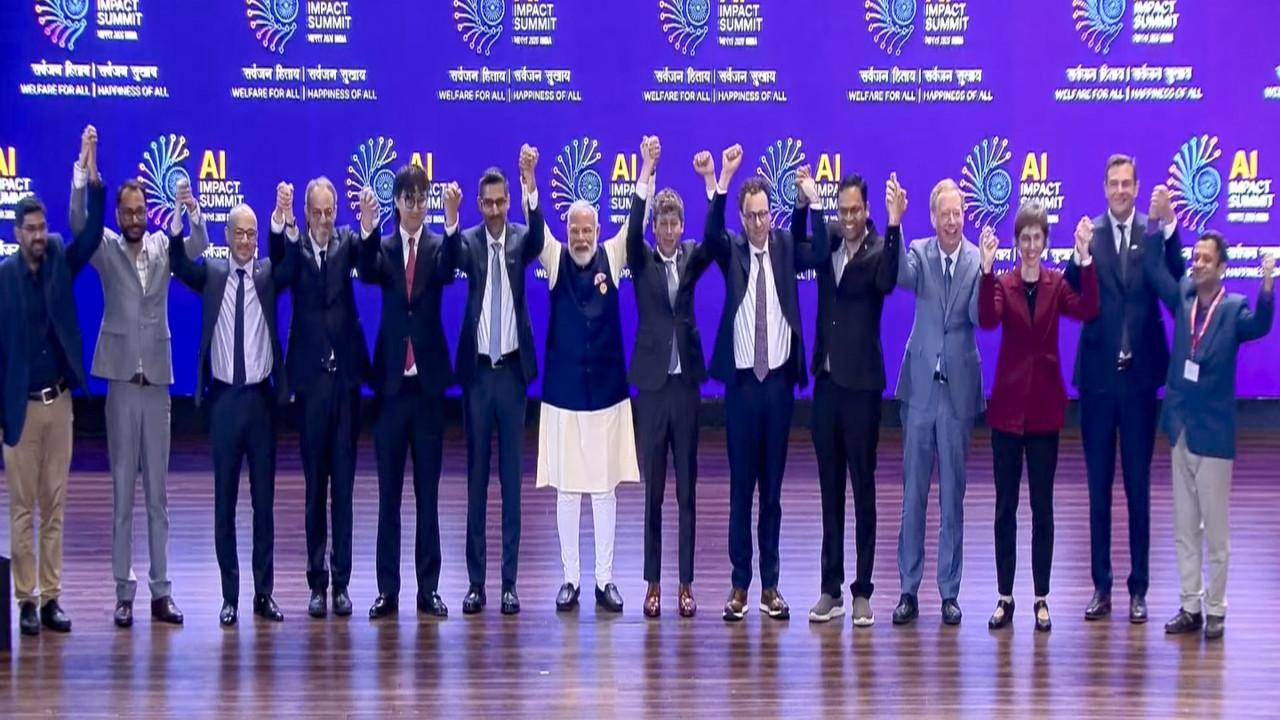
Global AI leaders join PM Modi in a bid to push for a smarter, inclusive future
PM Narendra Modi joins hands with Google CEO Sundar Pichai, OpenAI CEO Sam Altman, and others during the India AI Impact Summit 2026, in New Delhi. PIC/PTI
ADVERTISEMENT